
How to Identify the British Bank Token
Practical checks for a George III copper Bank Token: portrait, quartered arms, legend, metal and size, plus cautions on look-alikes.
Read the full British Bank Token encyclopedia entry →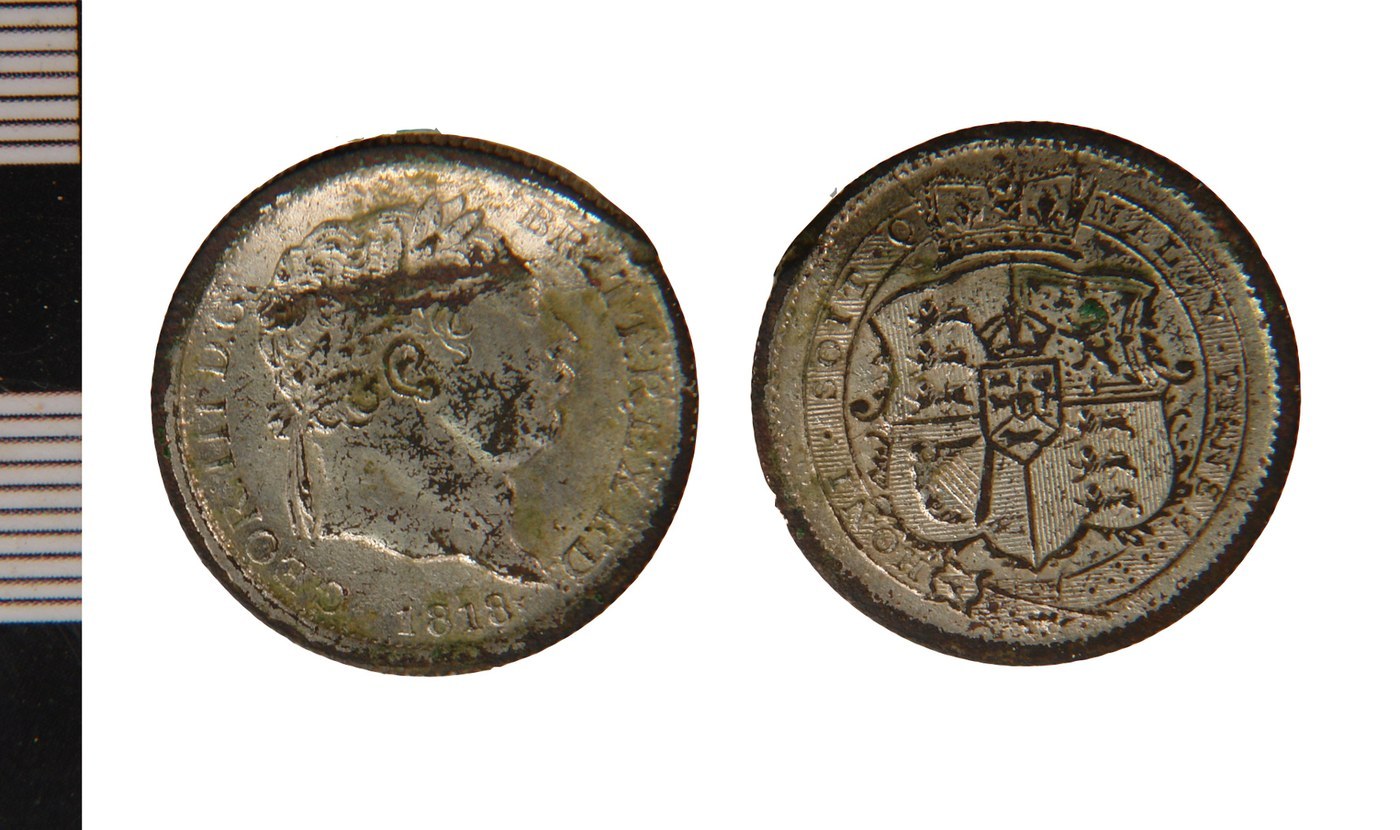
Begin with the portrait. The obverse should show a bust of George III facing left, surrounded by a legend. Compare the style of the bust and the exact wording of the inscription against a reference, because the George III era produced many similar portraits and small differences in legend, truncation, and lettering are what pin down a specific token.
Turn to the reverse and study the shield. You are looking for the royal arms rendered as a quartered heraldic shield, with the field divided into the arms of the realm, and the date (here 1819) placed with the design. Note whether any additional wording, an issuer name, a place, or a denomination appears; that text, not the general layout, is the key to attribution.
Check the physical characteristics as a cross-test. The piece should be copper: a brown to reddish metal that is not magnetic. Measure the diameter and weigh it; tokens of this class are usually penny- or halfpenny-sized, and a piece that is unusually thin, light, or gilded may be a gaming counter or a "toy" coin rather than a circulating token. A caliper, a small scale, and a magnet quickly separate copper tokens from later brass or plated imitations.
Mind the look-alikes. Regal George III copper coins share the same portrait and arms motifs but are official Mint products with standardized legends; gaming counters and gilt "model" coins copy the designs at reduced size or in different metal; and later reproductions were struck for collectors. Matching the full legend, the metal, and the size together avoids mistaking one of these for a genuine circulating token.
Authenticate carefully before relying on any conclusion. Examine the date and legend under magnification for signs of tooling or casting seams, weigh the piece against expected token standards, and for anything you suspect is a scarce issuer or an unusual variety, get a written opinion from a token or British-coin specialist rather than attributing it from the design alone.
Frequently asked questions
How do I tell a token from a regular George III coin?
Read the legend closely. Regal coins carry standardized official inscriptions, while tokens often name an issuer, place, or purpose, or differ in wording and style. Metal and size also help: many tokens are penny- or halfpenny-sized copper pieces.
Is the metal a reliable clue?
Yes as a cross-check. This piece is copper, which is brown to reddish and non-magnetic. A gilded, brassy, or magnetic piece is likely a counter, a plated imitation, or a reproduction rather than a genuine copper token.
Does the quartered shield identify a specific bank?
Not on its own. The quartered royal arms appear on many pieces of the period. You need the full legend and any issuer text to attribute the token, so avoid assuming a bank or denomination from the shield alone.
Should I get the token authenticated?
For common, clearly circulated pieces careful measurement is usually enough. For anything that looks like a scarce issuer, unusual variety, or high grade, have it reviewed by a token or British-coin specialist.