
How to Identify the Brazilian 960 Reis Silver
The Brazilian 960 réis silver coin, issued from 1809 to the 1830s, is notable for often being struck directly over Spanish colonial 8 reales coins, so traces of the original host coin can sometimes still be seen.
Read the full Brazilian 960 Reis Silver encyclopedia entry →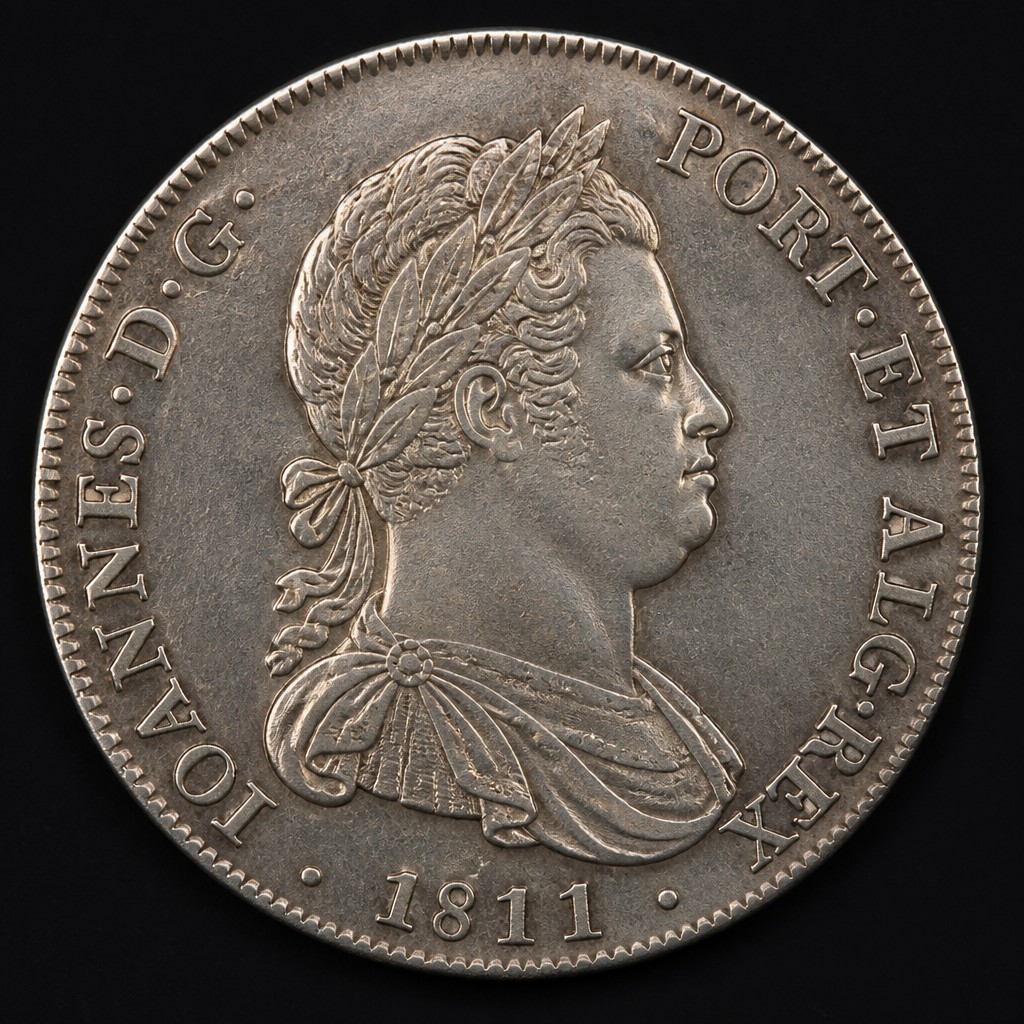
What the Coin Is
The 960 réis was a silver denomination issued by Portuguese Brazil and later the independent Brazilian Empire, beginning in 1809. A defining feature of many early examples is that they were struck over existing Spanish colonial 8 reales coins (often called "pieces of eight") rather than on freshly minted blank planchets, a practical wartime and economic measure of the period.
Obverse Design & Inscriptions
The obverse shows the crowned arms of Portugal (or later, Brazil), typically within a decorative shield, surrounded by a Latin legend referencing the reigning monarch, such as "JOANNES VI" or "PETRUS I," depending on the ruling period.
Reverse Design & Inscriptions
The reverse displays a crown above a value indicator or armillary sphere (a Portuguese royal navigational symbol), with the denomination "960" often overstamped or incorporated into the design, along with the mint's identifying elements.
Size, Weight, Metal, Edge
Because many examples were struck over Spanish 8 reales host coins, the size and weight tend to match that host coin closely — roughly 27 grams and about 38–39 mm in diameter, in silver of similar fineness to the original Spanish colonial standard. The edge often still shows remnants of the original host coin's edge design.
Mint Marks & Where to Find Them
Look for a small "R" (Rio de Janeiro) or "B" (Bahia) mintmark near the base of the design, indicating which Brazilian mint performed the overstriking.
Telling It Apart from Similar Coins
The clearest identifying trait is the overstruck appearance: on many genuine examples, faint traces of the original Spanish colonial design (such as pillars, a portrait outline, or parts of the original legend) peek out from beneath the Portuguese crown and shield. A coin with no overstrike ghosting is likely a later, non-overstruck issue rather than an early type, so compare carefully to the specific year and variety.
Judging Condition at a Glance
Because overstriking often left the underlying design partially visible, "condition" for these coins is judged both by circulation wear and by how cleanly the new design was struck over the old one. Collectors look at the crown's arches and the shield's fine lines for wear, and separately note how much of the host coin's ghost imagery remains visible.
Authenticity Red Flags
Given their historical interest, these coins attract fakes that either simulate an overstrike or crudely alter a genuine 8 reales. Be suspicious of overstrike "ghosting" that looks too precisely placed or artificially added, inconsistent weight for the claimed host coin, or tool marks around the edge suggesting the coin was reworked rather than mint-struck.
Frequently asked questions
Why do some 960 réis coins show a second design underneath?
Many were struck directly over existing Spanish colonial 8 reales coins rather than fresh blanks, so ghost traces of the original design can remain visible.
What period does this coin come from?
It was first issued in 1809 under Portuguese Brazil and continued into the early Brazilian Empire period.
What is depicted on the obverse?
The crowned arms of Portugal or Brazil appear within a shield, along with a Latin legend naming the reigning monarch.
How do I find the mintmark?
Check near the base of the design for a small 'R' (Rio de Janeiro) or 'B' (Bahia) letter indicating the minting location.
Does visible overstrike ghosting always mean it's genuine?
Not necessarily — some fakes attempt to simulate overstrike ghosting artificially, so weight, diameter, and overall die characteristics should also be checked.