
How to Identify the Brazilian 2000 Reis Silver
The Brazilian Empire's silver 2$000 réis coin displays a youthful or mature portrait of Emperor Pedro II alongside the imperial coat of arms, and was a widely circulated silver denomination of the 19th century.
Read the full Brazilian 2000 Reis Silver encyclopedia entry →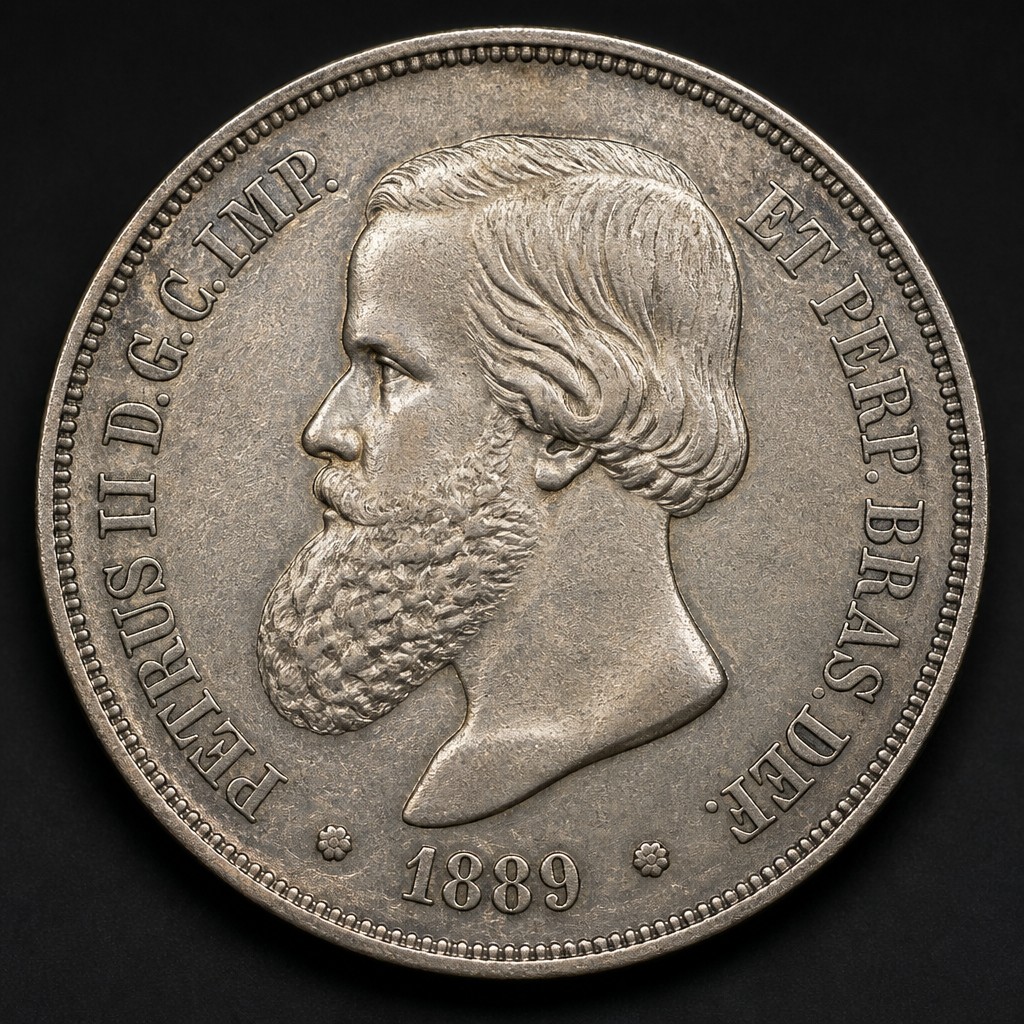
What the Coin Is
The 2$000 réis (two thousand réis) was a silver coin of the Brazilian Empire, struck predominantly during the long reign of Pedro II in the mid-to-late 19th century. It served as a common circulating silver denomination alongside smaller réis coins used in everyday commerce.
Obverse Design & Inscriptions
The obverse shows a right-facing portrait of Emperor Pedro II, with the portrait style evolving from a younger appearance in earlier issues to an older, bearded likeness in later ones. The surrounding legend names the emperor and his imperial titles, encircling the bust.
Reverse Design & Inscriptions
The reverse displays the Brazilian imperial coat of arms — a shield centered on an armillary sphere, flanked by branches, and topped by the imperial crown — with the denomination "2000" or "2$000 REIS" and the date positioned around or below the arms.
Size, Weight, Metal, Edge
Struck in silver, typically around .917 or similar high fineness, the 2$000 réis coin weighs approximately 25.5 grams with a diameter near 37 mm, placing it among the larger silver "crown" coins of its era. The edge is reeded.
Mint Marks & Where to Find Them
The Rio de Janeiro mint produced the great majority of these coins; check near the base of the coat of arms on the reverse for small engraver or mint identifiers.
Telling It Apart from Similar Coins
Because Pedro II's portrait appears on numerous Brazilian denominations of different sizes and metals, always check the specific denomination text ("2000" or "2$000 REIS") alongside the coin's size and weight to avoid confusing it with the smaller 1000 réis or larger gold denominations bearing a similar portrait.
Judging Condition at a Glance
Look at the emperor's hair, beard (on later portrait types), and coat details for the first signs of wear, along with the fine lines of the coat of arms on the reverse. A well-preserved example shows crisp facial detail and legible legend text; a heavily circulated coin presents a smoothed, generalized portrait.
Authenticity Red Flags
Watch for coins with indistinct or doubled lettering, incorrect weight or diameter, or a surface that looks unnaturally shiny or pitted, all of which can indicate a later-made copy. A properly struck genuine coin has clean, consistent reeding on the edge and naturally toned silver surfaces.
Frequently asked questions
Who is shown on the obverse?
Emperor Pedro II of Brazil, whose portrait changes from younger to older (bearded) across different issue years.
What metal is the coin made from?
It's struck in silver, generally around .917 fineness, weighing about 25.5 grams.
How do I avoid confusing it with the 1000 réis coin?
Check the denomination text on the reverse — '2000' or '2$000 REIS' — and compare the size, since the 2000 réis is notably larger and heavier.
Where was this coin struck?
The vast majority were produced at the Rio de Janeiro mint during Pedro II's reign.
What are the first signs of wear to check?
The emperor's hair and facial features on the obverse, along with the fine details of the coat of arms on the reverse, wear smooth first.