
How to Identify the Braunschweig-Lüneburg Thaler
Identify a Braunschweig-Lüneburg Thaler by its many-quartered Welf coat of arms, a standing armored figure on the reverse, Latin titles, and its large silver thaler size.
Read the full Braunschweig-Lüneburg Thaler encyclopedia entry →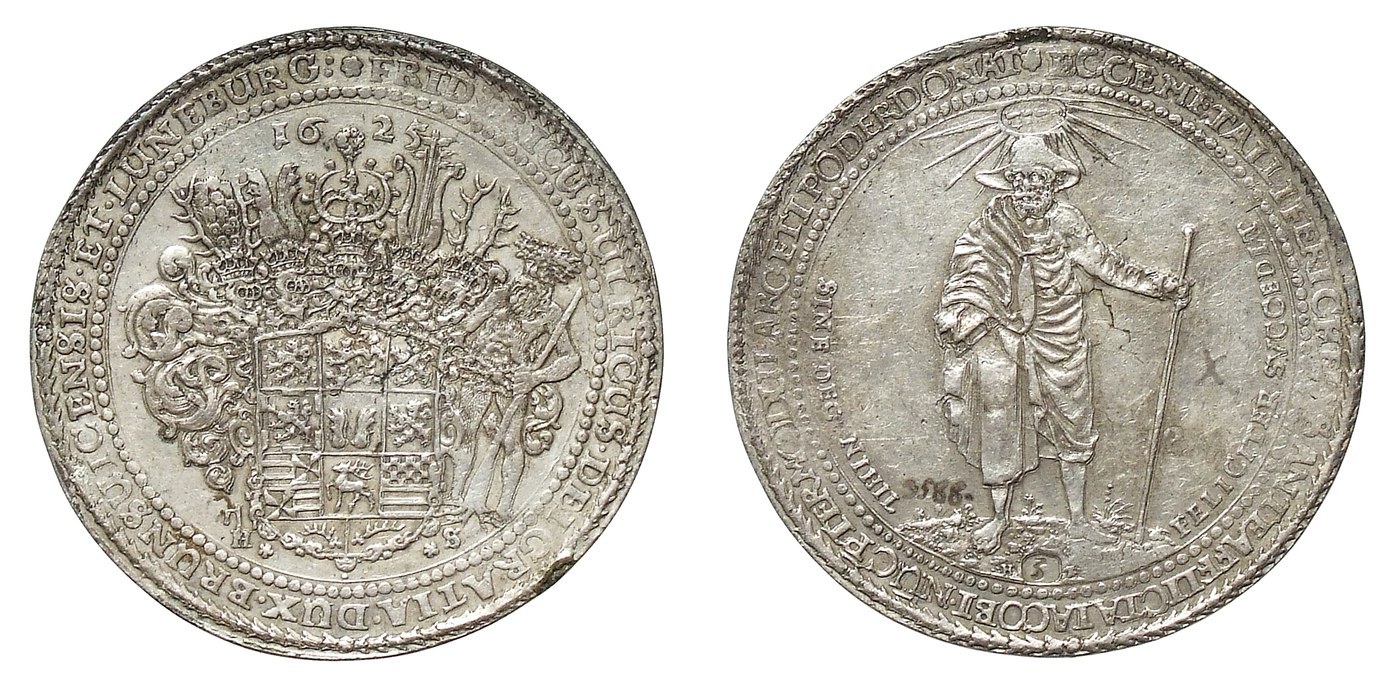
Start with the heraldry. The obverse is dominated by a coat of arms made of multiple shields and quarterings surrounded by ornamental scrollwork — the hallmark of the Welf house of Braunschweig-Lüneburg. Look within the fields for the leaping Saxon horses and the Lüneburg lions among the quarterings, but don't stop there: read the Latin legend around the rim, which names the duke and his titles and is the surest way to attribute the coin to a specific ruler and branch line.
Read the reverse figure and the date. The reverse shows a standing figure in armor holding a staff or weapon, ringed by an elaborate inscription. Note whether it is a heraldic "wild man" holding a tree or club, or an armored duke — the type helps narrow the issue. The date is usually worked into or placed near the legend; matching a legible date to the ruler's name links both faces to the correct variety.
Check size and metal. These are large silver thalers — broad, heavy crown-sized pieces. Weigh and measure the coin and compare against published specifications for the branch and date. Genuine period silver is dense and non-magnetic and often shows old cabinet toning; a piece well off the expected weight or diameter is a warning sign.
Watch for look-alikes. Many German states struck armorial and figural thalers of similar size, and Braunschweig-Lüneburg itself split into branches (Wolfenbüttel, Calenberg/Hanover, Celle) with closely related designs. Confirm the specific titles in the legend, the exact heraldic devices, and the date together rather than judging by the overall look, which can resemble neighboring German-states issues.
Authenticate carefully. Popular thalers are widely copied by casting and striking. Inspect the edge for casting seams, check that the lettering and heraldic detail are crisp rather than soft or mushy, and be wary of silvered base-metal fakes. For any valuable example, compare recent auction records for the same ruler and date and seek a specialist opinion or third-party certification.
Frequently asked questions
How do I tell which duke or branch struck it?
Read the Latin legend around the coat of arms; it abbreviates the ruler's name and titles. The heraldic details and date then narrow it to a branch line such as Wolfenbüttel, Calenberg/Hanover, or Celle.
What is the standing armored figure on the reverse?
Often it is a heraldic wild man holding a tree or club, associated with the Harz mining region, or the armored duke holding a staff or weapon. The exact figure and its attributes vary by issue.
How can I be sure it is silver and the right size?
Weigh and measure it against published thaler specifications for the branch and date. Genuine period silver is dense, non-magnetic, and often toned; readings well off the expected range suggest a fake or a different coin.
What are the main authentication risks?
Cast and struck copies and silvered base-metal fakes are common for popular German thalers. Check the edge for seams, look for crisp heraldic and lettering detail, and have valuable examples professionally authenticated.