
How to Identify the Bourgondische Rijksdaalder
Recognize this Habsburg-Netherlands silver daalder by Philip II's helmeted armored bust, a many-quartered shield with the Golden Fleece collar, and its ~29 g heft.
Read the full Bourgondische Rijksdaalder encyclopedia entry →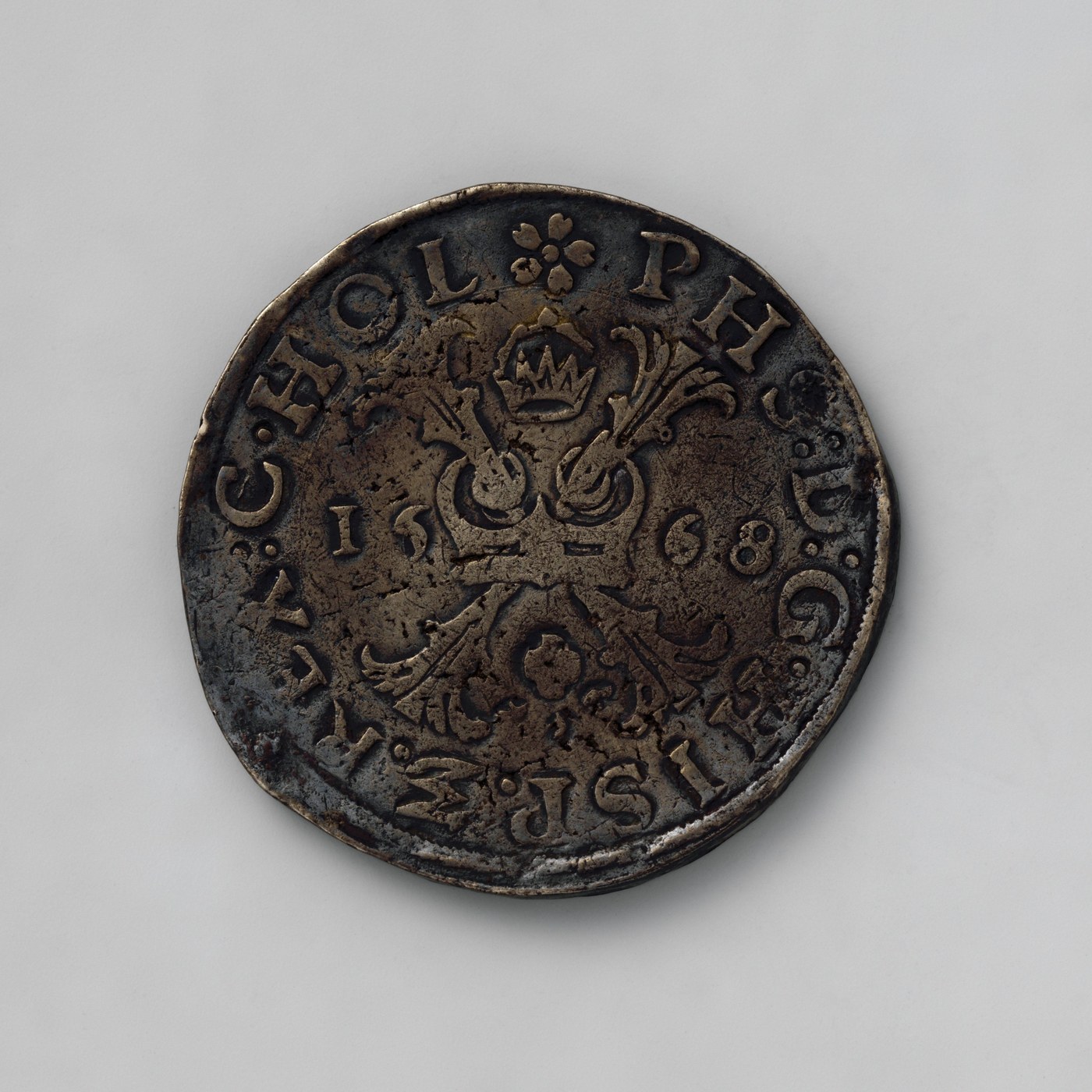
Begin with the portrait, which is the strongest single diagnostic. The Bourgondische Rijksdaalder shows Philip II as a helmeted bust in ornate armor facing right, a distinctly military portrait. If the coin instead shows a bare or crowned head, or no bust at all, you are probably looking at a different daalder type rather than this Burgundian rijksdaalder.
Turn to the reverse and read the heraldry. Expect a compartmented shield combining many blazons, the collected arms of Philip's territories, typically enclosed by the collar of the Order of the Golden Fleece with a small ram's-fleece pendant. A plain single cross or a simple Burgundian saltire on the reverse points instead to the related kruisdaalder or the earlier Philipsdaalder, not this type.
Check size, weight, and metal. This is a big, hefty silver coin, generally around 29 grams and about 40 millimeters wide, on the Reichsthaler standard. It should have the grey-white color and density of high-grade silver, not the lightness of a base-metal copy, and it should not be attracted to a magnet. Read the Latin legends for Philip's name and titles and, importantly, the date, which on genuine pieces is normally present even if abbreviated or partly worn.
Locate the mint mark. Because these coins were produced at several provincial mints of the Habsburg Netherlands, a small privy mark or mintmaster's symbol usually appears in the legend or field and identifies where the coin was struck; this is essential for precise attribution and for distinguishing legitimate provincial variants.
Finally, watch for reproductions. Cast copies show grainy surfaces, soft or 'mushy' detail, and sometimes an edge seam, whereas a genuine struck coin keeps crisp relief in the armor and heraldry even when circulated. Wrong weight, a too-perfect finish, or a portrait style that does not match known examples are warning signs, and any valuable piece should be confirmed by a recognized grading service before money changes hands.
Frequently asked questions
What most quickly separates this coin from other daalders?
The helmeted, armored bust of Philip II combined with a many-quartered heraldic shield and the Golden Fleece collar. That specific pairing distinguishes the Burgundian rijksdaalder from cross-type daalders and from bare-head portrait issues.
How is it different from a Bourgondische kruisdaalder or Philipsdaalder?
Those types typically feature a Burgundian cross or saltire and a different or older portrait treatment. The rijksdaalder here is defined by the helmeted armored bust and the compartmented arms with the Golden Fleece collar.
Do all genuine examples look identical?
No. Because production was spread across several provincial mints, legends, mint marks, and minor details vary. Small differences are expected; use the portrait style, heraldry, weight, and mint mark together to attribute a piece.
Should I have one authenticated?
For anything beyond nominal value, yes. Large silver daalders of this era are sometimes faked or cast, so certification by a recognized grading service or solid provenance protects both buyer and seller.