
How to Identify the Bolivia 8 Soles Silver
Bolivia's silver 8 soles was the largest coin of the early republic (1827–1863), roughly dollar-sized, featuring a standing liberty figure or sun-and-mountain imagery tied to the Cerro Rico mines.
Read the full Bolivia 8 Soles Silver encyclopedia entry →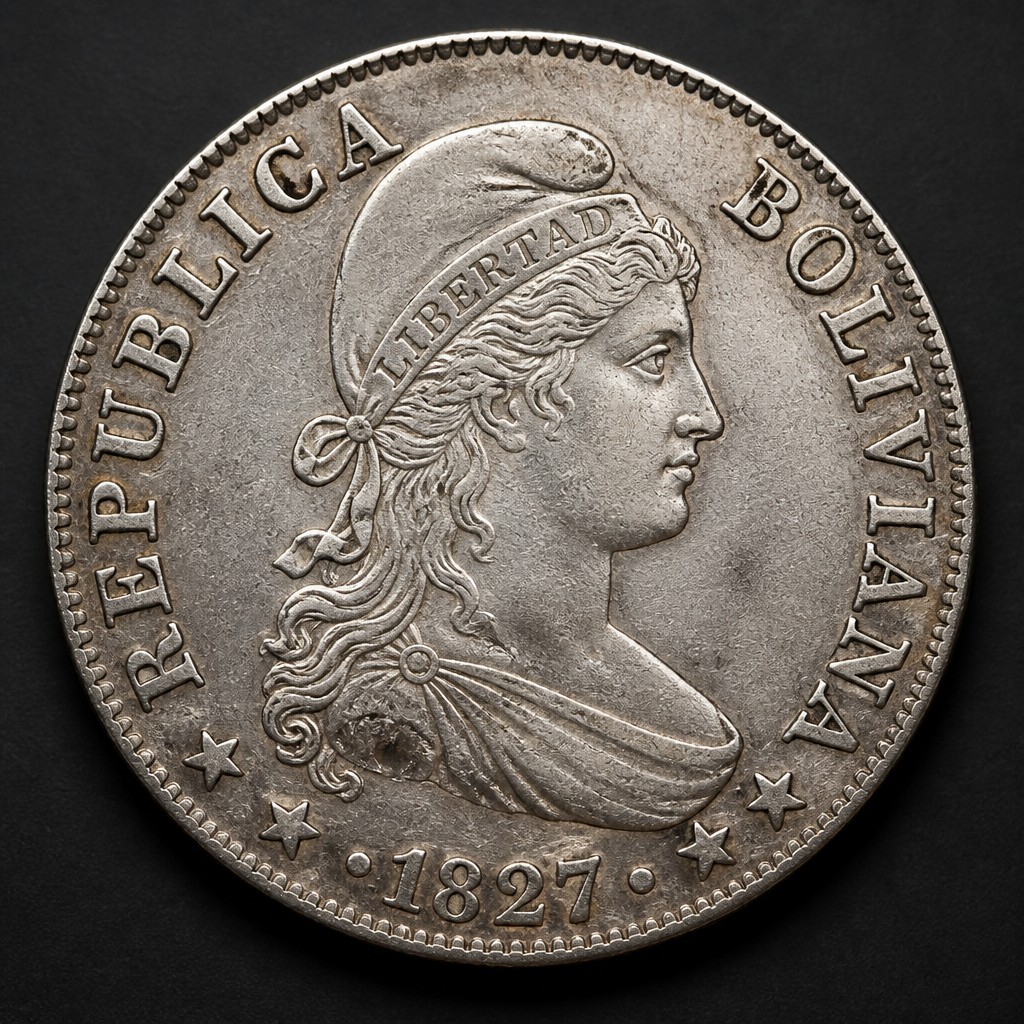
What the Coin Is
After independence, Bolivia's early coinage system was based on the sol, with the 8 soles piece serving as the top denomination — comparable in size and role to the Spanish colonial 8 reales it replaced. These coins were struck primarily at the Potosí mint between the late 1820s and early 1860s, before the boliviano system took over.
Obverse Design & Inscriptions
A common obverse design shows Cerro Rico (the "Rich Mountain" of Potosí) with a rising or setting sun above it, sometimes flanked by llamas, along with a small standing figure representing Liberty or the nation. The legend around the rim typically reads "REPUBLICA BOLIVIANA" with the date.
Reverse Design & Inscriptions
The reverse generally displays a wreath encircling the denomination "8 SOLES," along with the assayer's initials and mintmark. Some varieties include a sun face or additional national emblems worked into the wreath design.
Size, Weight, Metal, Edge
Struck in silver at approximately .900 to .903 fineness, the 8 soles coin weighs close to 27 grams with a diameter near 37–38 mm, putting it in the same size class as a Spanish colonial 8 reales or a U.S. silver dollar. The edge is typically reeded.
Mint Marks & Where to Find Them
The Potosí mintmark "PTS" appears on the reverse near the denomination, paired with assayer initials that changed over the decades — these letter combinations help pinpoint the specific year range of a given coin.
Telling It Apart from Similar Coins
Because the design borrows heavily from the Cerro Rico and sun motifs used on later Bolivian coinage, compare the denomination wording carefully: "8 SOLES" distinguishes this series from the later "BOLIVIANO" coins and from Peruvian 8 reales/soles, which use different national arms.
Judging Condition at a Glance
High points to check for wear include the peak of Cerro Rico, the sun's rays, and the standing liberty figure's drapery. A well-struck, lightly circulated coin shows crisp rays and clear separation between the mountain's terraced lines; heavy wear flattens these into a smooth dome.
Authenticity Red Flags
Genuine pieces have a solid, dense feel and a properly reeded edge without seams. Watch for coins with soft, indistinct sun rays (a sign of a worn or recut die used for a later counterfeit), incorrect weight, or a dull, grainy surface texture inconsistent with struck silver, which can point to a cast fake.
Frequently asked questions
What time period does the 8 soles coin come from?
It was minted in the early Bolivian republic era, roughly from the late 1820s through the early 1860s, before the boliviano replaced the sol.
How big is an 8 soles coin?
It's a large silver coin, about 37–38 mm across and around 27 grams, similar in size to a Spanish 8 reales or U.S. silver dollar.
What does the sun and mountain design represent?
It depicts Cerro Rico, the famous silver-bearing mountain at Potosí, often shown with a sun above it symbolizing the nation's mineral wealth.
Where do I find the mintmark?
Check the reverse near the denomination for 'PTS,' the mark of the Potosí mint, alongside small assayer initials.
How do I know if the surfaces are original?
Original surfaces show fine, even wear patterns following the coin's highest design points; artificially cleaned or polished coins often have unnaturally bright, scratched fields.