
How to Identify the Bolivia 8 Reales (Potosi Mint)
A Spanish colonial and early republican silver 8 reales struck at the prolific Potosí mint, identified by its 'P' or 'PTS' mint mark and, in later issues, a sun-face design.
Read the full Bolivia 8 Reales (Potosi Mint) encyclopedia entry →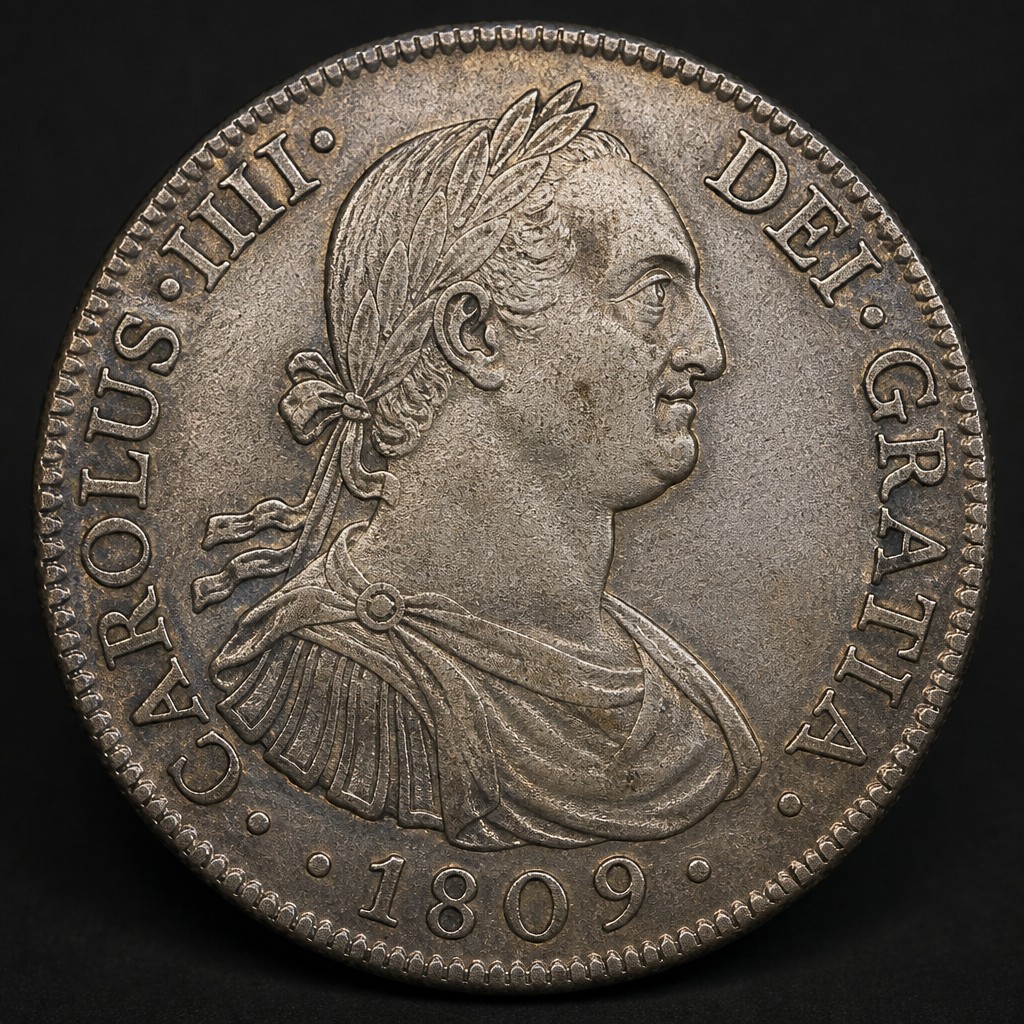
What It Is
Potosí, located in modern-day Bolivia, was one of the richest sources of silver in the Spanish colonial world, and its mint produced enormous quantities of 8 reales coinage for well over two centuries, both under Spanish rule and, after independence, under the new Bolivian republic.
Obverse Design
Earlier colonial issues from Potosí follow the same general styles used across Spanish America: hand-struck cob coinage in the earliest period, followed by the crowned pillars-and-globes "pillar dollar" design, and later a portrait bust of the reigning Spanish king. After independence, Bolivian 8 reales (and later 8 soles) instead adopted a radiant sun-face design, a motif strongly associated with early Bolivian and Peruvian republican coinage.
Reverse Design
Colonial-era reverses mirror other Spanish American mints of the same period, showing crowned pillars and globes or the Spanish royal shield depending on era. Post-independence Bolivian coinage instead typically shows a standing figure or the national coat of arms alongside the denomination, reflecting the country's new republican identity.
Size, Weight, and Metal
An 8 reales coin from Potosí weighs close to 27 grams in silver, with fineness and exact specifications varying by era, from the irregular hand-cut cobs of the earliest period to the more standardized, round milled coinage introduced later in the eighteenth century.
Mint Marks
Look for a "P" or "PTS" mint mark identifying Potosí, generally paired with assayer initials that changed periodically. This mint mark is the most direct way to confirm a coin's Potosí origin as opposed to other prolific colonial mints such as Mexico City or Lima.
Telling It Apart from Similar Coins
Because so many Spanish American mints produced visually similar 8 reales, the "P" or "PTS" mint mark is essential for confirming a Potosí origin. Separately, coins from before and after Bolivian independence look quite different: colonial pieces follow the Spanish royal design themes, while post-independence Bolivian coinage introduces distinctly republican imagery such as the sun face.
Judging Condition
On cob-era pieces, condition assessment focuses on how much of the design is visible due to the hand-striking process, while later milled coins are judged more conventionally, with wear first appearing on the highest points of the crowns, portrait, or sun-face rays depending on the specific type.
Authenticity Red Flags
Given the historical importance and popularity of Potosí coinage, check for a legible, correctly formatted mint mark, appropriate weight for the coin's era and type, and design details consistent with known references for that specific period. Unusually crude lettering, incorrect weight, or a mint mark that does not match the expected style for the coin's apparent date should prompt closer examination before assuming authenticity.
Frequently asked questions
How do I know a coin was struck at Potosí?
Look for a 'P' or 'PTS' mint mark on the coin, generally paired with assayer initials, distinguishing it from coins produced at other Spanish colonial mints.
Why do some Potosí 8 reales look irregular and hand-cut?
The earliest Potosí silver coinage was produced as hand-struck cobs before machine milling was introduced, resulting in irregular shapes and off-center designs.
What changed in Potosí coinage after Bolivian independence?
Post-independence coinage moved away from Spanish royal imagery toward republican designs, including a distinctive radiant sun-face motif associated with early Bolivian coinage.
How much silver does an 8 reales from Potosí contain?
It generally weighs close to 27 grams in silver, though exact fineness and specifications vary depending on the specific era of striking.