
How to Identify the Boeotia Federal Coinage Stater
A silver stater struck by the Boeotian League, identifiable at a glance by its distinctive round shield with cut-out sides on the obverse.
Read the full Boeotia Federal Coinage Stater encyclopedia entry →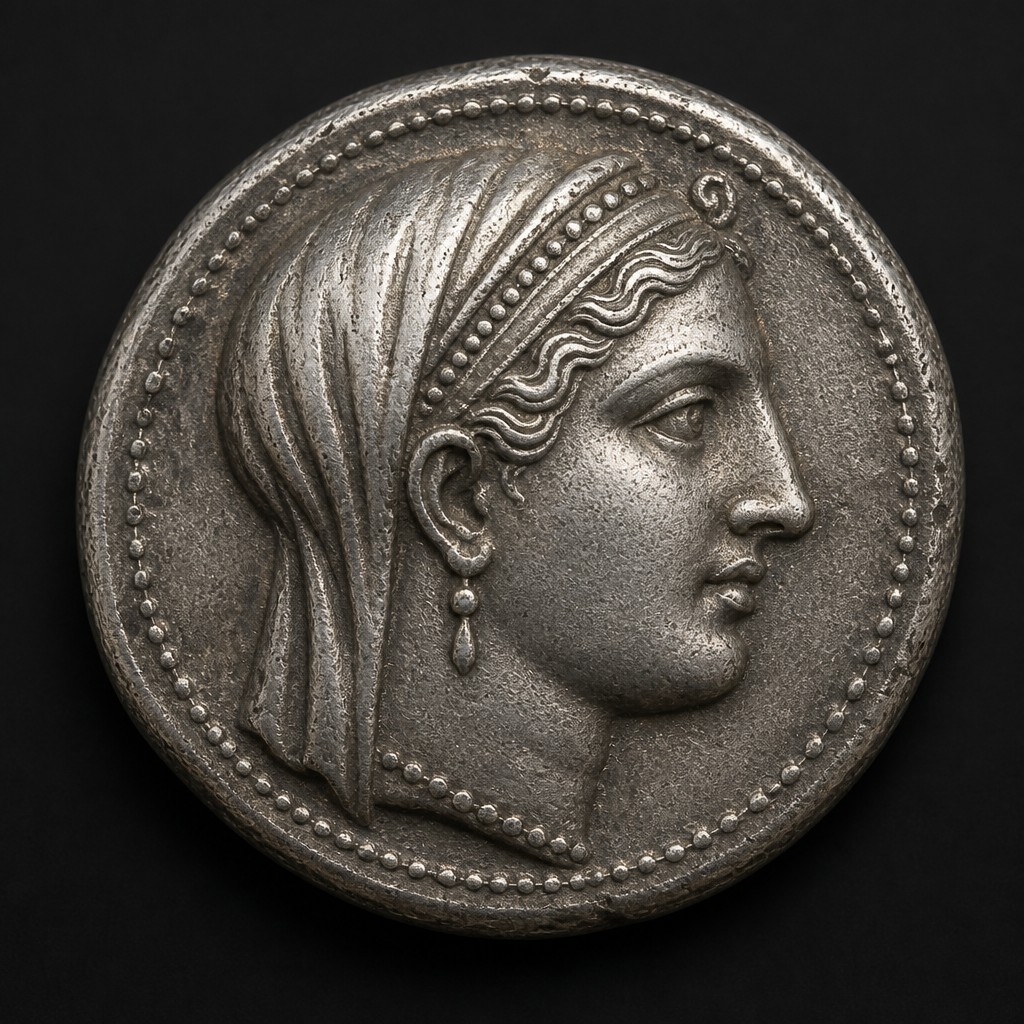
What the Coin Is
Boeotia was a region of central Greece whose cities, including Thebes, banded together at various points into a federal league that issued shared coinage bearing a common civic emblem. These silver staters were struck over several periods from the fifth through the fourth centuries BC, reflecting the political fortunes of the league as it expanded and contracted.
Obverse Design
The obverse consistently shows the Boeotian shield, a round shield with deep semicircular cut-outs on each side, giving it a distinctive figure-eight silhouette that makes this coinage instantly recognizable even to non-specialists. This shield was the standing badge of the Boeotian confederation across its various coinages.
Reverse Design
Reverse types vary considerably depending on the period and the specific city responsible for a given issue, since individual member cities took turns striking coinage in the league's name. Common reverse motifs include an amphora, a kantharos (wine cup), a head of Herakles, or a head of Dionysos, often accompanied by the name or initial of the responsible magistrate or city, set within an incuse square that ranges from a simple sunken square on earlier issues to a more refined recessed frame later.
Size, Weight, and Metal
These are silver staters (didrachms) struck on the Aeginetic weight standard, generally weighing close to 12 to 12.2 grams, noticeably heavier than the Attic-standard staters used in many other parts of Greece. This heavier standard is a useful quick check when weighing a suspected example.
Mint Marks and Where to Find Them
Because production rotated among member cities, look for a city initial or magistrate's name near the reverse type; Thebes in particular often used the letters ΘΕ or a similar abbreviation. These letters, together with the reverse symbol chosen, allow specialists to attribute a given stater to a specific city and approximate date within the league's history.
Telling It Apart from Similar Coins
The cut-out Boeotian shield is essentially unique in Greek coinage and is rarely confused with any other city's badge, making the obverse alone a strong identifier. The reverse type and accompanying letters are then used to pin down which member city or period produced a specific coin, since the same shield obverse was used consistently across a long span of years and several different reverse motifs.
Judging Condition at a Glance
On the obverse, check the crispness of the shield's outline and the cut-out sections, which should appear as clean, well-defined curves rather than a blurred oval. On the reverse, the fine details of the amphora handles, the kantharos stem, or a portrait head are the first to wear away, so sharper detail here indicates a better-preserved coin.
Authenticity Red Flags
Modern reproductions of the Boeotian shield type sometimes render the shield's cut-outs too shallow or too deep compared to genuine dies, or place the reverse legend in an inconsistent position. As with other ancient silver, be wary of coins with unusually light weight for their apparent size, a suspiciously uniform surface color, or a seam line around the edge, all of which point toward a cast copy rather than a genuinely struck ancient coin.
Frequently asked questions
Why does the reverse design change so much on these coins?
The Boeotian League rotated minting responsibility among its member cities over time, and each city or period introduced its own reverse type and magistrate names while keeping the shared shield obverse.
What is the shape on the obverse supposed to represent?
It represents the Boeotian shield, a real type of round shield with cut-out sides used by Boeotian warriors, which became the standard civic badge of the federal coinage.
What weight standard should I check against?
Boeotian federal staters were struck on the Aeginetic standard, so a genuine example should weigh approximately 12 to 12.2 grams.
How can I tell which city struck a particular coin?
Look for a city initial or magistrate's name near the reverse symbol; Thebes, for example, commonly used letters abbreviating its name alongside its chosen reverse type.