
How to Identify the Bluenose Ten Cents (dime)
Canada's modern dime design, introduced in 1937 and still in use today, featuring the famous Nova Scotian schooner Bluenose under full sail on the reverse.
Read the full Bluenose Ten Cents (dime) encyclopedia entry →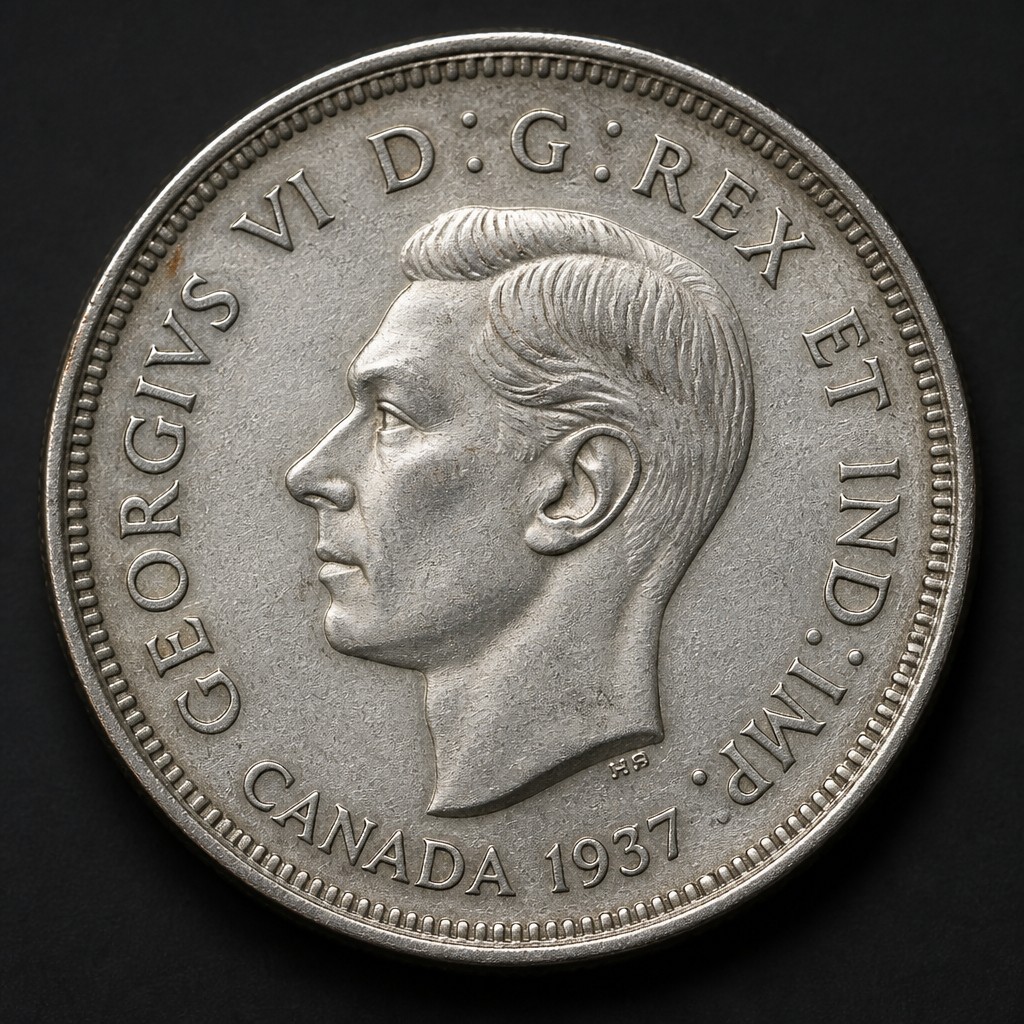
What It Is
Introduced in 1937 under King George VI, this design replaced the old maple wreath dime with an image of the Bluenose, a celebrated Canadian racing and fishing schooner. The design, created by Emanuel Hahn, has continued largely unchanged through the reigns of later monarchs and remains Canada's dime design today.
Obverse Design
The obverse carries a portrait of the reigning monarch at the time of striking: King George VI from 1937 to 1952, Queen Elizabeth II from 1953 into the 2020s, and King Charles III from 2023 onward, with legend wording updated to match each reign.
Reverse Design
The reverse shows the schooner Bluenose under full sail on open water, with CANADA arched above and "10 CENTS" and the date below.
Size, Weight, Metal & Edge
The coin is round, about 18.03mm in diameter, with a reeded edge maintained throughout the design's history. It was struck in silver (.800 fine by this period) through most of 1968, when Canada transitioned away from silver coinage to pure nickel; in more recent years, dimes have been struck in nickel-plated steel.
Mint Marks
Coins were produced by the Royal Canadian Mint, and standard circulation issues do not carry mintmarks.
Telling It Apart From Similar Coins
Because this design has remained visually consistent for so long, the obverse portrait style is the best way to place a coin within a particular monarch's reign, after which the date narrows it further. Distinguishing a silver-era Bluenose dime from a later nickel or steel one can be done by weight and with a simple magnet test, since steel-core coins are magnetic while silver and nickel examples are not. It should also not be confused with the earlier wreath-design dime that it replaced in 1937, which shows a maple leaf wreath rather than a ship on the reverse.
Judging Condition
Examine the rigging lines and hull details of the ship on the reverse, and the portrait's hair or laurel detail on the obverse, for smoothing from wear. On well-preserved examples, individual mast and rigging lines remain distinct, while heavily worn coins show a flattened, blurred outline of the ship.
Authenticity Red Flags
Given the huge number of common-date Bluenose dimes in existence, outright counterfeiting is uncommon for ordinary dates. The main concern with older silver examples is aggressive cleaning meant to disguise true wear; look for unnatural shine or fine hairline scratches under magnification before judging a coin's grade.
Frequently asked questions
What ship is shown on the reverse?
It depicts the Bluenose, a famous Nova Scotian racing and fishing schooner, shown under full sail.
How long has this design been used?
It was introduced in 1937 and, aside from updated obverse portraits, has remained Canada's standard dime design ever since.
How can I tell a silver Bluenose dime from a newer one?
Weigh it and try a magnet test; silver and pure nickel dimes are non-magnetic, while modern nickel-plated steel dimes are magnetic and slightly lighter.
When did Canada stop using silver for dimes?
Silver was phased out during 1968, after which the dime was struck in pure nickel and, more recently, nickel-plated steel.
Does the coin have a mintmark?
No, standard circulation Bluenose dimes do not carry mintmarks.