How to Identify the Bicentennial Quarter
How to confirm the dual 1776-1976 date, the Colonial drummer reverse, clad versus silver composition, and mint marks on this one-year type.
Read the full Bicentennial Quarter encyclopedia entry →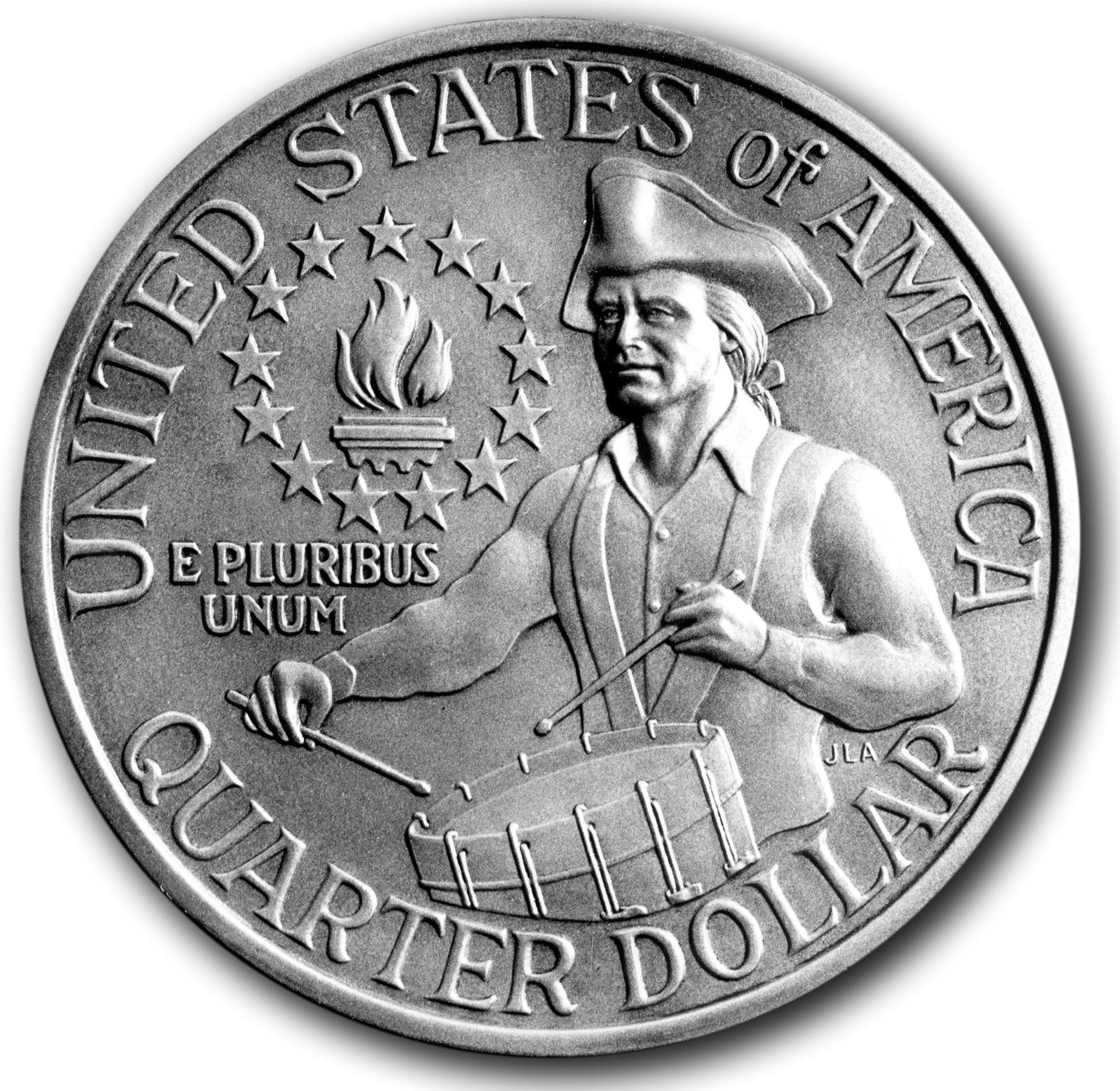
Confirm the Dual Date on the Obverse
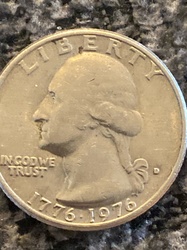
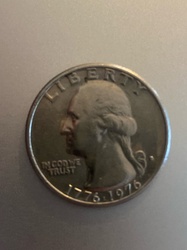
Start with Washington's portrait. A Bicentennial Quarter shows the standard right-facing George Washington with "LIBERTY" above and "IN GOD WE TRUST" in the left field, but the date reads "1776-1976" instead of a single year. That dual date is the fastest and most reliable identifier — if a Washington quarter carries it, you have a Bicentennial coin. No genuine Bicentennial quarter is dated with only "1976."
Check the Drummer Reverse
Turn the coin over and look for the Colonial drummer: a soldier facing left beating a drum, with a torch ringed by thirteen stars in the upper field. The legends read "UNITED STATES OF AMERICA" around the top, "E PLURIBUS UNUM" in small letters, and "QUARTER DOLLAR" along the bottom. This drummer design is unique to 1975-1976; a quarter with the usual eagle reverse is not a Bicentennial type even if it turns up alongside them.
Tell Clad From Silver
Most drummer quarters are copper-nickel clad. Look at the reeded edge: a plain copper-colored stripe sandwiched between silvery outer layers confirms a standard clad coin, which is worth face value. The special 40% silver versions, made only at San Francisco for collector sets, show a more uniformly light edge and a slightly heavier feel. Silver examples generally reach the public already removed from circulation, so a drummer quarter from pocket change is almost always clad.
Read the Mint Mark
The mint mark sits on the obverse, just to the right of Washington's neck near the ribbon end. No mint mark means Philadelphia, "D" is Denver, and "S" indicates a San Francisco coin — the S coins are proofs or silver-clad pieces made for collectors rather than for circulation. Mint mark plus surface quality, not the date, is what distinguishes an ordinary example from a more desirable one.
Watch for Look-Alikes and Altered Coins
Because the coins are common, be skeptical of sellers claiming huge values for ordinary circulated drummer quarters. Genuine premium value comes from the silver-clad and proof issues, high certified grades, or verified mint errors. Avoid coins with added or removed mint marks, artificial toning, or "rare" claims that ignore the type's massive mintage, and rely on a reputable third-party grading service to confirm anything that appears unusual.
Frequently asked questions
How can I quickly tell a Bicentennial Quarter from a normal one?
Check the date and the reverse. A Bicentennial coin reads "1776-1976" under Washington and shows a Colonial drummer on the back instead of the eagle. Either feature confirms the one-year type.
Does the drummer quarter contain any silver?
Only the special San Francisco 40% silver versions do, and those were sold in collector sets. Standard circulation coins are copper-nickel clad; the copper stripe on the edge is the giveaway.
Why is there no 1975 Bicentennial Quarter?
None were dated 1975. Coins struck in both 1975 and 1976 carry the dual date "1776-1976," so a single-1975-dated drummer quarter does not exist.
Should I clean a Bicentennial Quarter to see it better?
No. Cleaning leaves hairlines and hurts value, especially on uncirculated or proof coins. Examine it under good light and magnification, and leave any conservation to professionals.
Bicentennial Quarter identified by the community
Recent Bicentennial Quarter coins identified with Coin Identifier.