
How to Identify the Bhutan 5 Sengtrum
A collector's guide to Bhutan's 1979 five-Sengtrum coin: the national emblem, the gateway reverse, its cupro-nickel flan, and how to tell it from look-alikes.
Read the full Bhutan 5 Sengtrum encyclopedia entry →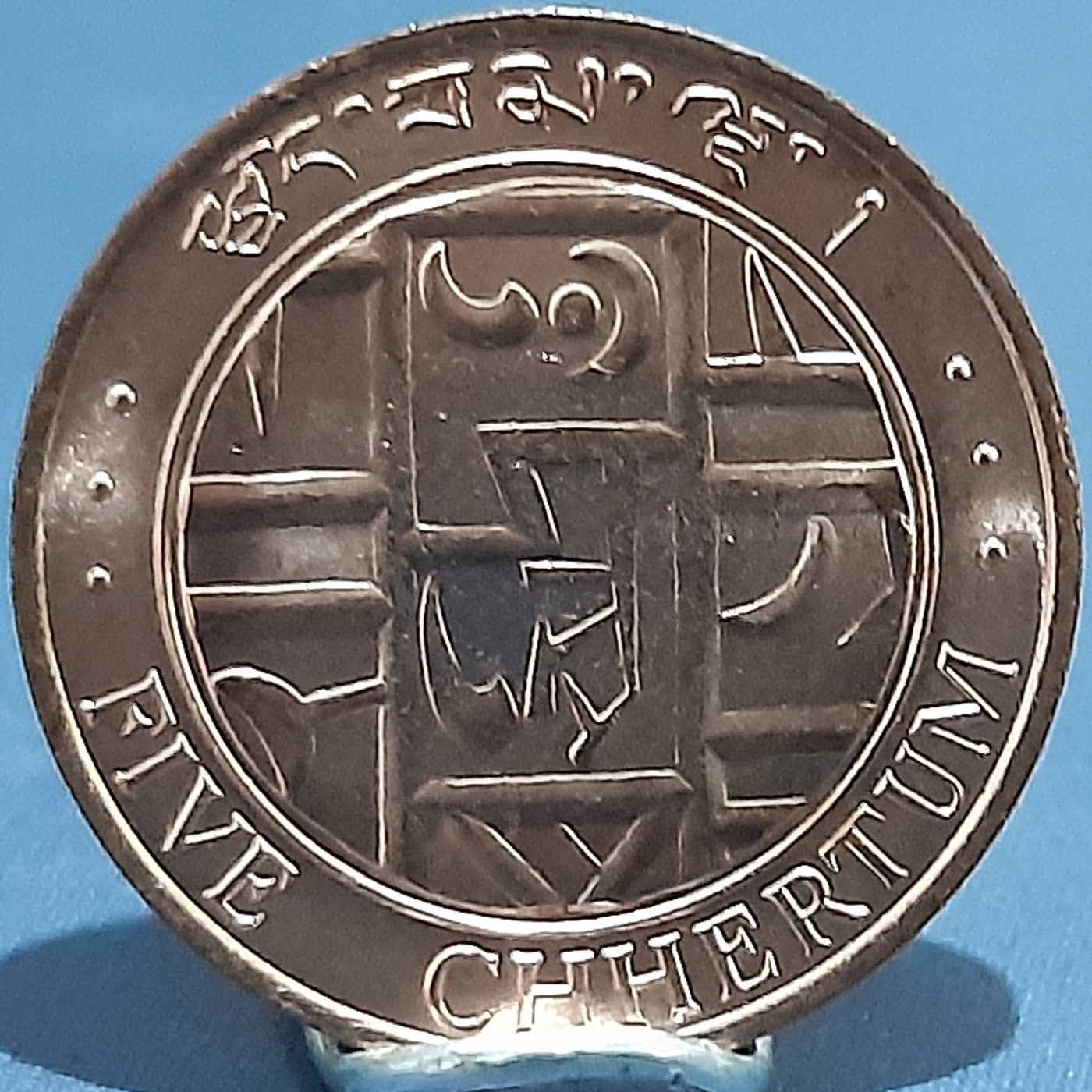
Begin with the metal and size. The 5 Sengtrum is a small, light coin struck in cupro-nickel, so it has the pale silvery-grey tone of a nickel alloy rather than the yellow of brass or the reddish-brown of bronze. A genuine piece is a cleanly struck circulation coin; expect even machine-made relief, with softened high points only where wear has smoothed the design. A coin that is strongly magnetic, brassy-yellow, or far off in size for a minor denomination should be treated with caution.
Read the obverse for the national identity. The central device is the national arms and emblem of Bhutan, the symbolic design the kingdom placed on its decimal coinage. This national styling ties the piece to Bhutan rather than to any neighbouring Himalayan or Indian issue, and it is the first thing to confirm when attributing the coin.
Use the reverse to lock in the type. The reverse shows a traditional Bhutanese architectural gateway, a symmetrical structure that stays recognisable even on worn coins, accompanied by the date 1979. Together the gateway motif, the 1979 date and the five-Sengtrum value are the combination that identifies this specific denomination within Bhutan's decimal series.
Separate it from its siblings. Bhutan's other minor decimal coins of the same era share the national emblem and a broadly similar look, so the safest way to distinguish the 5 Sengtrum is to read the stated value and compare the diameter and reverse design. The architectural gateway reverse and the small cupro-nickel flan are what set this piece apart from the other low denominations.
For authentication, weigh and measure the coin and compare it against catalogue figures for the 1979 five-Sengtrum issue, since a correct diameter, weight and non-magnetic cupro-nickel composition are the simplest checks. As a common, low-value modern coin it is rarely faked, so the practical questions are usually accurate attribution and honest grading rather than forgery; when the emblem or gateway is unclear, photograph both faces and check the design and date against standard references for modern Bhutanese coinage.
Frequently asked questions
What is the quickest way to recognise the Bhutan 5 Sengtrum?
Look for a small silvery-grey cupro-nickel coin with Bhutan's national emblem on the obverse and a traditional architectural gateway on the reverse, dated 1979 with a value of five Sengtrum. The gateway reverse is the surest identifier.
How do I tell it apart from Bhutan's other minor coins?
The low denominations of the same era share the national emblem, so read the stated value and compare the size and reverse design. The 5 Sengtrum is marked by its architectural gateway reverse and its small cupro-nickel flan.
How can I confirm the metal and that it is genuine?
Cupro-nickel is pale grey and only weakly affected by a magnet. Check that the colour is silvery rather than brassy or reddish, and weigh and measure the coin against catalogue figures for the 1979 issue. Sharp, even struck detail points to an authentic circulation piece.
Does condition matter for such a small coin?
Yes. Most survivors are circulated with softened detail, so examples that keep a crisp emblem and clear gateway with clean surfaces stand out and can carry a modest premium, even though the coin is common overall.