
How to Identify the Bermuda Half Penny
Identify the Bermuda Half Penny by its lion-crested arms with pineapples, Latin motto, crowned reverse shield, small size and pale copper-nickel colour.
Read the full Bermuda Half Penny encyclopedia entry →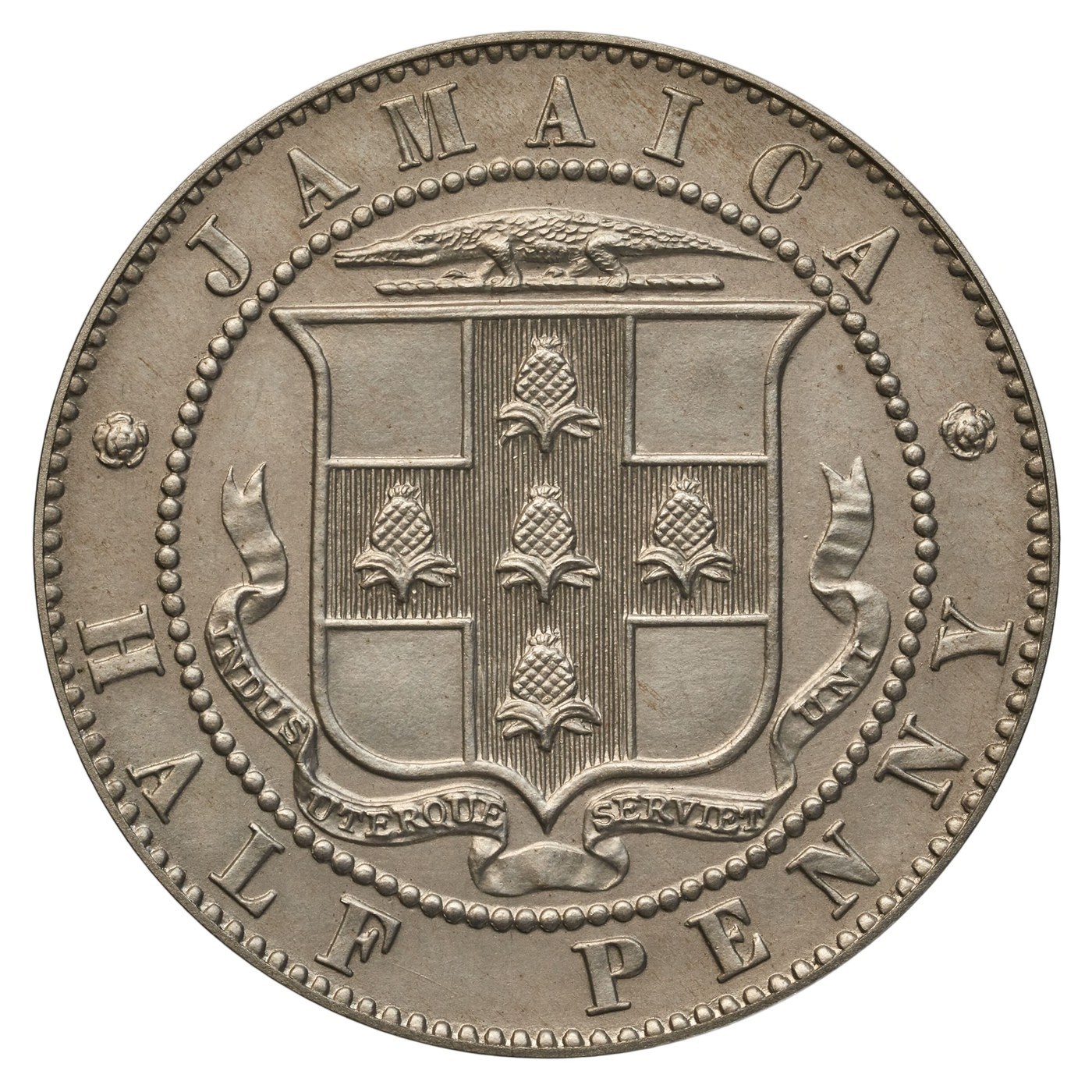
Start with the overall design language. Unlike coins that lead with a royal portrait, this half penny is armorial on both sides: the obverse is a coat of arms crowned by a lion crest with pineapples and a Latin motto, and the reverse is a heraldic shield beneath a crown. If you are looking at a bust-and-value layout, you have a different coin.
Read the obverse heraldry closely. Confirm the lion crest sits above the arms, look for the pineapple motifs, and check that the surrounding legend is in Latin. These three cues together are the strongest single test for the type, because pineapple-and-lion armorial small coins are distinctive within British colonial series.
Check the reverse and date. The reverse should present a shield of heraldic charges under a crown rather than a large denomination numeral, and the date 1909 should appear in the legend. Verify the date is consistent and struck up rather than tooled or added.
Assess metal, size and colour. This is a small copper-nickel piece, so expect a pale silver-grey surface, not the brown patina of bronze, and a diameter and weight appropriate to a half penny. Compare against a trusted reference for the type; a coin that is the wrong colour, size or weight, or that a magnet grabs strongly, warrants suspicion of a plated or altered piece.
Authenticate with care. Small colonial issues can be imitated or misattributed, so weigh and measure the coin, examine the sharpness of the lion, pineapples and shield under magnification, and be wary of cast seams, filed edges or soft, greasy detail. For any example of real value, or where the attribution is uncertain, seek third-party grading or an expert opinion.
Frequently asked questions
What is the fastest way to recognise this coin?
Look for the armorial layout: a lion-crested coat of arms with pineapples and a Latin motto on the obverse, and a crowned heraldic shield on the reverse, with the 1909 date in the legend.
How do I tell copper-nickel from bronze?
Copper-nickel is pale silver-grey, while bronze small coins are reddish-brown. Colour is the quickest clue, backed up by checking weight and diameter against a reference.
Where do I find the date?
The date 1909 appears in the legend around the design. Confirm it is crisply struck and consistent with the rest of the lettering rather than tooled or re-cut.
How can I be sure it is genuine?
Match the colour, size and weight to a trusted reference, inspect the heraldic detail under magnification for casting or tooling, and have valuable or doubtful pieces authenticated by a grading service.