
How to Identify the Belize 1 Cent
A collector's guide to recognizing this small bronze one-cent coin by its Elizabeth II portrait, 1954 date, colour and size.
Read the full Belize 1 Cent encyclopedia entry →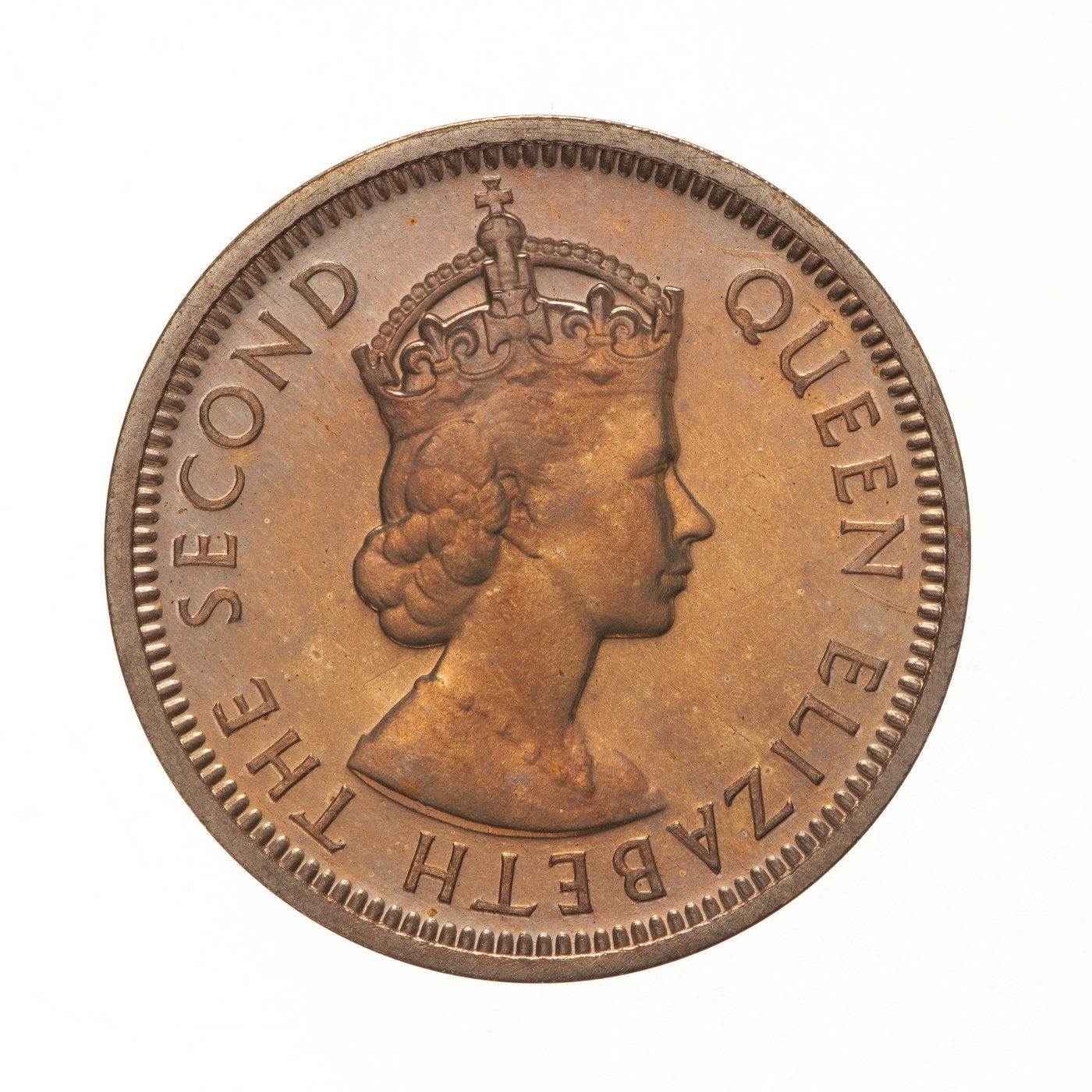
Begin with the portrait and legend on the visible side. A coin of this type shows a portrait of Queen Elizabeth II framed by a royal legend running around the rim. Read the legend and the surrounding text carefully, since the wording and the monarch shown confirm both the issuing authority and the era of the coin.
Find and read the date. This example carries 1954, which is an important clue: it places the coin in the colonial period when the territory was administered as British Honduras, before it was renamed Belize in 1973. The date pins the coin to a specific issue and helps you separate it from later cents of the same country.
Check colour, size and metal together. This is a small coin struck in bronze, so it should look reddish-brown to dark brown, often darkening with age. That warm tone is the key separator from the pale, silver-coloured higher denominations. A coin of similar size but silver colour is a different denomination, not the bronze cent.
Examine the value side if you have the coin in hand. The reverse is not shown in this image, but on the physical coin it should carry the one-cent denomination along with the issuing name and any heraldic or decorative device. Confirming the value side against a reference image of the same issue is the surest way to complete the identification.
Rule out look-alikes and watch condition. Many Commonwealth colonies struck small bronze Elizabeth II cents of similar size and colour in the 1950s, so do not identify by portrait and metal alone — confirm the country name and the exact date. Because these are low-value circulation coins they are rarely counterfeited, so most concerns are about grade: watch for corrosion, spotting, cleaning and heavy wear that blur the portrait, and compare with a confirmed example of the same date for grading.
Frequently asked questions
What is the fastest way to identify this coin?
Confirm the Elizabeth II portrait and royal legend on the visible side, read the 1954 date, and check that the metal is bronze. Together these point to a colonial-era one-cent coin of this country.
How do I tell the cent from higher denominations?
By colour and size. The cent is a small bronze coin with a reddish-brown tone, while the higher values are larger and pale silver-coloured. A silver-coloured coin is not the bronze cent.
Could this be a small cent from another Commonwealth country?
Yes — many colonies issued similar small bronze Elizabeth II cents in the 1950s. Always confirm the country name and the exact date rather than relying on the portrait and colour alone.
Does wear or corrosion affect identification?
For identification the portrait, legend and date are usually enough. For value, corrosion, spotting and heavy wear lower the grade, so cleaner, sharper coins are preferred.