
How to Identify the Belgian Franc
Belgium's national currency coin from independence through the euro era, identifiable by its royal portrait or lion arms and dual-language legends.
Read the full Belgian Franc encyclopedia entry →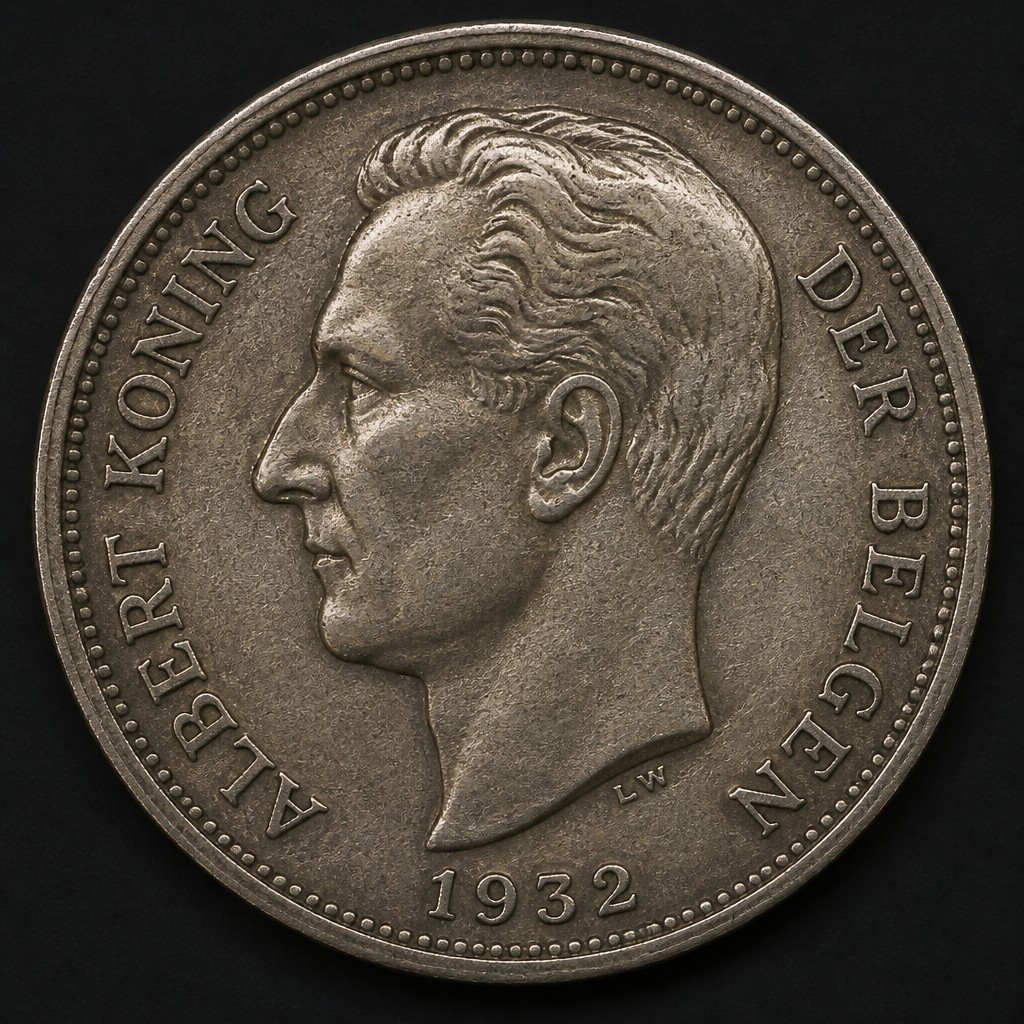
What Is the Belgian Franc?
The Belgian Franc was adopted as the country's official currency following independence in 1830 and remained in use, later as part of the Latin Monetary Union from 1865, until Belgium switched to the euro in 2002. Over this long span, Franc coins were issued under several kings and in a variety of metals and design styles.
Obverse Design
Most Belgian Franc coins display a profile portrait of the reigning king — Leopold I, Leopold II, Albert I, Leopold III, or Baudouin, depending on the era — with a legend naming the king and his title. A distinctive feature of Belgian coinage is that it was struck in two language versions: one reading "BELGIQUE" (French) and the other "BELGIE" (Dutch/Flemish), reflecting the country's bilingual population.
Reverse Design
The reverse typically shows the denomination within a wreath, or in some issues the Belgian lion taken from the national coat of arms. The national motto "L'UNION FAIT LA FORCE" ("Unity is Strength") or its Flemish equivalent "EENDRACHT MAAKT MACHT" often appears somewhere on the coin.
Size, Weight & Metal
Belgian Franc coins were struck in various metals over their long history, including silver for early and Latin Monetary Union-era issues and later nickel or cupronickel as the currency modernized. Size and weight depend on the specific denomination and date, so always compare against the stated face value for that particular issue.
Mint Marks
Belgian coins were produced at the Royal Mint of Belgium in Brussels. Because the language variant (French versus Flemish) is a more prominent identifying feature than a physical mint mark for this series, checking which legend appears is often the fastest way to sort varieties within the same date and denomination.
Telling It Apart from Similar Coins
Because Belgium was part of the Latin Monetary Union alongside France, Italy, and Switzerland, its silver coinage from that period shares similar sizes and weights with French Francs and Italian Lire of equivalent value. The clearest distinguishing features are the king's identity, the "BELGIQUE"/"BELGIE" wording, and the Belgian lion or national motto, none of which appear on the coinage of other member countries.
Judging Condition at a Glance
Examine the king's hair and facial features, along with the fine details of the lion or wreath on the reverse. A well-preserved coin retains crisp separation in these areas, while a worn example shows a smoothed portrait and faint, shallow lettering, especially around the rim.
Authenticity Red Flags
Verify that the language pairing on obverse and reverse is consistent with known genuine issues for the date (some years exist in both language versions as separate, correctly matched coins), and check that the weight and metal color align with the expected standard for that specific year and denomination. A muddled or inconsistent strike, or lettering that doesn't match the crisp official style, can indicate a lower-quality counterfeit.
Frequently asked questions
Why do some Belgian Franc coins say 'BELGIE' and others say 'BELGIQUE'?
Belgium is bilingual, so Franc coins were struck in both French ('BELGIQUE') and Dutch/Flemish ('BELGIE') language versions.
What replaced the Belgian Franc?
The euro replaced the Belgian Franc when Belgium completed its currency changeover in 2002.
Who appears on the obverse of Belgian Franc coins?
The reigning Belgian king at the time of issue — Leopold I, Leopold II, Albert I, Leopold III, or Baudouin, depending on the coin's date.
What does the Belgian national motto say?
'L'UNION FAIT LA FORCE' in French or 'EENDRACHT MAAKT MACHT' in Flemish, both meaning 'Unity is Strength.'
How do I tell a Belgian Franc apart from a similar French or Italian coin?
Check for the king's identity, the 'BELGIQUE'/'BELGIE' wording, and the Belgian lion or national motto, which are unique to Belgian issues.