
How to Identify the Belgian 5 Francs
A silver crown-sized coin issued by the Kingdom of Belgium featuring the reigning king's portrait, struck in both French and Dutch legend varieties.
Read the full Belgian 5 Francs encyclopedia entry →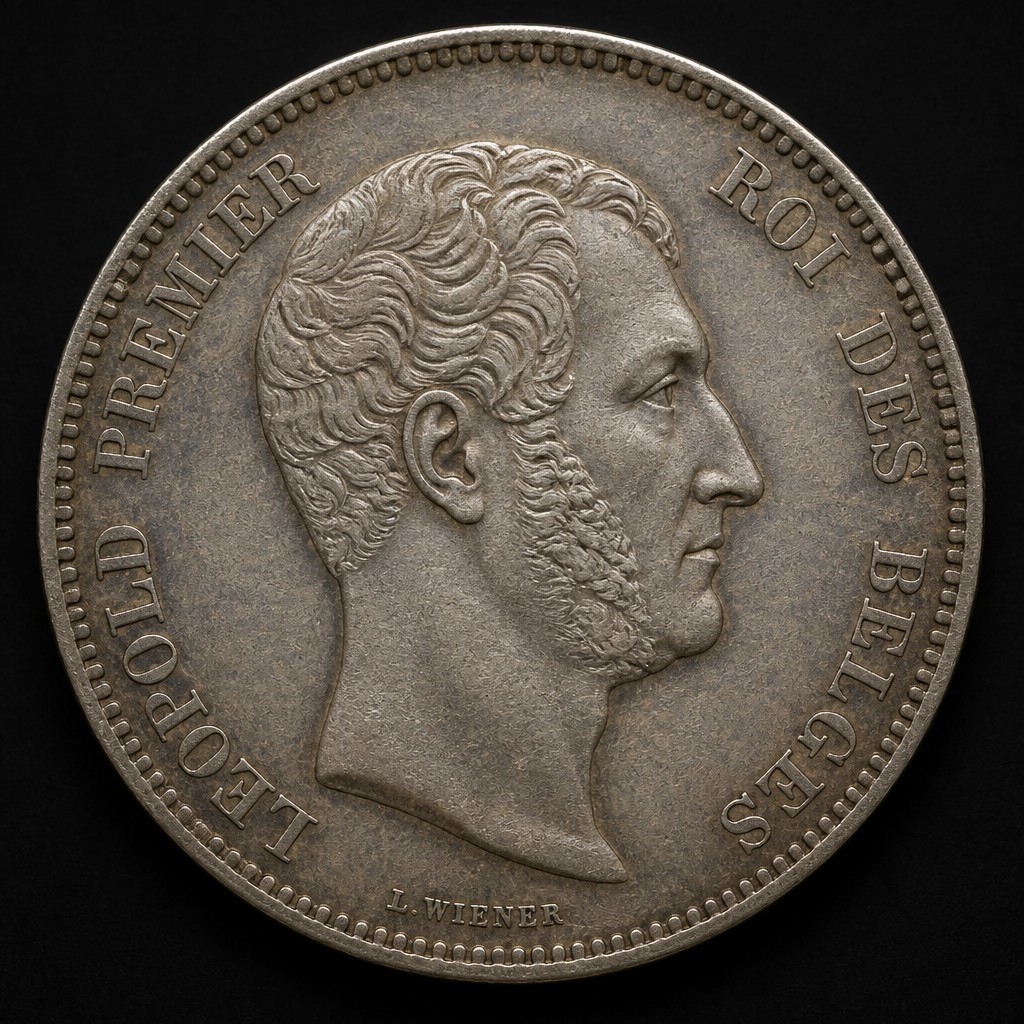
What This Coin Is
The Belgian 5 Francs is a large silver coin issued by the Kingdom of Belgium beginning shortly after independence in 1830, continuing through the reigns of Leopold I, Leopold II, and later monarchs in various metal compositions. Because Belgium has two main language communities, many dates were struck in both French ("BELGES") and Dutch ("BELGEN") legend versions, a bilingual practice that continued across much of the country's coinage history.
Obverse Design & Inscriptions
The obverse shows the bare or laureate head of the reigning king in profile, with his name and regnal title around the rim, such as "LEOPOLD PREMIER ROI DES BELGES" or "LEOPOLD II ROI DES BELGES." The engraver's initials often appear in tiny letters at the base of the neck.
Reverse Design & Inscriptions
The reverse typically displays the crowned Belgian national arms or a wreathed value, with "5 FRANCS" or "5 FR" and the date. Legend variants read either "L'UNION FAIT LA FORCE" (French) or "EENDRACHT MAAKT MACHT" (Dutch), both meaning "Unity makes strength," Belgium's national motto.
Size, Weight, Metal, and Edge
Early silver issues are large crowns around 37 mm and 25 grams in .900 fine silver, with a reeded edge. Some later 20th-century 5 Francs coins were struck in smaller sizes and base metals such as nickel or nickel-brass, so always check the coin's overall diameter and color before assuming silver content.
Mint Marks and Where to Find Them
Belgian coins generally do not carry separate mint letters since all official coinage came from the Brussels mint, but small privy marks (such as a lion's head or workshop symbol) may appear near the date to mark a particular die series or restrike.
Telling It Apart From Similar Coins
French and Swiss silver crowns of similar size can be confused with Belgian issues at a glance; check the national motto and the king's name to confirm origin. Also distinguish the French-legend and Dutch-legend Belgian varieties of the same date, since both exist for many years and are considered distinct types by collectors.
Judging Condition at a Glance
Look at the king's hair or laurel wreath and the fine feathers or fur on the coat of arms for wear; these areas flatten quickly with circulation. A coin with full luster in the fields and sharp lettering is in higher grade than one with a smooth, dull portrait, and any hairlines or scratches across the open fields should also be factored into an overall condition assessment.
Authenticity Red Flags
Be cautious of coins that feel unusually light, have soft or mushy lettering, or show a seam around the rim, all signs of cast counterfeits. Also verify the language legend matches known issue years, since mismatched wording can indicate a fantasy or altered piece.
Frequently asked questions
Why do some Belgian 5 Francs coins say different things?
Belgium issued coins with both French and Dutch legends to serve its two main language communities, so the same year can exist in two text varieties.
Is every Belgian 5 Francs coin silver?
No. Early and mid-issues are silver, but later 20th-century coins were struck in nickel or other base metals, so check the color and weight.
What does the coin's motto mean?
"L'Union Fait La Force" and "Eendracht Maakt Macht" both translate to "Unity makes strength," Belgium's national motto.
How do I identify which king is shown?
Read the name in the legend around the portrait, such as Leopold, Albert, or Baudouin, to identify the reigning monarch.