
How to Identify the Bavaria Thaler
A large silver thaler from the Kingdom of Bavaria showing the king's portrait and the Bavarian crowned arms or lion supporters, identified by its royal German legends and heavy crown-sized fabric.
Read the full Bavaria Thaler encyclopedia entry →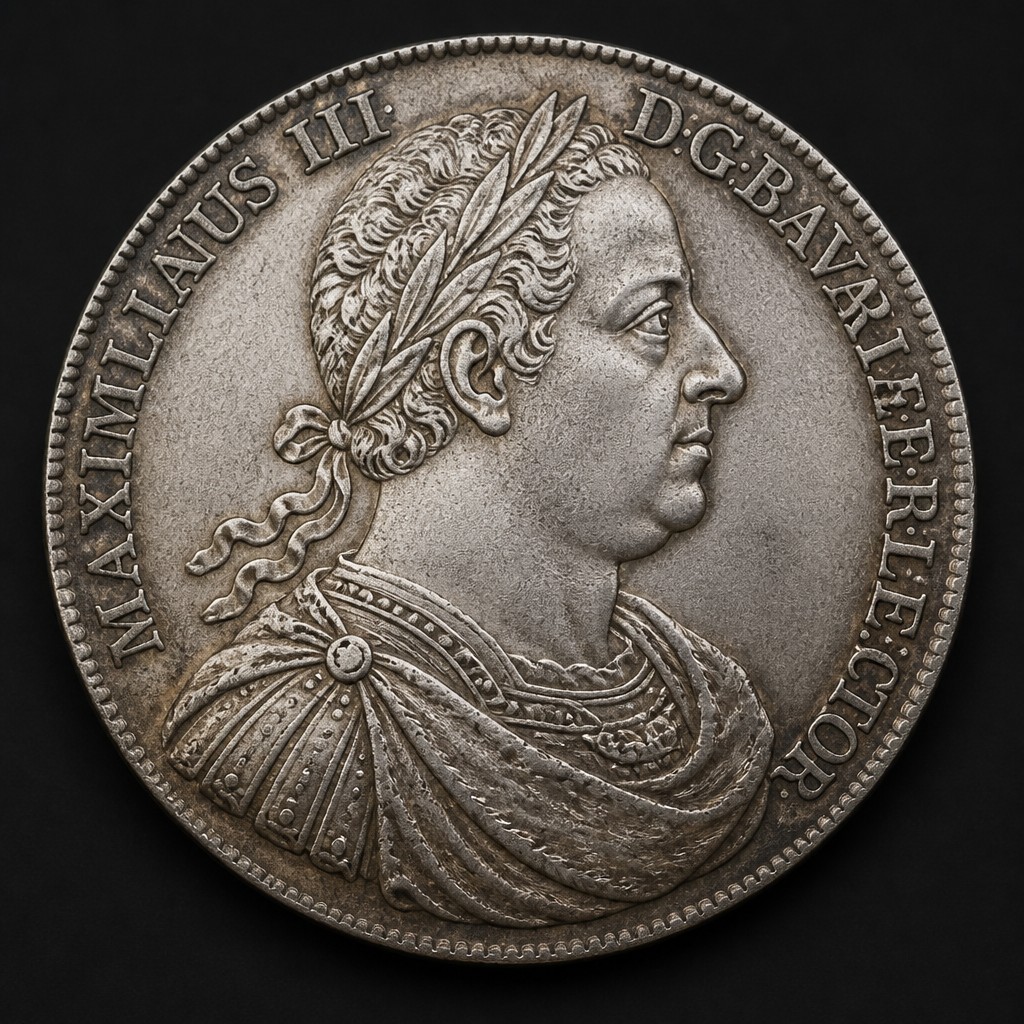
What It Is
The Bavaria Thaler is a large silver coin struck by the Kingdom of Bavaria (and its predecessor electorate) during the German thaler era, spanning rulers such as Maximilian I Joseph, Ludwig I, Maximilian II, and Ludwig II. As one of the major German states within the old Holy Roman Empire and later the German Confederation, Bavaria issued thalers that followed shared German monetary conventions while displaying distinctly Bavarian royal imagery. Because Bavaria remained one of the larger and more prosperous German kingdoms throughout the 19th century, its thalers are relatively well documented, with distinct bust styles and reverse arrangements marking each reign and helping collectors date an example even without a fully legible year.
Obverse Design and Inscriptions
The obverse shows a portrait of the reigning Bavarian king or elector, typically in profile, wearing period court dress or a laurel wreath, with his name and title in Latin or German, such as "LUDWIG KOENIG VON BAYERN" (Ludwig, King of Bavaria).
Reverse Design and Inscriptions
The reverse displays the crowned Bavarian coat of arms, a checkered (fusilly) shield sometimes flanked by lion supporters, or in commemorative issues, a specific scenic or allegorical design tied to an event such as a royal marriage, jubilee, or public works project. The denomination, in thaler units, along with the date, appears around or below the shield.
Size, Weight, Metal, and Edge
Bavarian thalers follow the standard German thaler weight conventions of their era, generally 33 grams or so under the Prussian-aligned Vereinsthaler standard adopted in 1857, with a diameter around 33 mm, struck in .900 fine silver. Earlier thaler issues before the mid-19th century standardization can vary slightly in weight and fineness. The edge is usually lettered or reeded depending on the specific type.
Mint Marks and Where to Find Them
Look for a small mint letter near the date, most commonly identifying the Munich mint, the primary Bavarian minting center, though some earlier issues may show different regional mint identifiers from before centralization.
Telling It Apart from Similar Coins
Bavaria Thalers are easily confused with thalers from other German states like Prussia, Saxony, or Württemberg, since they share the same general size and fineness standards. The decisive clue is the ruler's name and title in the legend along with the distinctive checkered Bavarian shield, which does not appear on other states' coinage.
Judging Condition at a Glance
Examine the fine details in the king's hair or wreath and the small squares of the checkered shield pattern on the reverse. A well-preserved coin shows crisp, separated squares in the shield pattern and sharp facial features, while a worn example shows a flattened, indistinct shield and smoothed portrait relief.
Authenticity Red Flags
Be cautious of coins with an incorrect weight or diameter for the claimed thaler standard, blurred or shallow lettering, or shield patterns that appear melted together rather than sharply defined. A grainy surface texture or a visible seam around the edge suggests a cast copy rather than an authentic struck coin.
Frequently asked questions
Which Bavarian kings appear on these thalers?
Rulers including Maximilian I Joseph, Ludwig I, Maximilian II, and Ludwig II each issued thalers during their reigns, distinguishable by the portrait style and name in the legend.
How do I recognize the Bavarian coat of arms?
Look for a checkered (fusilly) shield pattern, often crowned and sometimes flanked by lion supporters, which is distinct to Bavaria among the German states.
What is the standard weight of a Bavaria Thaler?
Under the 1857 Vereinsthaler standard, about 33 grams at .900 fine silver and roughly 33 mm in diameter, though earlier issues can vary slightly.
Where is the mint mark found?
Typically a small letter near the date identifying the Munich mint, the primary minting center for the Kingdom of Bavaria.