
How to Identify the Bavaria 3 Mark
Identify a Bavaria 3 Mark by its crowned rampant-lion shield, German eagle reverse, silver 3 Mark value, mid-size format, and 1925 date.
Read the full Bavaria 3 Mark encyclopedia entry →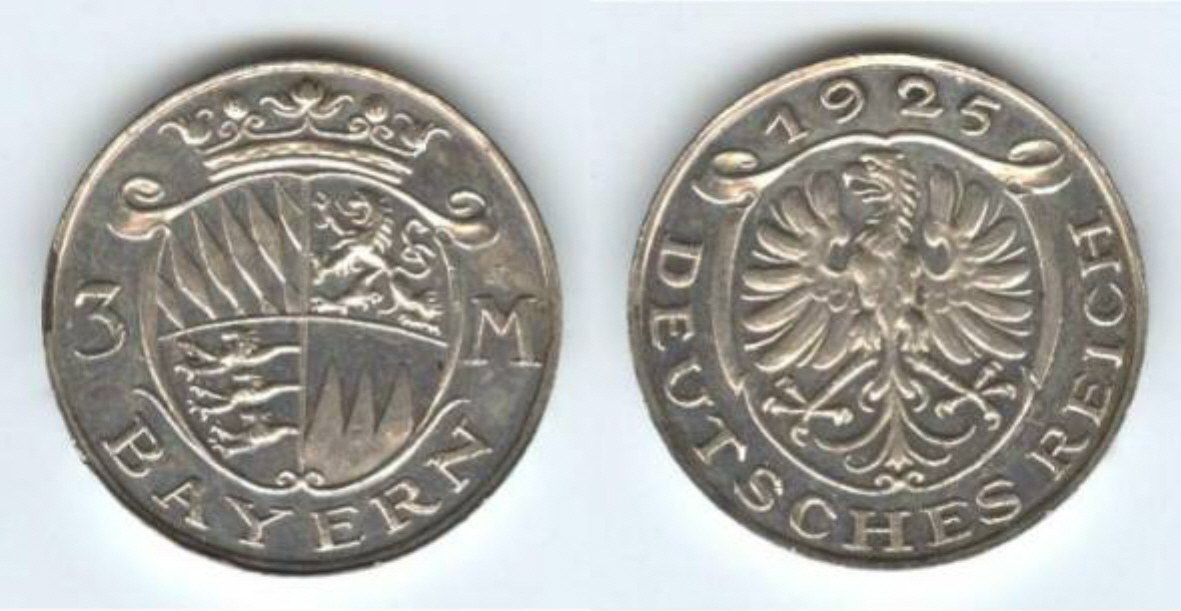
Start with the Bavarian shield. The obverse is anchored by a shield bearing a rampant lion beneath an ornate crown — the arms of Bavaria. A crowned lion shield, rather than a ruler's portrait or a plain wreath, is the clearest sign the coin belongs to Bavaria. Note any supporters, ornament, or legend around the arms, as these help pin down the exact issuing authority.
Read the reverse for the eagle, value, and date. The reverse shows a German eagle with outstretched wings together with the denomination 3 Mark and the date 1925. The eagle marks the national currency, and the numeral three plus the word Mark confirms the denomination. Read the full legend: whether it names the German Reich or a Bavarian body is decisive for correct attribution.
Confirm size, weight, and metal. This is a mid-sized silver coin with a reeded edge, heavier than the 1 and 2 Mark pieces and lighter than the 5 Mark. Measure the diameter, weigh the coin, and compare against published figures for the German 3 Mark. Genuine silver is non-magnetic and shows soft grey toning and honest wear on the high points of the lion, crown, and eagle.
Watch for look-alikes and era confusion. Several German states issued 3 Mark coins with their own arms and the same national eagle, so a lion is not enough on its own — Bavarian lions differ from those of other regions, and other states used different beasts entirely. Also remember that state-specific 3 Mark coins are typical of the pre-1918 empire, while 1925 is a republican date; use the combination of Bavarian arms, eagle, 3 Mark value, and 1925 date to place the piece, and be alert that it could be a commemorative or a later replica rather than an ordinary circulating coin.
Authenticate before you trust the value. German 1920s silver is heavily reproduced and faked. Check the edge for casting seams, confirm the coin is non-magnetic, verify weight and diameter against references, and look for crisp rather than mushy legends and details. For any better-grade or higher-value example, get a specialist or third-party grading opinion before buying or selling.
Frequently asked questions
How do I know it's Bavarian and not another German state?
Look for the crowned shield with a rampant lion, the Bavarian arms. Other states used different emblems on their 3 Mark coins, so match the specific arms and read the legend rather than relying on the eagle, which is shared nationally.
How can I confirm it is a 3 Mark and not another value?
The reverse states the denomination in words and numerals alongside the eagle and date. Confirm the 3 Mark value there, then check the coin's diameter and weight against published figures for the German 3 Mark.
What signs point to a fake or replica?
Casting seams on the edge, a magnetic response, wrong weight or diameter, and soft or blurry legends all raise concern. Genuine silver is non-magnetic and shows natural wear; authenticate valuable pieces professionally.
Why does the date matter for identification?
State arms with the national eagle belong to the pre-1918 imperial tradition, while 1925 is a republican date. The date helps establish which coinage era and type you are looking at, so read it carefully alongside the legends.