How to Identify the Barakah Copper Fals
A collector's guide to recognizing a medieval Islamic copper fals by its aniconic calligraphy, benedictory legends, size and metal — and reading the barakah inscription.
Read the full Barakah Copper Fals encyclopedia entry →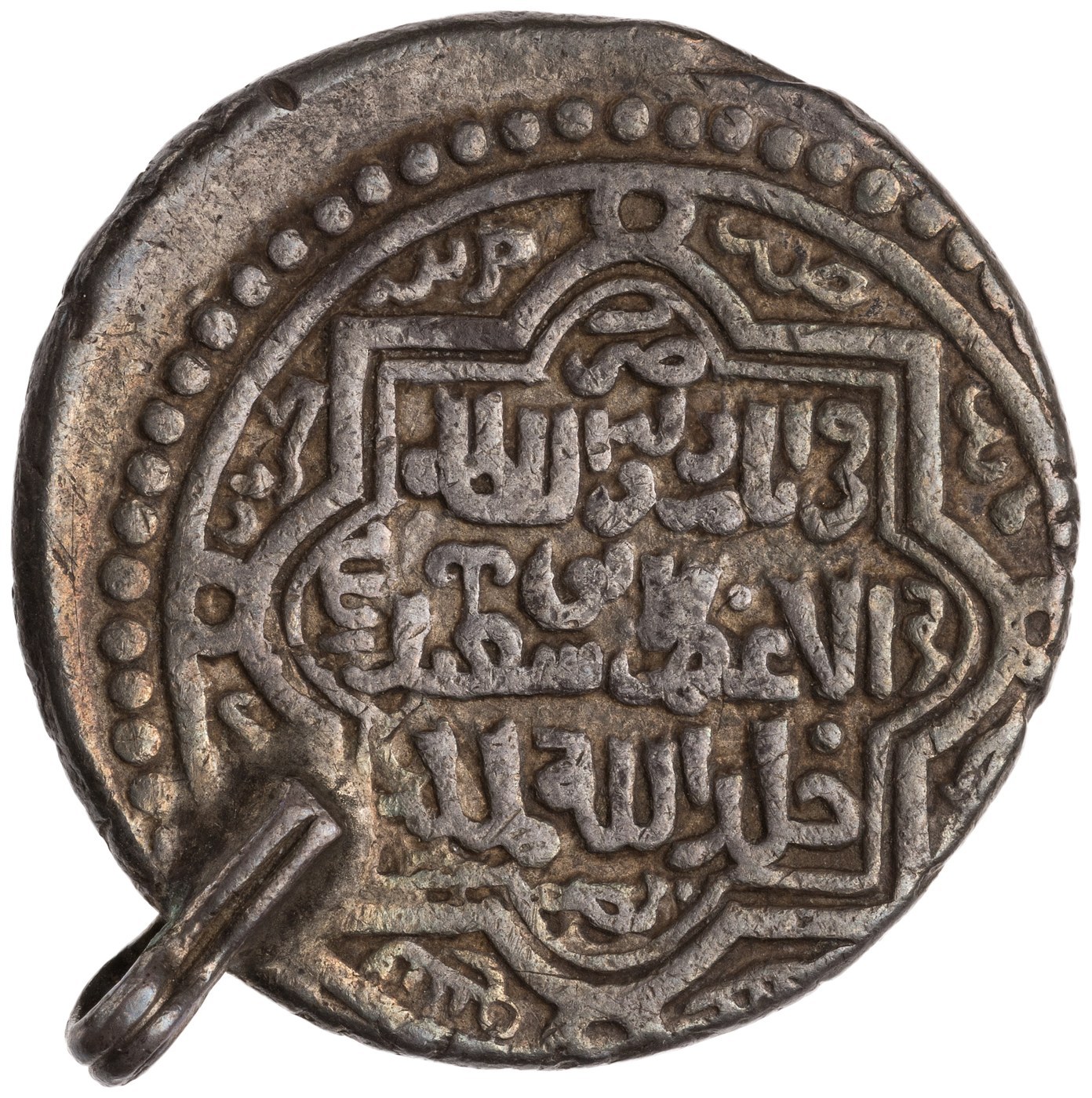
Begin with metal and fabric. A fals is copper (or a copper alloy), so expect a brown, reddish, or green-patinated surface, a fairly thick flan, and an irregular, hand-struck outline rather than a neat modern circle. Most medieval fulus fall in the rough range of 15–25 mm and a few grams, but copper standards varied greatly by mint and era, so treat size and weight as supporting clues, not proof of a specific issue. A magnetic coin, a bright uniform modern finish, or casting seams and bubbles are warning signs.
The surest diagnostic is the calligraphy. This type is entirely aniconic — no portrait, animal, or Latin script — and the obverse arranges Arabic text in concentric bands, an inner legend enclosed by an outer marginal legend. Read the reverse legend as well. Look specifically for the word barakah (بركة, “blessing”) and for standard formulas such as the shahada or invocations of God; their presence confirms the coin belongs to the benedictory tradition of Islamic copper coinage.
To push the attribution further, hunt within the legends for a ruler's name, a mint city, or a Hijri date. If any of these are legible, they can tie the coin to a specific dynasty and period; where the marginal legend is off-flan or worn — very common on humble copper — you may only be able to classify it generically. Careful, high-resolution photographs of both faces, checked against standard Islamic reference catalogues, are the best way to read faint text.
Be aware of look-alikes and cautions. Countless dynasties and city mints struck aniconic copper fulus that resemble one another at a glance, so never assume a single origin from style alone — the legend is what distinguishes them. Genuine fulus are struck, so a mold seam, air bubbles, a soft mushy surface, or an artificially bright green “patina” suggests a cast copy or fake. Harsh cleaning that strips the natural patina both damages value and can hide diagnostic detail, so leave conservation to specialists.
When in doubt, weigh and measure the coin, record its diameter, and have the Arabic legends read by someone familiar with Islamic epigraphy or compared against reference works. An accurate reading not only confirms it is a medieval copper fals but may also reveal the issuer and mint that determine where it stands among common and scarcer pieces.
Frequently asked questions
How do I know it is a fals and not a dirham?
Metal is the quickest test. A fals is copper, with a brown, red, or green patina and a thick, irregular flan, while a dirham is silver and usually thinner and broader. If the coin is base-metal copper, it is a fals rather than a silver dirham.
Where should I look for the word barakah?
Scan the Arabic legends on both faces, including the concentric bands on the obverse. Barakah (بركة) appears as part of the pious inscription; recognizing it helps confirm the benedictory copper-fals type.
My coin's outer writing is cut off — is that a problem?
It is normal. Copper fulus were struck by hand on blanks smaller than the dies, so marginal legends are often partly off-flan or worn. It does not make the coin fake, but it can limit how precisely you can attribute it.
How can I spot a cast fake?
Genuine fulus are struck, not cast. Watch for a seam around the edge, tiny air bubbles, a soft or grainy surface, and an unnaturally bright or uniform green coating. Odd weight or magnetic metal are also red flags.
Barakah Copper Fals identified by the community
Recent Barakah Copper Fals coins identified with Coin Identifier.