
How to Identify the Bank of Upper Canada One Penny Token
Collector checks for the St. George penny token: obverse and reverse designs, copper and size, the bank legend, look-alikes, and authentication.
Read the full Bank of Upper Canada One Penny Token encyclopedia entry →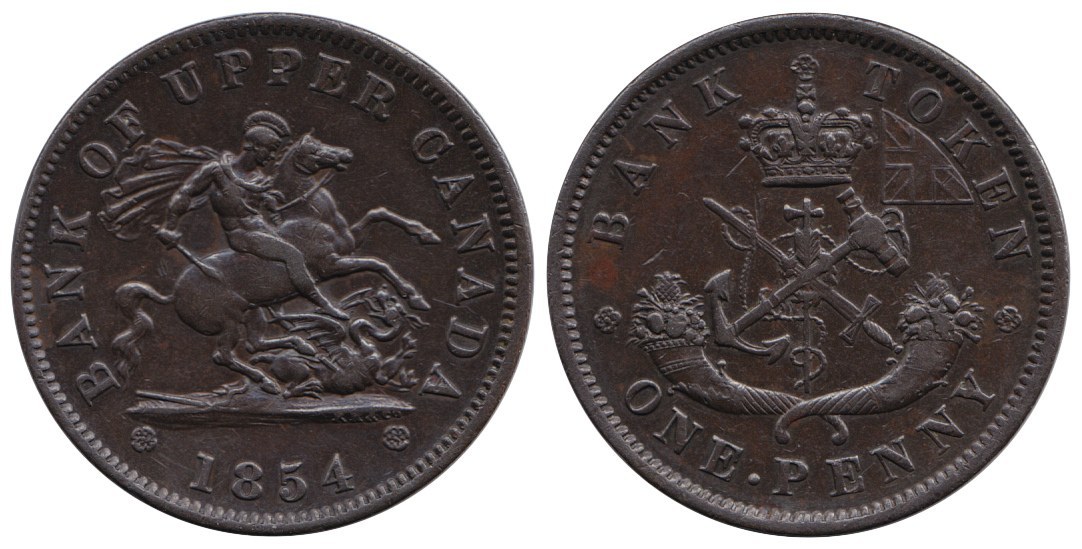
Start with the obverse image, which is the signature of this series. Look for an armoured St. George mounted on a rearing horse, thrusting a weapon down into a dragon beneath the horse's hooves. This is the same subject used on British silver crowns and sovereigns, so the motif alone does not prove the token is Canadian; you must confirm the legends and reverse as well.
Turn the token over. The reverse should show a crowned shield of royal arms with heraldic supporters and scrollwork, and the inscription naming the Bank of Upper Canada together with the denomination. Reading the bank's name in the legend is the key step that separates this piece from British regal coins and from other token issuers who also used St. George. Read the date, here 1854, and note it, as date and variety matter to specialists.
Check the physical evidence. The penny is copper, a large and substantial piece with a plain edge, clearly bigger and heavier than the matching half penny that shares the identical designs. If you have both denominations, size and weight tell them apart instantly; if you have only one, compare its diameter against a published specification for the series to decide which you hold.
Beware of look-alikes. British crowns and sovereigns carry the same horseman-and-dragon design but are silver or gold, are smaller, and never name the Bank of Upper Canada. Other bank and merchant tokens of British North America used similar Crown imagery under different names, so always read the issuer legend rather than trusting the picture alone. Modern souvenir and fantasy "dragonslayer" pieces exist too and typically differ in metal, weight, or lettering.
Authenticate cautiously. Confirm the piece is genuinely copper, not plated, and that its weight and diameter match the known standard for the type. Examine the date and lettering under magnification for signs of tooling or casting, such as soft, mushy detail or a seam on the edge. For a scarcer date or a piece you intend to buy or sell at a premium, seek an opinion from a dealer or reference familiar with Canadian tokens.
Frequently asked questions
How do I know a St. George token is from the Bank of Upper Canada?
Read the reverse legend. The Bank of Upper Canada's own tokens spell out the bank's name and the denomination. The St. George image alone is not enough, since British coins and other tokens use it too.
How is the penny told apart from the half penny?
The two denominations share the same designs, so go by size and weight. The penny is the larger, heavier copper piece; the half penny is distinctly smaller.
Could this be a British coin instead?
British crowns and sovereigns use the same horseman-and-dragon design but are silver or gold, are smaller, and never name the Bank of Upper Canada. Metal, size, and legend settle it.
Do I need professional authentication?
For a common worn example, checking that it is copper and matches the standard size and weight is usually enough. For scarcer dates or higher-value pieces, consult a dealer or reference in Canadian tokens.