
How to Identify the Bank of England Dollar
A collector's guide to identifying the 1804 George III Bank of England Dollar by its bust, legends, size and silver, Spanish undertype, and common look-alikes.
Read the full Bank of England Dollar encyclopedia entry →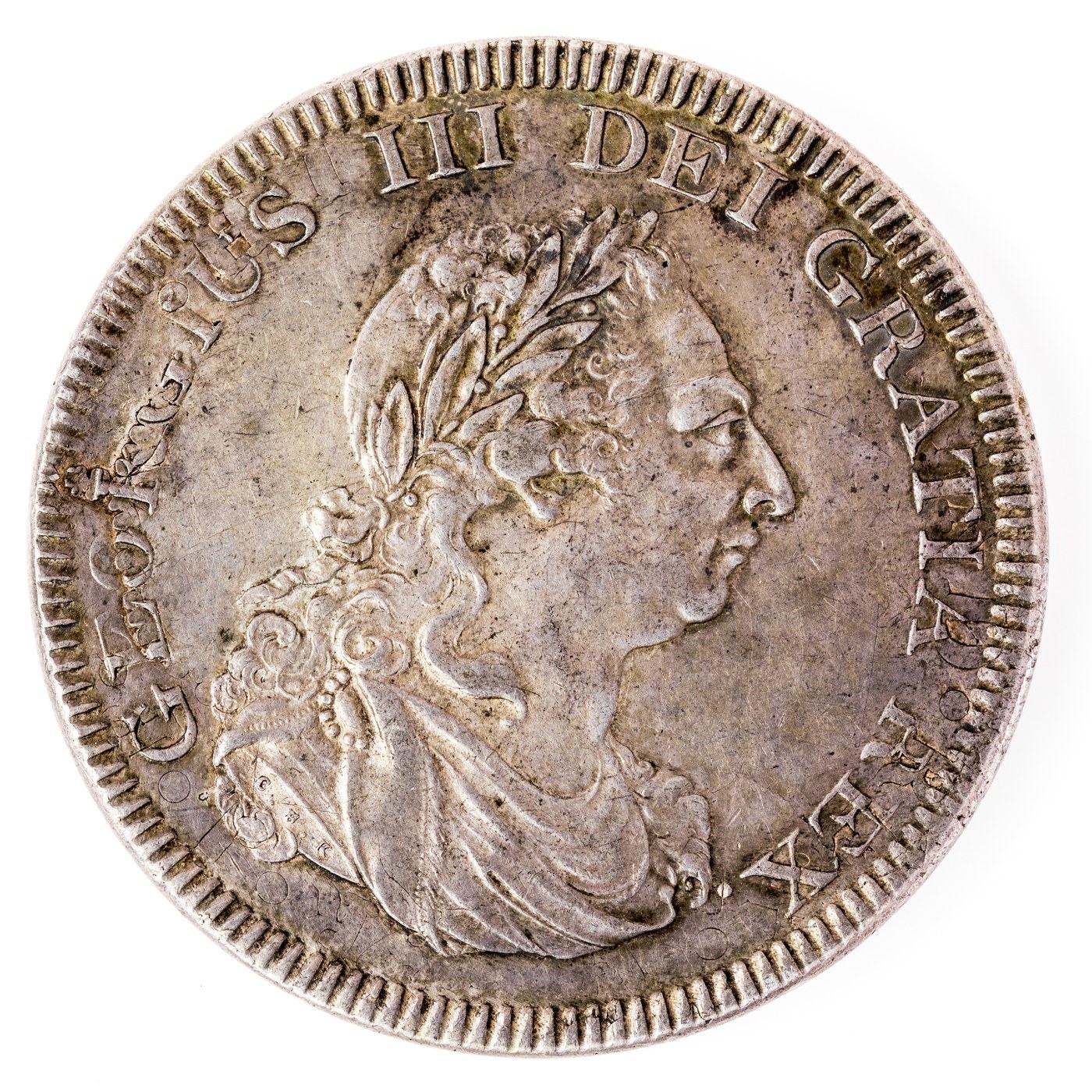
Start with the obverse. The Bank of England Dollar shows a laureate bust of George III facing right, wearing a laurel wreath, with the Latin legend GEORGIUS III DEI GRATIA around the rim. This combination of a wreathed right-facing portrait and that legend, together with the date 1804, is the quickest confirmation of the type. Read the legend carefully, since it names the king and helps separate the coin from later George III issues.
Check the reverse legend, not just the design. The defining feature of this coin is that its reverse names the Bank of England and states a value of five shillings, rather than carrying a normal royal denomination. Whether the reverse shows the crowned royal shield seen on this example or the seated Britannia of the standard issue, the presence of the Bank's name and the five-shilling value is the key diagnostic that marks it as a Bank of England Dollar rather than an ordinary crown.
Confirm size, weight, and metal. The coin is a large silver piece close to a British crown in diameter and struck on the sterling standard, so it should have the heft, ring, and color of good silver. Measure the diameter and weigh the coin, and compare against published specifications; a piece that is markedly light, undersized, or non-magnetic-but-off in tone warrants caution.
Look for Spanish undertype. Because these dollars were overstruck on Spanish colonial eight-reales coins, faint traces of the original design and lettering can often be seen beneath George III's portrait and around the fields. Genuine undertype appears as ghostly, slightly misaligned detail under the British types; its presence supports authenticity, while a completely flat, blank field with no trace of overstriking is worth examining more closely.
Rule out look-alikes and fakes. Contemporary copies, later restrikes, and modern reproductions exist, and the type has been counterfeited. Compare the portrait style, lettering, date, and edge against reliable references, and be wary of cast surfaces, seams, bubbles, soft detail, or an incorrect weight. For any high-grade or valuable example, seek an opinion from a specialist dealer or a reputable grading service before relying on an attribution or price.
Frequently asked questions
Which side is the obverse?
The side with the laureate bust of George III facing right and the legend GEORGIUS III DEI GRATIA is the obverse. The side with the crowned shield or seated Britannia, naming the Bank of England and the five-shilling value, is the reverse.
How do I confirm it is a Bank of England Dollar and not a normal crown?
Check the reverse legend for the Bank of England name and a five-shilling value, and the obverse for the 1804 date and GEORGIUS III DEI GRATIA. A regular Royal Mint crown will not carry the Bank's name.
What does the faint lettering under the design mean?
It is undertype from the Spanish eight-reales coin the dollar was overstruck on. Ghostly, slightly misaligned detail beneath the British designs is normal for this type and supports authenticity.
How can I tell a genuine example from a fake?
Genuine coins are large sterling-silver pieces of correct weight and size, often with visible Spanish undertype and honest wear. Cast seams, bubbles, soft detail, or wrong weight are warning signs; have valuable pieces checked by a specialist or grading service.