
How to Identify the Bangladesh One Taka
A collector's guide to Bangladesh's One Taka coin: the jute-plant obverse, the numeral-1 Bengali reverse, its magnetic nickel-plated steel flan, and how to tell it apart.
Read the full Bangladesh One Taka encyclopedia entry →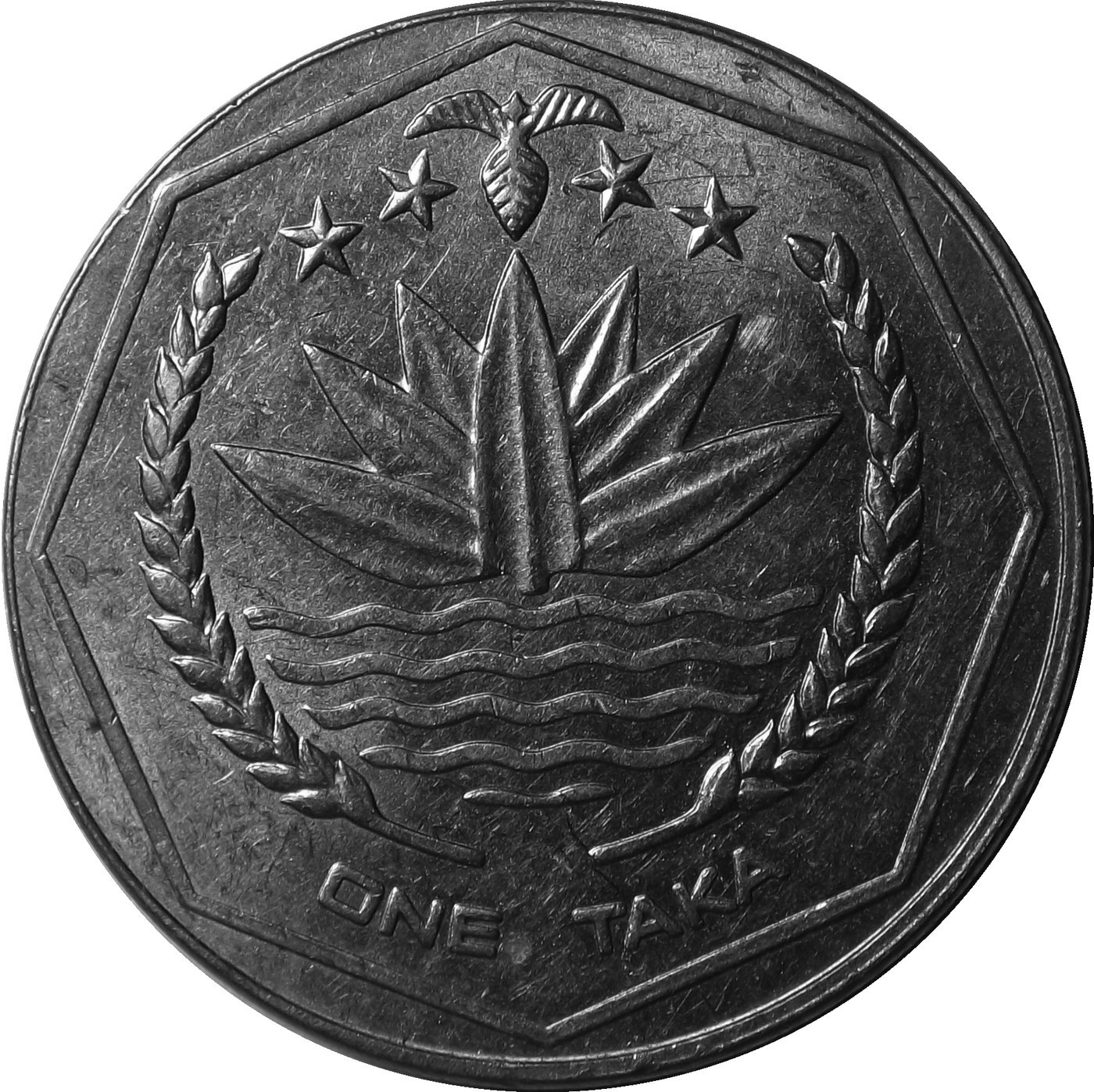
Start with the metal and the magnet. The One Taka shown here is struck in nickel-plated steel, so it has a pale silvery-grey tone but a steel core, which means a magnet will pull on it. That single test separates it from solid cupro-nickel or brass coins of similar size, which are non-magnetic. Expect a small, light circulation coin with even machine-struck detail; where the plating has worn or spotted, the underlying steel may show as darker patches.
Read the obverse for the national identity. The central device is a jute plant emblem with stars, the motif Bangladesh placed on its base coinage in honour of the "golden fibre" that was long central to the national economy. This design ties the piece to Bangladesh rather than to a neighbouring South Asian issue, and it is the first thing to confirm when attributing the coin.
Use the reverse to lock in the denomination. The reverse carries a large numeral 1 for the value, together with Bengali text naming the denomination and the date, shown here as 2002. The bold numeral plus the Bengali legend and year is the combination that fixes both the value and the type. If the script is unfamiliar, the prominent 1 and the four-digit date are the easiest anchors to read.
Separate it from other Bangladeshi coins. The country's other denominations share a similar national styling, so the safest way to distinguish the One Taka is to read the stated value and compare the diameter against the higher Taka coins and the smaller poisha pieces. The jute-plant obverse combined with the numeral-1 reverse and the magnetic steel flan is what marks this specific denomination.
For authentication, weigh and measure the coin and compare it with catalogue figures for the early-2000s one-Taka issue, and confirm that it is magnetic as expected for plated steel. As a common, low-value modern coin it is rarely counterfeited, so the practical questions are usually accurate attribution and honest grading rather than forgery; when a face is unclear, photograph both sides and check the jute-plant design, the numeral and the date against standard references for modern Bangladeshi coinage.
Frequently asked questions
What is the quickest way to recognise the Bangladesh One Taka?
Look for a small silvery coin with a jute plant and stars on the obverse and a large numeral 1 with Bengali text and a date on the reverse. Because it is nickel-plated steel, it is also magnetic, which helps confirm the type.
How do I tell it apart from other Bangladeshi coins?
The various denominations share a similar national look, so read the stated value and compare the size. The One Taka is marked by its jute-plant obverse, its bold numeral-1 reverse and its small magnetic steel flan.
How can I confirm the metal and that it is genuine?
Nickel-plated steel is silvery but magnetic, so a magnet should pull on the coin. Check for a pale grey colour, watch for darker patches where the plating has worn, and weigh and measure the piece against catalogue figures for the issue.
Does condition matter for such a small coin?
Yes. Plated steel can spot or corrode where the plating breaks down, so most survivors show wear. Examples that keep bright, clean surfaces with a sharp jute plant and clear numeral stand out and can carry a modest premium.