
How to Identify the Banda Singh Bahadur Sikh Rupee
A collector's guide to recognizing an early Sikh Khalsa-era silver rupee: reading the Guru couplet, the Khalsa-era date, size and metal, and common look-alikes.
Read the full Banda Singh Bahadur Sikh Rupee encyclopedia entry →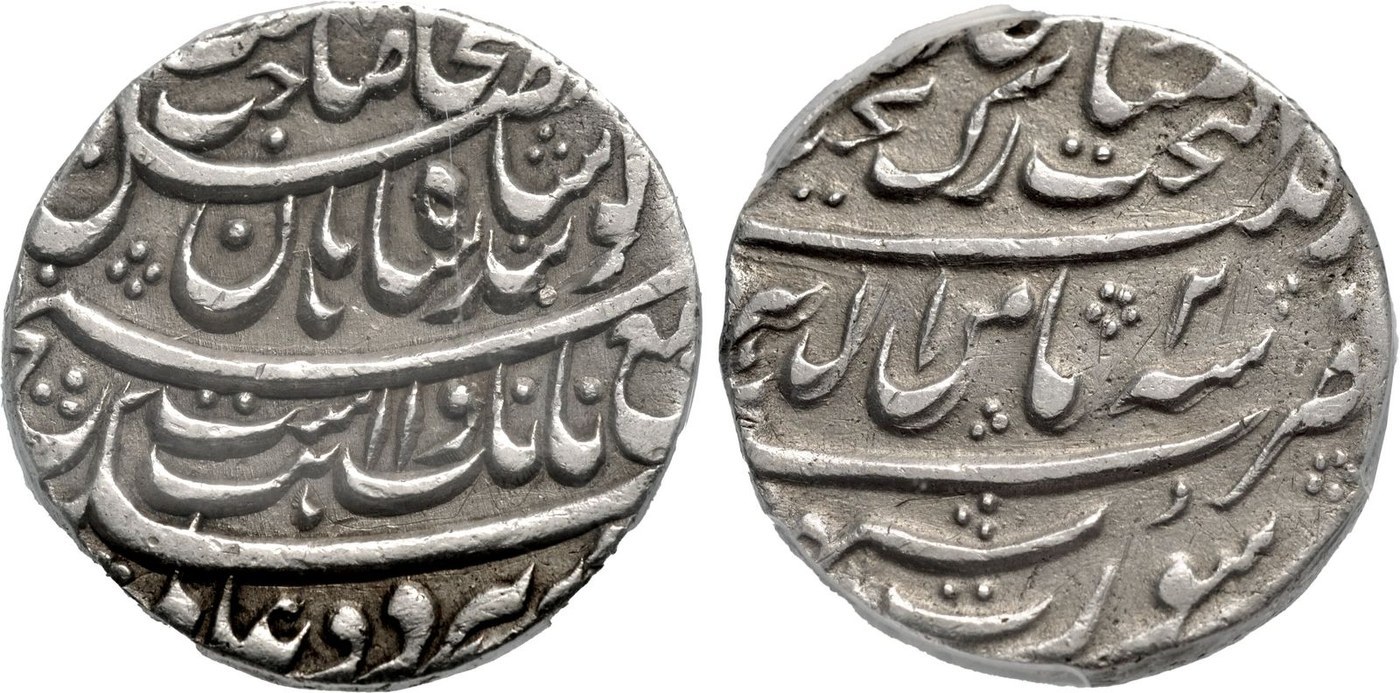
Begin with the physical coin. This should be a silver rupee, roughly circular but often slightly irregular, in the general range of about 20–24 mm across and near 11 grams — the hand-struck rupee standard of the early eighteenth century. A coin that is much lighter, magnetic, or clearly base metal is likely a different piece, a replica, or a modern fake. Expect an off-center strike with part of the legend running off the edge; the dies were larger than the blank, so this is normal for the type, not a defect.
The decisive test is the legend. Genuine coins of this tradition carry the Guru couplet rather than a ruler's name — the wording credits grace and victory to Guru Nanak and Guru Gobind Singh. Confirming that the inscription honors the Gurus, and does not name a Mughal emperor, is what places a coin in the Sikh series rather than the visually similar Mughal rupees of the same era.
Next, read the dating. The hallmark of the earliest issues is the Khalsa (Nanakshahi) Era rather than a Hijri (AH) year or a Mughal regnal year. A low era number — such as Year 2 on this coin, about 1711 — points to the opening phase associated with Banda Singh Bahadur's sovereignty. Note that the same couplet form was reused for decades afterward, so the era number and any mint formula in the decorative bands matter for narrowing the date within the long-lived design.
Be alert to look-alikes and reproductions. The Guru-couplet legend continued through the later Sikh misls and the Sikh Empire, so many coins with this design are in fact later issues, not early Banda-period pieces. This famous type is also widely reproduced as commemoratives, souvenirs, and outright forgeries. Do not assume that any Sikh-legend rupee, or any coin simply sold under Banda's name, belongs to the earliest series without evidence.
Authentication is essential for this type. Genuine coins are struck, not cast, so casting seams, air bubbles, a soft or grainy surface, a mold line around the rim, or an incorrect weight are warning signs. Given how few genuine early pieces exist and how many later and replica coins share the design, weigh and measure the coin, photograph both faces clearly, and have the legend and era date read against specialist references or by an expert in Sikh numismatics before accepting an attribution to Banda Singh Bahadur.
Frequently asked questions
How do I tell a Sikh rupee from a Mughal rupee?
Read the legend. A Mughal rupee names an emperor and often gives a Hijri date, while this Sikh coinage honors Guru Nanak and Guru Gobind Singh and uses the Khalsa (Nanakshahi) Era. The Guru couplet, not a ruler's name, is the key marker.
How can I date the coin?
Look for the Khalsa-era year in the legend rather than a Hijri or Mughal regnal date. A low number such as Year 2 corresponds to about 1711, the earliest phase of the coinage; the same design continued for many years afterward at higher era numbers.
Is my coin definitely a Banda Singh Bahadur original?
Not necessarily. The same Guru-couplet design was reused by later Sikh authorities and is also widely reproduced as commemoratives and replicas. Only a securely attributed early Khalsa-era piece belongs to Banda's period, so expert authentication is important.
How do I spot a fake or replica?
Genuine rupees are struck, not cast. Watch for casting seams, bubbles, a soft or grainy surface, a rim mold line, incorrect weight, or magnetic metal. When unsure, check weight and diameter and have the legend and era date verified by a specialist.