How to Identify the Bahraini Dinar
The modern coinage of the Kingdom of Bahrain, identifiable by Arabic script, the national dhow or falcon emblem, and denominations expressed in fils fractions of the dinar.
Read the full Bahraini Dinar encyclopedia entry →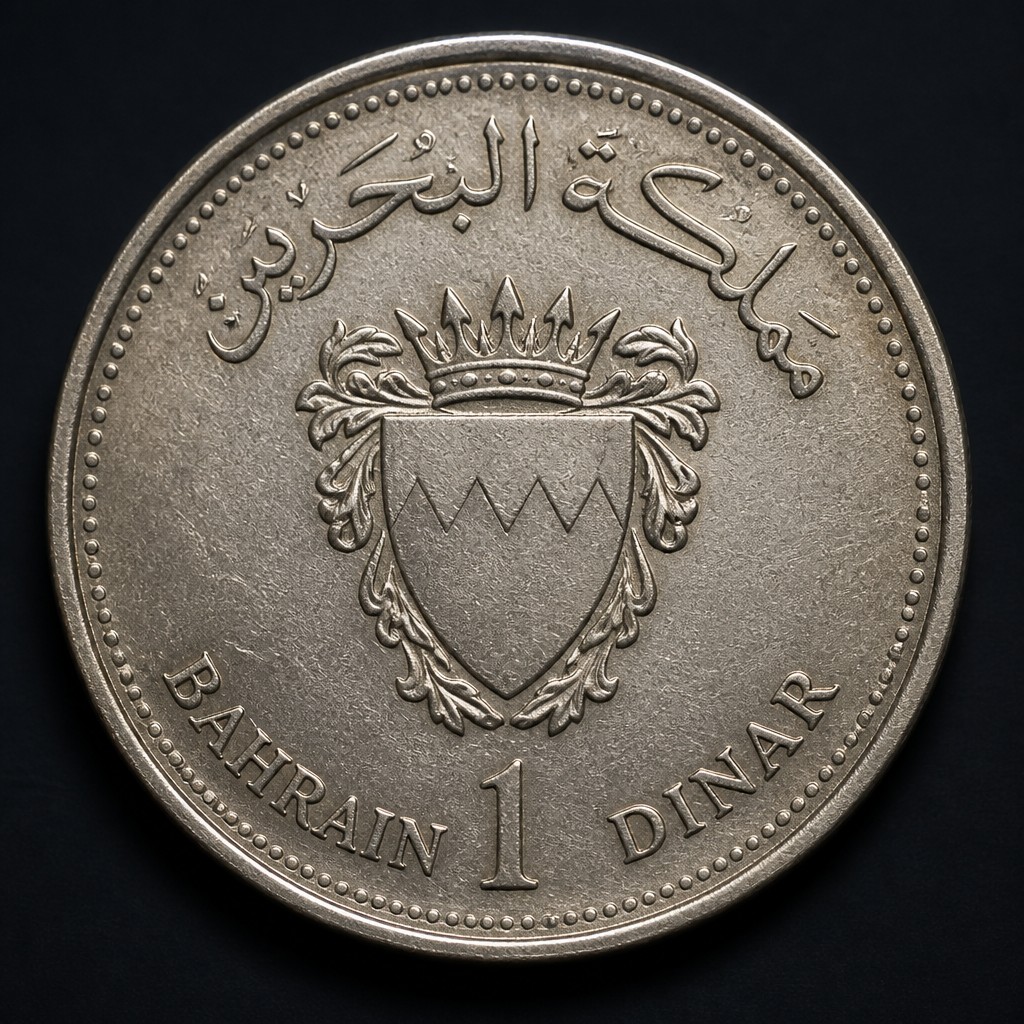
What It Is
The Bahraini dinar has been the national currency since 1965, replacing the earlier Gulf rupee. Coins circulate as fils, with 1,000 fils equal to one dinar, and the series has been updated periodically with new portraits of the ruling Emir or King and refreshed national emblems while keeping a consistent overall format.
Obverse Design & Inscriptions
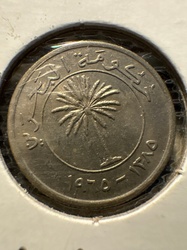
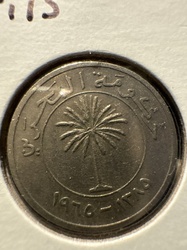
Many Bahraini fils coins carry a stylized version of the national emblem, historically a sailing dhow representing Bahrain's pearling and seafaring past, combined with Arabic text naming the Kingdom of Bahrain. Later issues may include a formal coat of arms rather than the dhow alone.
Reverse Design & Inscriptions
The reverse states the denomination in both Arabic and Western numerals along with the Gregorian date, often bordered by a decorative rim or pattern. Higher denominations tend to carry more elaborate detailing than the smallest fils pieces.
Size, Weight, Metal & Edge
Bahraini fils coins are struck in base metals appropriate to their value, such as bronze for small denominations and cupro-nickel or nickel-brass for larger ones. Sizes scale with denomination, and edges range from plain to reeded; some higher-value coins use a distinctive scalloped or multi-sided shape to aid quick recognition by touch.
Mint Marks & Where to Find Them
Bahraini circulation coinage typically does not display a separate mint-mark letter; identification instead relies on the specific wording "Bahrain" in Arabic, the emblem style used (dhow versus coat of arms), and the date, which together place a coin within a particular issue period.
Telling It Apart From Similar Coins
Because Gulf states share a common visual language of Arabic script, palm trees, and dhows, Bahraini coins are easiest to confirm by their specific legend reading "Bahrain" and by the particular dhow or coat-of-arms style used, which differs in detail from the dhow, falcon, or palm designs used by Kuwait, Qatar, or the UAE.
Judging Condition at a Glance
Look at the fine lines of the dhow's rigging or the coat of arms detailing; these fine engraved lines wear away first, leaving a smoother, less detailed silhouette on circulated coins. A sharp, high-grade example shows crisp rigging lines and fully separated Arabic letters, while a worn coin shows a blurred hull and softened script.
Authenticity Red Flags
Because circulation fils coins have low intrinsic value, counterfeiting for profit is uncommon, but look for inconsistent plating color at the edge (suggesting a re-plated or altered coin), noticeably incorrect weight or diameter for the stated denomination, and blurry, poorly centered strikes that do not match the clean, well-centered look typical of official mint production.
Frequently asked questions
What replaced the Gulf rupee in Bahrain?
The Bahraini dinar became the national currency in 1965, and fils coins (1,000 fils to one dinar) have circulated ever since, replacing the earlier Gulf rupee system.
What is the traditional symbol on Bahraini coins?
A stylized sailing dhow representing Bahrain's pearling and maritime history appears on many issues, sometimes alongside or later replaced by a formal coat of arms.
How can I tell a Bahraini fils from a Qatari or Kuwaiti coin?
Check the Arabic legend for the specific word 'Bahrain' and compare the exact style of the dhow or emblem, since neighboring states use similar but distinct maritime and heraldic imagery.
Why do some Bahraini coins have unusual, non-round shapes?
Certain higher denominations use a scalloped or multi-sided shape so people can tell denominations apart by feel, a practical design feature rather than a defect.
Bahraini Dinar identified by the community
Recent Bahraini Dinar coins identified with Coin Identifier.