
How to Identify the Bactrian Silver Tetradrachm
A large Greco-Bactrian silver coin prized for its realistic royal portraits, paired with a standing or seated Greek deity and the king's name and titles on the reverse.
Read the full Bactrian Silver Tetradrachm encyclopedia entry →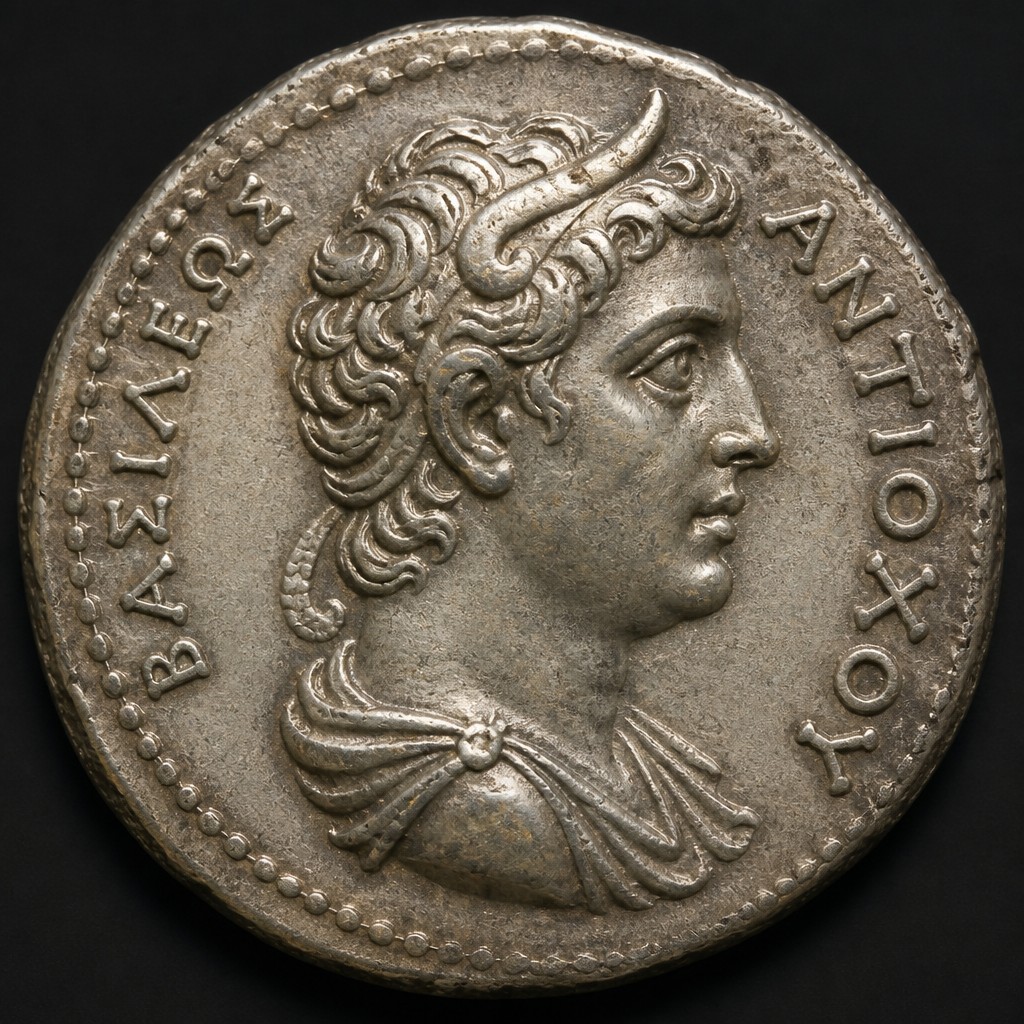
What It Is
The Greco-Bactrian tetradrachm was the principal large silver denomination of the Greek kingdoms that ruled Bactria and neighboring regions of Central Asia from roughly the 3rd to 2nd centuries BC, following the breakup of Alexander the Great's successor states. Kings such as Diodotus, Euthydemus, Demetrius, Eucratides, and later Menander issued these coins, which are celebrated for some of the finest portraiture in ancient coinage. These kingdoms flourished at a crossroads of Greek, Persian, and Indian cultural influence, and their coinage reflects that unusual blend even while remaining firmly Greek in its overall style and legends.
Obverse Design
The obverse carries a strikingly realistic, individualized portrait bust of the king, often shown with distinctive attire that helps identify the ruler, such as a kausia sun hat, a crested helmet, or, in a few famous cases, an elephant-scalp headdress evoking conquest.
Reverse Design
The reverse depicts a Greek deity appropriate to the king's chosen patronage, such as Zeus enthroned, Apollo seated on the omphalos, Poseidon standing, or Athena/Pallas striding with shield and thunderbolt. A Greek legend reads "BASILEOS" followed by the king's name and often an epithet such as "SOTEROS" (Savior) or "MEGALOU" (Great).
Size, Weight, and Metal
These are substantial silver coins, roughly 30-33mm in diameter and about 16-17 grams in weight, considerably larger and heavier than a typical drachm, giving engravers more room to render fine portrait detail.
Mint Marks and Where to Find Them
Small monograms appear in the field, usually to one side of the deity on the reverse, identifying the specific mint or workshop; these monograms vary by king and issue and are cataloged extensively by specialists.
Telling It Apart from Similar Coins
Compared to Seleucid coinage, Bactrian tetradrachms tend to show more individualized, lifelike portraiture and distinct regional deity choices. Compared to later Indo-Greek issues struck by descendants of these same dynasties further south and east, Bactrian tetradrachms are purely Greek in legend, while Indo-Greek coins typically add a second inscription in Kharoshthi script on the reverse.
Judging Condition at a Glance
Because portrait quality is central to this series' appeal, examine the sharpness of facial features, hair, and headgear details, along with the legibility of the king's name and epithet in the legend, when assessing how well-preserved a piece is. Even a coin with moderate overall wear can remain desirable if the portrait retains strong individuality and the deity on the reverse is clearly rendered.
Authenticity Red Flags
This series is a well-known target for forgery given the value collectors place on fine portraiture, so check the weight closely against the expected 16-17 gram standard, look for casting seams along the edge, and compare the monogram and legend combination against documented pairings for the named king.
Frequently asked questions
Why are Bactrian tetradrachm portraits considered so special?
Greco-Bactrian engravers produced unusually realistic, individualized royal portraits, often considered among the finest artistic achievements in ancient coinage.
How do I identify which king issued a given tetradrachm?
Read the reverse legend for the king's name and epithet, and cross-check the obverse portrait's distinctive headgear or features, since some kings are strongly associated with specific attire like a kausia hat or elephant-scalp headdress.
What is the difference between Bactrian and Indo-Greek tetradrachms?
Bactrian issues carry legends purely in Greek, while later Indo-Greek coins from the same dynastic lineage typically add a second legend in Kharoshthi script on the reverse.
Why should I be extra cautious buying this type of coin?
Because Bactrian tetradrachms can command strong interest for their artistry, they are a frequent target for forgery, so weight, edge inspection, and monogram verification are especially important.