
How to Identify the Austrian Silver Philharmonic
A guide to identifying the modern Austrian Silver Philharmonic bullion coin, recognized by its Golden Hall organ obverse, orchestral instruments reverse, and .999 fine silver purity.
Read the full Austrian Silver Philharmonic encyclopedia entry →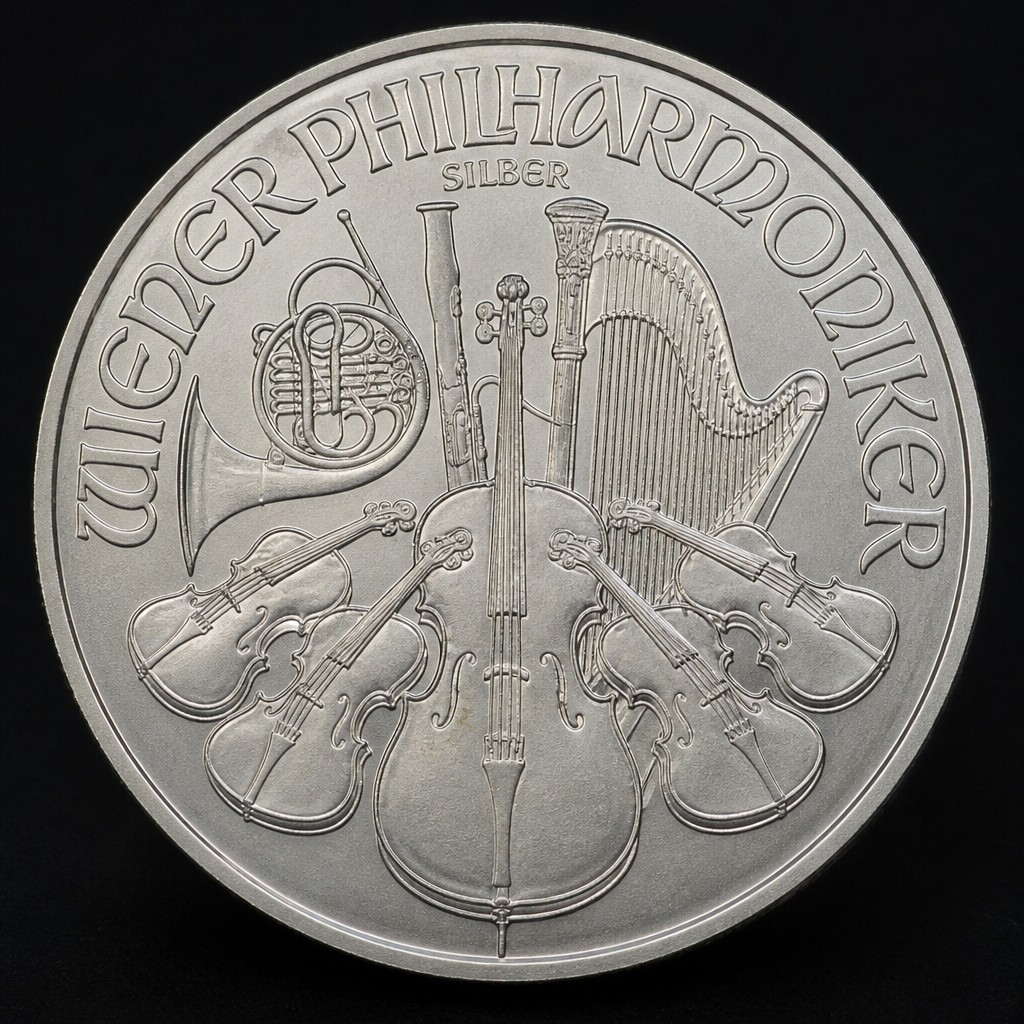
What It Is
The Silver Philharmonic is a modern bullion coin issued by the Austrian Mint, first struck in the late 2000s as a silver companion to the long-running gold Philharmonic series. It celebrates the Vienna Philharmonic Orchestra and is one of the most widely produced silver bullion coins in the world, popular with both collectors and investors for its high purity and simple, elegant design.
Obverse Design
The obverse depicts the Great Organ of the Vienna Musikverein's Golden Hall, the concert venue closely associated with the Vienna Philharmonic Orchestra, along with the coin's face value and the words "REPUBLIK OSTERREICH."
Reverse Design
The reverse shows a grouping of orchestral instruments, including a cello, bassoons, a French horn, and a harp, arranged together as a tribute to the orchestra, with "WIENER PHILHARMONIKER" lettered above.
Size, Weight, Metal, and Edge
The standard one-ounce coin is struck in .999 fine silver, weighing 31.103 grams (one troy ounce) with a diameter of about 37 mm. The edge is plain (smooth), consistent with most modern bullion coins. Larger multi-ounce and smaller fractional versions have also been issued in later years, so always check the stated weight against the coin's actual size.
Mint Marks and Denomination
As a coin of the modern Republic of Austria, it does not use a traditional mintmark system since it is struck exclusively at the Austrian Mint in Vienna; the face value (such as "1.50 EURO" on the standard one-ounce issue) appears on the obverse and helps confirm the specific issue.
Telling It Apart From Similar Coins
The Silver Philharmonic's organ-and-instruments theme is unique among world bullion coins, so it is not easily confused with other silver bullion issues like the American Silver Eagle or Canadian Silver Maple Leaf, which use entirely different national imagery.
Judging Condition
Because this is a modern bullion coin typically bought and sold in investment-grade condition rather than worn through circulation, focus on checking for handling marks, scratches, or milk-spot toning common to silver bullion, rather than traditional circulation wear.
Authenticity Red Flags
Given its popularity as a bullion product, counterfeits exist. Check that the coin's weight, diameter, and thickness precisely match official specifications for its stated size, verify a sharp and detailed strike on the organ pipes and instrument details, and confirm the coin is non-magnetic. A coin that is noticeably lighter, has muddled design details, or shows a seam line from casting should be treated with suspicion.
Frequently asked questions
What is depicted on the Silver Philharmonic?
The obverse shows the Great Organ of Vienna's Musikverein Golden Hall, and the reverse shows a grouping of orchestral instruments, both honoring the Vienna Philharmonic Orchestra.
How much silver does the standard coin contain?
The standard issue is one troy ounce (31.103 grams) of .999 fine silver.
Does this coin have a mint mark?
No traditional mintmark system is used since it is struck exclusively at the Austrian Mint; the face value on the obverse helps identify the specific issue.
How can I check if my Silver Philharmonic is genuine?
Verify the weight and diameter match official specifications for the stated size, confirm the coin is non-magnetic, and look for sharp, detailed strikes on the organ and instrument imagery rather than blurred or mushy details.