
How to Identify the Austrian 4-fold Ducat
Identify the Austrian 4 Ducat by its uniformed Franz Joseph portrait, the crowned double-headed eagle, the 4 Ducat value, and its large thin high-purity gold flan.
Read the full Austrian 4-fold Ducat encyclopedia entry →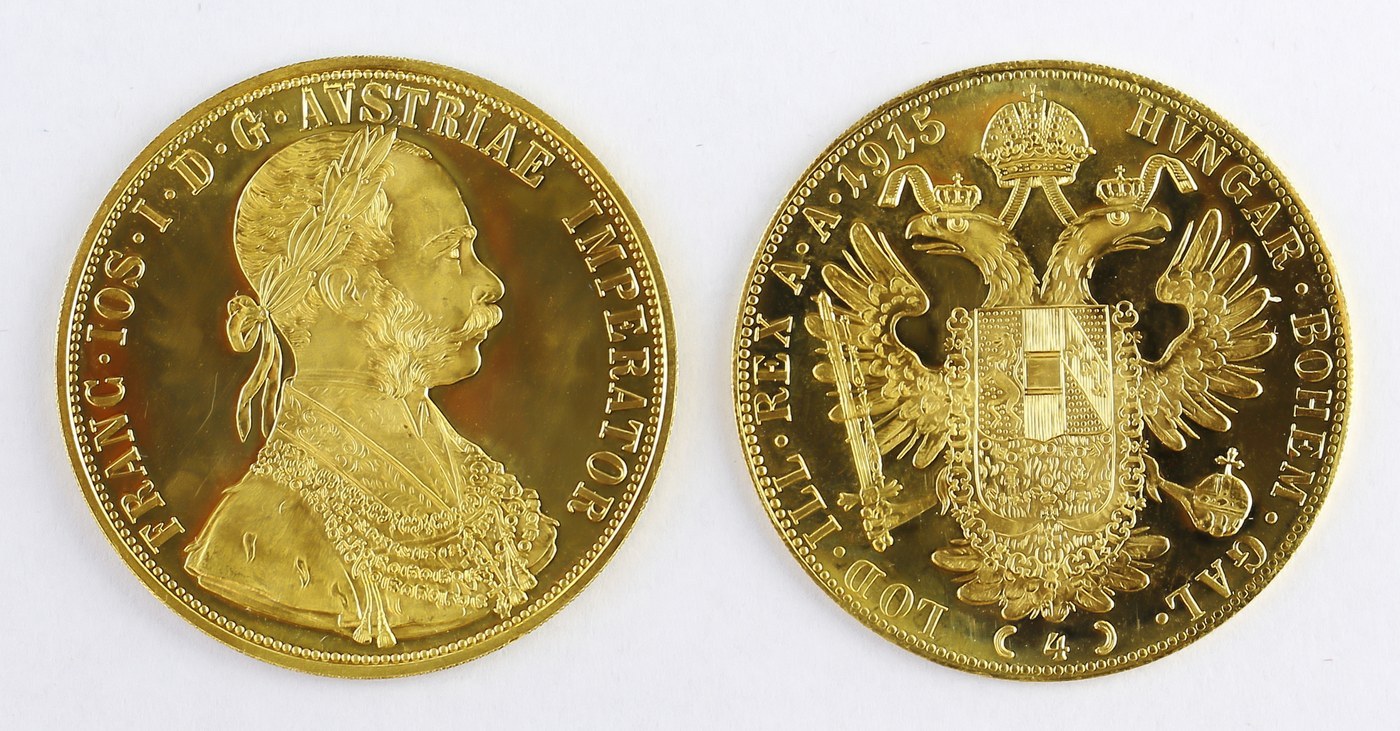
Start with the portrait. The obverse shows a right-facing bust of Franz Joseph I in military uniform with medals and a laurel wreath. Read the surrounding Latin legend, which abbreviates his name and imperial titles; confirming the ruler's name in the inscription is more reliable than judging the face alone, since the mint used several portrait styles across his long reign.
Read the reverse. Look for the crowned double-headed imperial eagle with wings spread, carrying a detailed heraldic shield on its breast and holding a sword, orb and sceptre. The denomination and the date 1915 are arranged around the eagle. The value marking distinguishes the 4 Ducat from the far more common single ducat, which shares the same designs but is much smaller.
Check size, metal, and module. The 4 Ducat is a large-diameter but thin gold coin of high fineness (roughly .986). Weigh and measure it against published specifications for the type — genuine ducat gold is dense, warm-toned, and non-magnetic. A coin that is too light, too thick, or off-diameter is a warning sign.
Understand restrikes and look-alikes. Most 1915-dated 4 Ducats are official mint restrikes, so the date alone tells you the type, not the striking year. Do not confuse this coin with the single 1 Ducat (same imagery, smaller) or with Austria's 1915 gold Corona and Hungarian ducats, which use different legends and denominations. Verify the 4 Ducat value on the reverse.
Authenticate carefully. Large gold coins are frequently counterfeited or made as gilt or underweight copies. Inspect the edge and surfaces, judge whether the eagle feathers, medals, and lettering are crisp rather than soft, and confirm weight and diameter. For any valuable example seek specialist review or third-party certification and compare recent auction records for matching coins.
Frequently asked questions
How do I tell a 4 Ducat from a single Ducat?
Both share the Franz Joseph portrait and imperial eagle, but the 4 Ducat is much larger and its reverse states the higher value. Confirm the denomination marking and check the size and weight against published specifications.
Is a 1915-dated coin a fake because the empire ended soon after?
No. The Austrian mint legitimately restruck 4 Ducat coins with the frozen 1915 date for years as bullion pieces, so a genuine coin can bear 1915 yet have been struck much later.
How can I confirm it is real gold?
Genuine ducat gold is high fineness, dense, warm-toned, and non-magnetic. Weigh and measure the coin against the published standard; underweight, thick, or magnetic pieces are red flags, and valuable examples deserve professional authentication.
What does the reverse eagle represent?
It is the crowned double-headed imperial eagle of the Habsburg monarchy, bearing a heraldic coat of arms and holding a sword, orb, and sceptre as symbols of imperial authority.