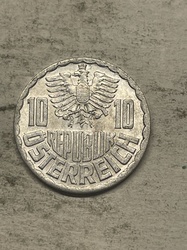
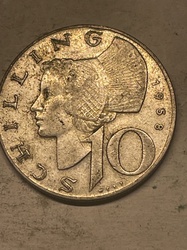
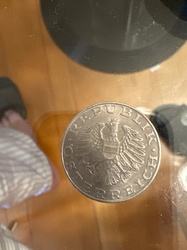
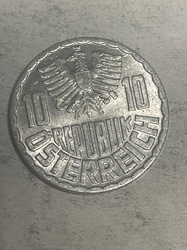
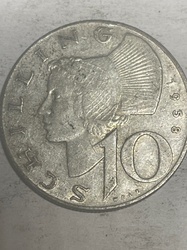
How to Identify the Austria-Hungary 10 Kreuzer
Identify a Franz Joseph 10 Kreuzer by its laureate portrait, crowned double-headed eagle, "10" value shield, Latin titles, and small low-grade silver form.
Read the full Austria-Hungary 10 Kreuzer encyclopedia entry →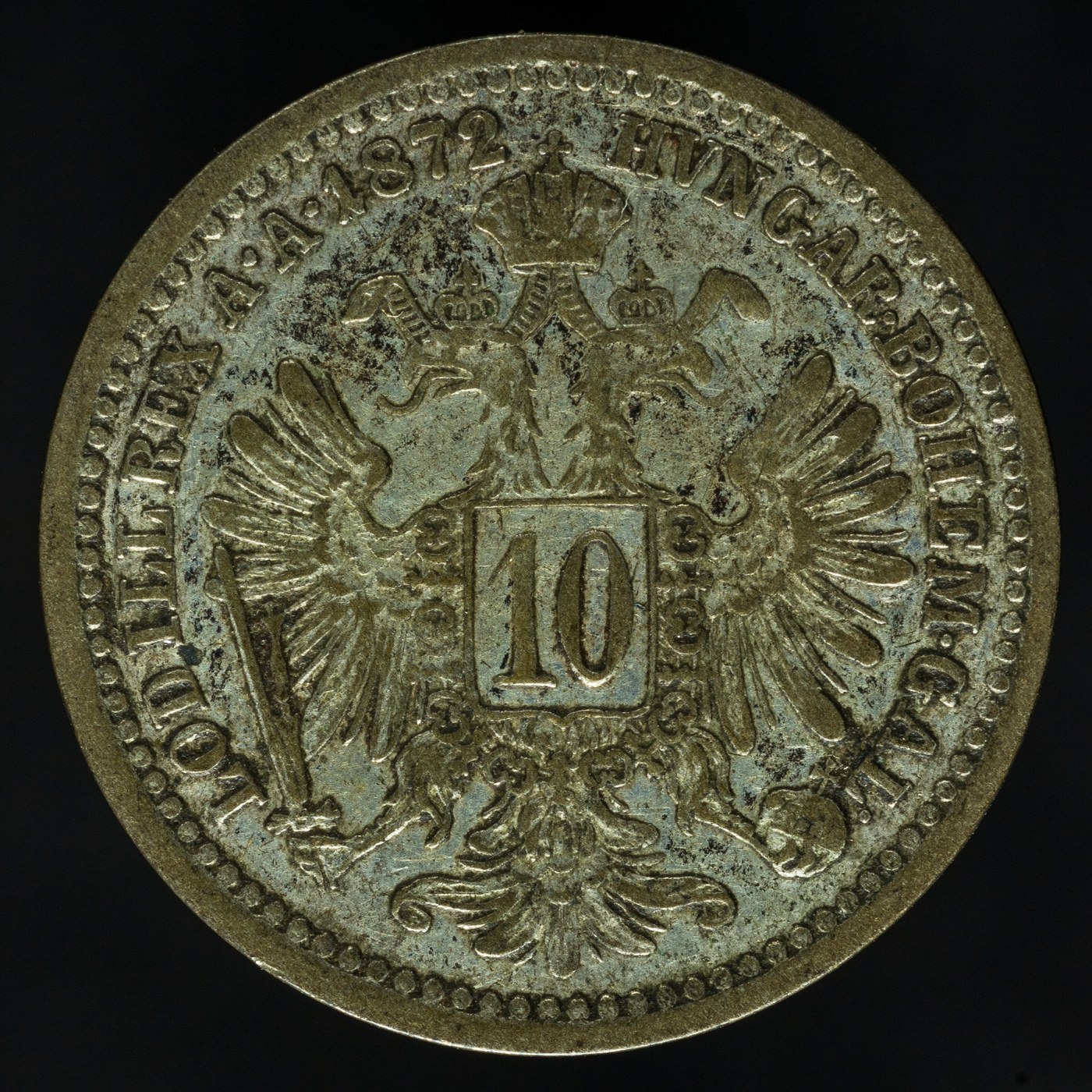
Read the two legends first. One side carries FRANC · IOS · I · D · G · AVSTRIAE IMPERATOR around a laureate head of Franz Joseph I facing right; the other carries his royal titles HVNGAR · BOHEM · GAL · LOD · ILL · REX · A · A with the date around a crowned eagle. Reading both legends confirms both the ruler and that this is an Austrian (not a separate Hungarian) issue.
Confirm the value shield. The eagle side shows a crowned double-headed imperial eagle with a shield on its breast bearing the numeral "10". That numeral is the single clearest diagnostic of the denomination. If the shield reads a different number, or there is a bust and value wreath instead of an eagle, you are looking at another Kreuzer denomination or a different series.
Check size and metal. This is a small, thin, low-grade silver coin, noticeably smaller than the silver Gulden and heavier and whiter than the copper 1 and 4 Kreuzer pieces. Genuine silver is non-magnetic; worn examples tone grey or dark. An oversized, heavy, or bright-white coin with no wear should be questioned.
Watch for look-alikes. Franz Joseph's long reign produced many similar portrait-and-eagle coins, and the parallel Hungarian coinage uses different legends and arms. Use the combination of the AVSTRIAE IMPERATOR portrait legend, the crowned two-headed eagle, the value 10, and the specific date to separate this type from the 5, 20 and other Kreuzer coins and from Gulden-series pieces that share the eagle motif.
Authenticate carefully. Small silver coins of this age can be cast copies or cleaned. Inspect the edge for casting seams, check that the legends and the eagle's feathers are crisp rather than mushy, and be wary of any magnetic response. For any better-grade or higher-value example, compare against verified specimens or seek a specialist or third-party grading opinion before buying or selling.
Frequently asked questions
How do I know it is a 10 Kreuzer and not another value?
Look for the numeral 10 in the shield on the eagle's breast. Other Kreuzer coins show different numbers, so the 10 in the shield is the key indicator of this denomination.
How can I tell the Austrian issue from the Hungarian one?
Read the legends. The Austrian type names Franz Joseph as AVSTRIAE IMPERATOR with his combined royal titles and the imperial double-headed eagle, whereas Hungarian coinage uses Hungarian-language or Hungarian-arms designs.
What signs suggest a fake or altered coin?
Casting seams on the edge, soft or blurry legends and eagle detail, incorrect size or weight, and any magnetic pull are warning signs. Genuine period silver is non-magnetic and shows natural wear.
Where is the date and mint information?
The date appears in the legend on the eagle side, here 1872. Small letters flanking the value shield on issues of this type can indicate mint or mint-master details, so examine those areas closely.
Austria-Hungary 10 Kreuzer identified by the community
Recent Austria-Hungary 10 Kreuzer coins identified with Coin Identifier.