
How to Identify the Australian Threepence (pre-decimal)
A small silver coin struck from 1910 to 1964, the Australian threepence carried the monarch's portrait on the obverse and three ears of wheat tied together on the reverse.
Read the full Australian Threepence (pre-decimal) encyclopedia entry →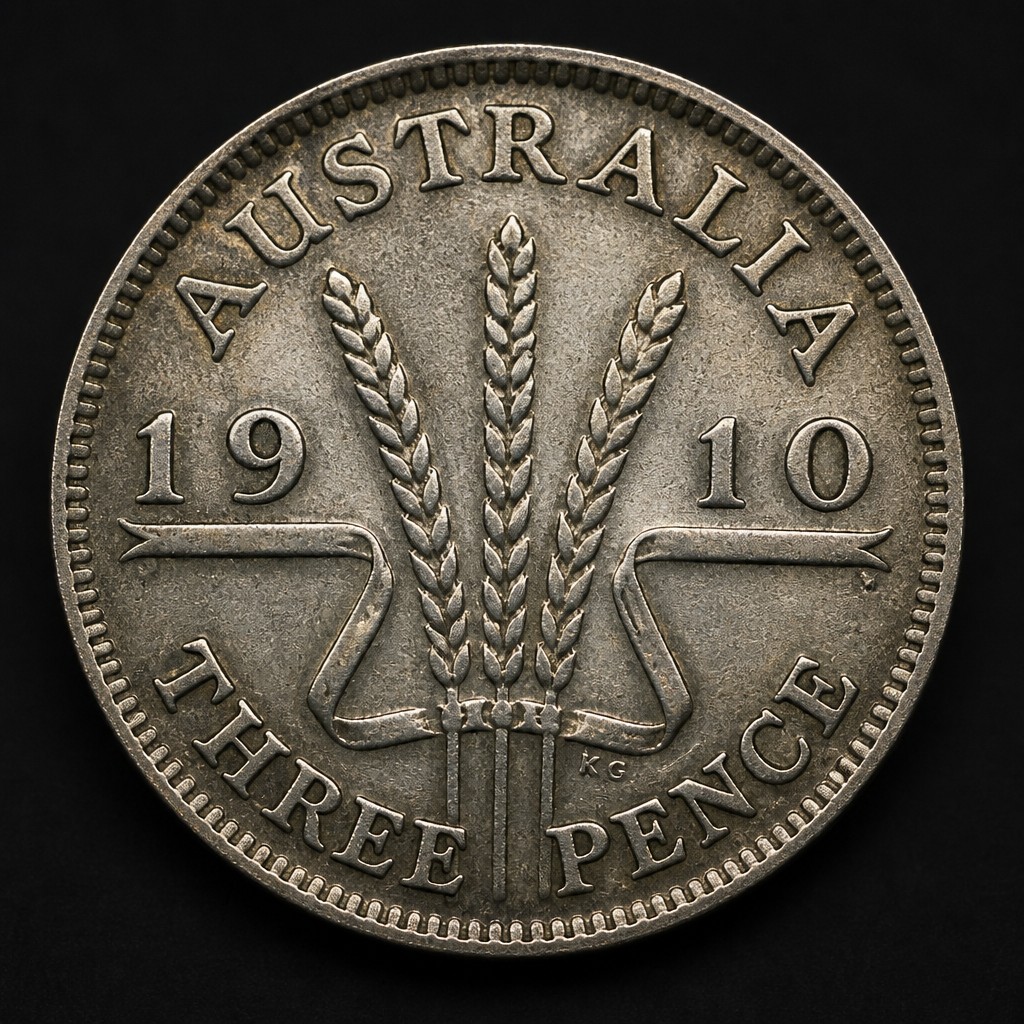
What This Coin Is
The threepence was Australia's smallest pre-decimal silver denomination, worth three pence, struck from 1910 until the series ended in 1964 ahead of decimalization in 1966. Its small size made it a common, widely circulated coin for everyday small purchases.
Obverse Design & Inscriptions
The obverse features the portrait of the reigning monarch at time of striking — King Edward VII, King George V, King George VI, or Queen Elizabeth II — with the ruler's name and title in Latin abbreviation and the date below.
Reverse Design & Inscriptions
The reverse shows three ears of wheat bound together, a simple agricultural motif used consistently throughout the series, with "THREEPENCE," "AUSTRALIA," and the surrounding design elements arranged around the wheat sheaf.
Size, Weight, Metal & Edge
Australian threepences are quite small, at about 16 mm in diameter and roughly 1.4 grams in weight. Coins from 1910 through 1945 are .925 sterling silver, while those from 1946 onward were reduced to .500 silver, matching the broader change applied across Australian silver coinage at the time. The edge is reeded.
Mint Marks & Where to Find Them
Threepences were struck primarily at the Melbourne Mint, with some years also produced at Sydney and, briefly, other mints; small mint-mark letters may appear near the date on certain issues, though many pre-decimal Australian coins show no visible mark and rely on die variety attribution by specialists.
Telling It Apart From Similar Coins
Because of its small size, the threepence is sometimes confused at a glance with the slightly larger sixpence; comparing diameter (about 16 mm for the threepence versus about 19 mm for the sixpence) and the reverse design (wheat ears on the threepence versus the Australian coat of arms on the sixpence) resolves the confusion quickly.
Judging Condition at a Glance
Look at the wheat ears' fine detail and the monarch's hair and facial features for signs of wear; because the coin is small and was heavily used in commerce, well-preserved lustrous examples with sharp wheat texture are less common than the coin's overall mintage numbers might suggest. Post-1946 lower-silver-content coins can also show duller surfaces compared to the higher-fineness earlier issues.
Authenticity Red Flags
Threepences are common and inexpensive in worn grades, so outright counterfeiting is uncommon; the main concerns are coins that have been cleaned (leaving an unnaturally bright or scratched surface) or artificially toned to appear better preserved than they are. Comparing a suspect coin's weight and silver content against the correct standard for its date is a useful check.
Frequently asked questions
What does the threepence reverse depict?
Three ears of wheat tied together, a design used consistently throughout the series from 1910 to 1964.
How is the threepence different from the sixpence?
The threepence is smaller (about 16 mm versus about 19 mm) and shows a wheat-sheaf reverse, while the sixpence shows the Australian coat of arms.
When did silver content change in the threepence?
Fineness dropped from .925 to .500 silver starting in 1946, matching changes across Australian silver coinage generally.
Is the Australian threepence rare?
Most dates are common and affordable in circulated grades; specific low-mintage years can carry a premium, but the series overall is well within reach of casual collectors.