
How to Identify the Australian Penny (1930)
The 1930 Australian penny is the country's most famous rare coin, prized for its very limited original mintage and frequently targeted by counterfeiters who alter other dates to imitate it.
Read the full Australian Penny (1930) encyclopedia entry →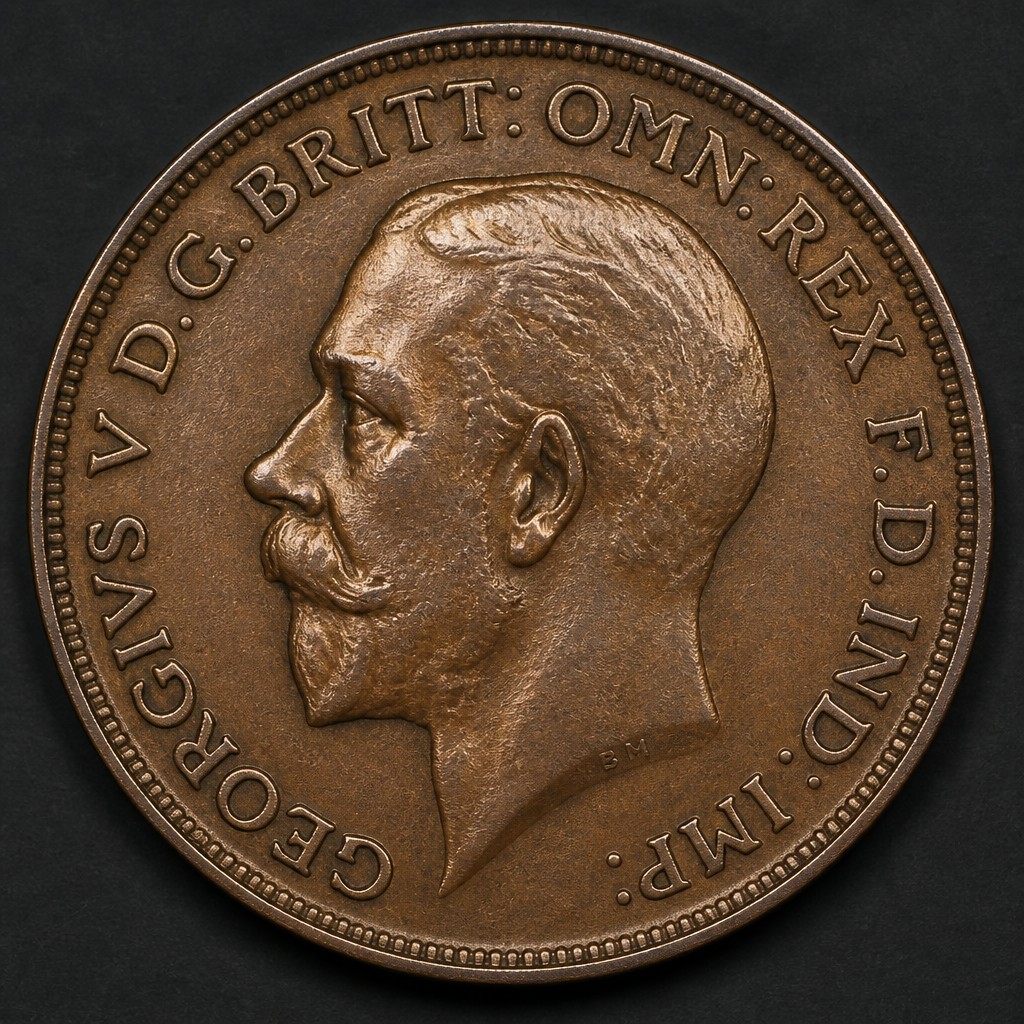
What This Coin Is
The 1930 penny is a bronze one-cent-equivalent coin from Australia's pre-decimal series, and it holds legendary status among Australian collectors as the key date of the entire penny series due to its unusually small original mintage compared to surrounding years. It was struck during the Great Depression when demand for new coinage had fallen sharply.
Obverse Design & Inscriptions
The obverse carries the portrait of King George V along with his name and title in Latin abbreviation, and the date 1930 below the bust.
Reverse Design & Inscriptions
The reverse shows a kangaroo standing amid grass and small shrubs, a design used consistently across most pre-decimal Australian pennies of this era, with "PENNY," "AUSTRALIA," and ornamental elements arranged around the border but no numeral denomination displayed.
Size, Weight, Metal & Edge
Like other pre-decimal Australian pennies, the 1930 issue is a bronze coin approximately 31 mm in diameter and weighing around 9.3 grams, with a plain edge typical of the large penny format.
Mint Marks & Where to Find Them
Australian pennies of this period were struck at the Melbourne and (rarely, for 1930) other Australian mints; genuine 1930 pennies are generally attributed to the Melbourne Mint, and specific die characteristics recognized by specialists help confirm an authentic strike rather than a later alteration.
Telling It Apart From Similar Coins
Because the 1930 penny is so highly sought after, a common approach by forgers is to alter the last digit of a more common date, such as 1929 or 1936, to resemble a "0." Careful examination of the numeral's shape, spacing relative to the other digits, and the surrounding design details compared against a verified genuine 1930 penny is essential, and professional authentication is strongly recommended before assuming a coin is genuine.
Judging Condition at a Glance
Wear first appears on the king's hair details and the kangaroo's back and legs; a well-preserved example retains crisp fur texture on the kangaroo and clear definition in the king's portrait. Because so much value rides on authenticity rather than just condition for this date, professional grading services that also confirm genuineness are commonly used for this particular coin.
Authenticity Red Flags
Given its fame and value, the 1930 penny is one of the most heavily counterfeited and altered Australian coins. Warning signs include an "0" in the date that looks slightly different in size, font, or alignment from the other digits, evidence of tooling or re-engraving around the last digit, or a coin whose surfaces show inconsistent wear patterns between the date area and the rest of the coin. Because of the risk of alteration, third-party authentication from a recognized grading service is strongly advised before purchasing an expensive example.
Frequently asked questions
Why is the 1930 Australian penny so valuable?
It had a very limited original mintage compared to other years in the series, making genuine examples scarce and highly sought after by collectors.
How can I tell if my 1930 penny is a fake?
Check the date carefully for signs that a '9' or '6' has been altered into a '0,' including differences in digit size, spacing, or tooling marks, and consider professional authentication.
What does the reverse of the coin show?
A kangaroo standing among grass and small shrubs, the standard reverse design used on most pre-decimal Australian pennies of that era.
Where was the 1930 penny struck?
Genuine examples are generally attributed to the Melbourne Mint.