How to Identify the Australian Kookaburra
A practical guide to confirming a genuine silver Kookaburra: the QEII obverse legend, the two-dollar size, weight and metal checks, the P mint mark, and fakes to avoid.
Read the full Australian Kookaburra encyclopedia entry →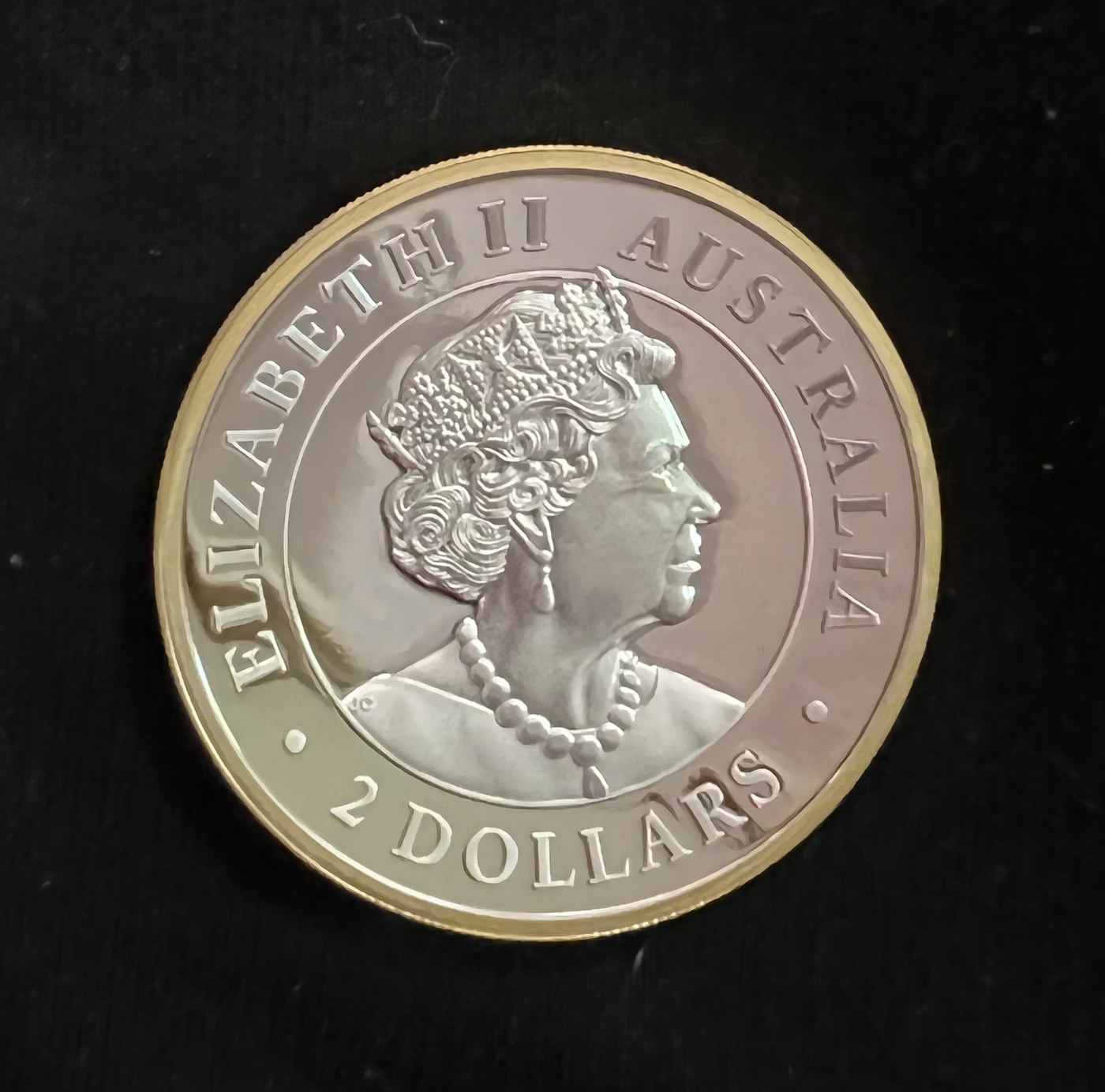
Read the obverse legend first. A genuine coin shows a portrait of Queen Elizabeth II encircled by ELIZABETH II AUSTRALIA 2 DOLLARS. The presence of the two-dollar denomination is important: it tells you this is the two-ounce Kookaburra, not the one-ounce (one dollar) coin or a larger size. A 2012 coin uses the Ian Rank-Broadley effigy of the Queen typical of that period.
Use size, weight and metal as your strongest quick check. A two-ounce silver Kookaburra is a large coin—about 50 mm in diameter with a reeded edge—and should weigh close to 62.2 grams of .999 fine silver. Weigh it on an accurate scale and measure the diameter; a coin that is underweight, undersized, or strongly attracted to a magnet is a warning sign, since silver is not meaningfully magnetic.
Examine the reverse to confirm the date. The Kookaburra reverse changes every year, so the design itself is a dating clue: the 2012 issue shows a single kookaburra perched on a branch among foliage. The reverse also carries the series name, the weight and fineness (2 oz 999 silver), the year, and a small P mint mark for the Perth Mint. The pictured design, the stated weight, and the year should all agree with a known 2012 two-ounce coin.
Watch the details that counterfeiters get wrong. Look for crisp feather and foliage detail, sharp lettering, and even reeding on the edge. Cast fakes often show soft or grainy surfaces, seams on the rim, incorrect weight, or a dull ring when tapped. Because the series has many years and sizes, compare against reference images of the exact 2012 two-ounce issue rather than any generic Kookaburra.
For higher-value or pristine examples, favor coins in original Perth Mint capsules or packaging and, when in doubt, coins certified by a recognized grading service. Buying from reputable bullion dealers reduces the risk of plated, cast, or altered pieces.
Frequently asked questions
How do I know this is the two-ounce Kookaburra and not a one-ounce?
Check the denomination in the obverse legend. The two-ounce coin reads 2 DOLLARS, while the one-ounce coin reads 1 DOLLAR. The two-ounce coin is also markedly larger and heavier, at roughly 50 mm and about 62.2 grams.
What is the fastest way to check if a silver Kookaburra is genuine?
Weigh and measure it. A two-ounce coin should be near 62.2 grams of .999 silver and about 50 mm across, with a reeded edge. Wrong weight or diameter, or any strong magnetic pull, points to a fake.
Where is the mint mark and what should it be?
Genuine Kookaburra coins carry a small P mint mark for the Perth Mint on the reverse, alongside the kookaburra, the year, and the weight and fineness. Its absence on a purported Kookaburra is a red flag.
Does the kookaburra design help date the coin?
Yes. The Perth Mint changes the reverse every year, so the specific pose is tied to a date. A single kookaburra perched among foliage matches the 2012 issue; comparing to reference images of that year confirms it.
Australian Kookaburra identified by the community
Recent Australian Kookaburra coins identified with Coin Identifier.