
How to Identify the Australian Gold Kangaroo
A guide to identifying the Australian Gold Kangaroo by its yearly-changing kangaroo reverse, its earlier Gold Nugget design, Perth Mint P mintmark, and .9999 gold purity.
Read the full Australian Gold Kangaroo encyclopedia entry →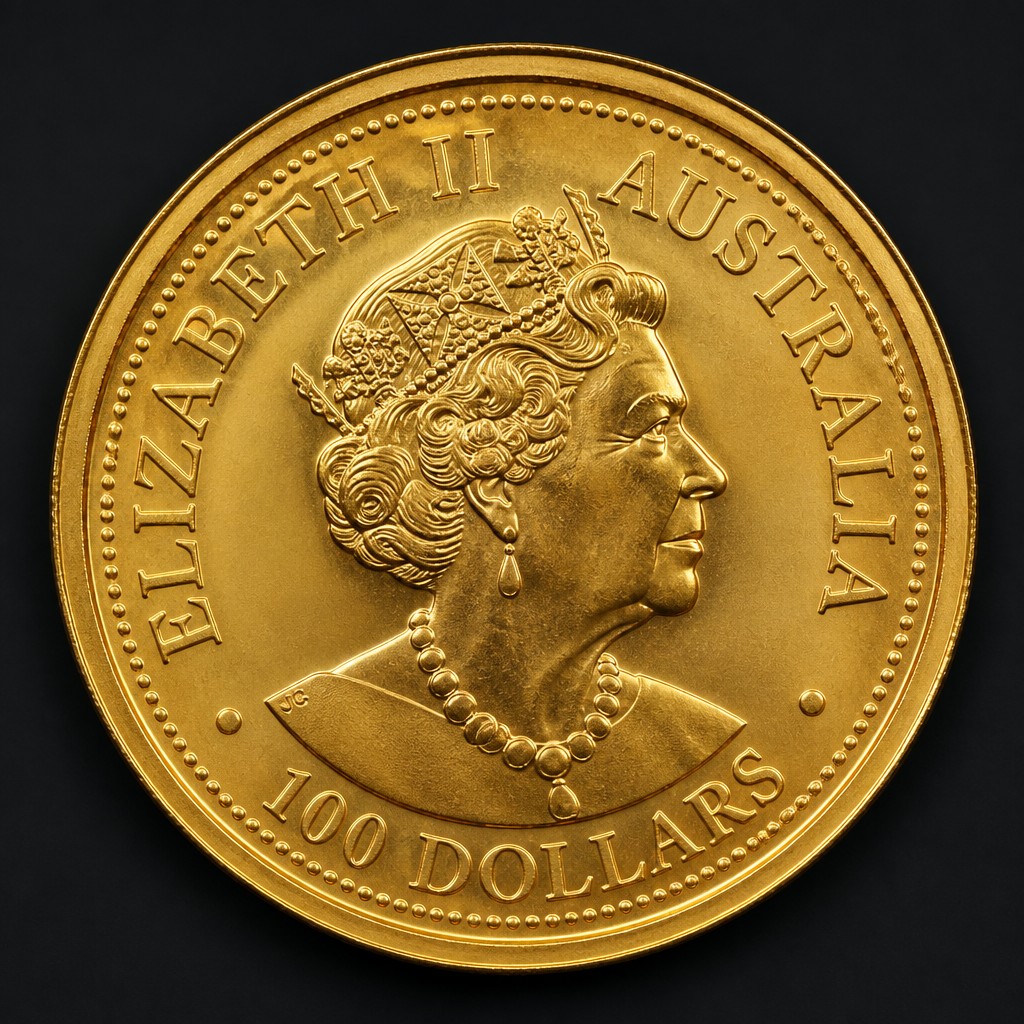
What It Is
The Gold Kangaroo is the Perth Mint's flagship gold bullion coin. It began in 1986 under the name "Australian Nugget," originally depicting actual Australian gold nuggets on the reverse. Starting in 1990, the reverse switched to a kangaroo design that has changed nearly every year since, and the coin later became widely known as the Gold Kangaroo. It remains one of the world's major gold bullion coins alongside the American Gold Eagle, Canadian Gold Maple Leaf, and South African Krugerrand.
Obverse Design
The obverse shows a portrait of the reigning monarch - Queen Elizabeth II on older coins, King Charles III on the most recent issues - along with "AUSTRALIA" and the face value.
Reverse Design
Coins from 1986 to 1989 show a depiction of an actual gold nugget. From 1990 onward, the reverse instead shows one or more kangaroos in a new pose or setting most years, along with "AUSTRALIAN KANGAROO" (or "NUGGET" on earlier coins), the weight and fineness, and the date.
Size, Weight, and Metal
Gold Kangaroos are struck in .9999 fine gold, in sizes ranging from 1/20 oz up to 1 oz, with larger kilo coins also produced.
Mint Marks and Where to Find Them
A small "P" mintmark appears within the coin's design field, identifying the Perth Mint.
Telling It Apart From Similar Coins
The easiest way to place a coin in the nugget era versus the kangaroo era is the reverse subject itself - an actual nugget shape (1986-1989) versus a kangaroo (1990 onward). Within the kangaroo era, compare that year's pose to the known design. The Gold Kangaroo is distinguished from the Silver Kangaroo primarily by metal color and weight, and from the Perth Mint's other series (Kookaburra, Koala) by its distinct kangaroo reverse.
Judging Condition at a Glance
Gold does not tone, so grading relies on surface marks and strike sharpness. Examine the fine detail in the kangaroo's fur and the nugget's texture on earlier coins for wear or bag marks, which reduce eye appeal on an otherwise uncirculated coin. A coin that has stayed in its original mint capsule usually shows uniform, undisturbed luster, while a coin that has been handled loose often develops small rim dings and light scuffing across the open field.
Authenticity Red Flags
Check that the weight and diameter match the stated denomination for .9999 fine gold, confirm the coin is not magnetic, and be cautious of a soft or indistinct strike. A "P" mintmark that is missing, blurry, or oddly placed is also worth a closer look. Weighing the coin on an accurate scale and measuring its diameter and thickness with calipers is a straightforward way to catch a counterfeit before examining finer design details, since gold-plated base-metal fakes are often close in size but slightly off in exact weight.
Frequently asked questions
Why did the Gold Kangaroo start as the 'Gold Nugget'?
From 1986 to 1989, the Perth Mint's gold bullion coin depicted actual gold nuggets on the reverse before switching to the annually-changing kangaroo design in 1990.
Where is the mint mark on a Gold Kangaroo?
A small 'P' appears within the coin's design field, identifying the Perth Mint.
What purity is the Gold Kangaroo struck in?
.9999 fine gold.
How is the Gold Kangaroo different from the Silver Kangaroo?
They share a similar kangaroo reverse theme, but the Gold Kangaroo is struck in .9999 gold while the Silver Kangaroo is struck in .999 silver, giving them different weights and colors.