
How to Identify the Australian Florin
Collector checks for the two-shilling florin: coat of arms, monarch portrait, size, silver fineness by date, and how to avoid confusing it with the shilling.
Read the full Australian Florin encyclopedia entry →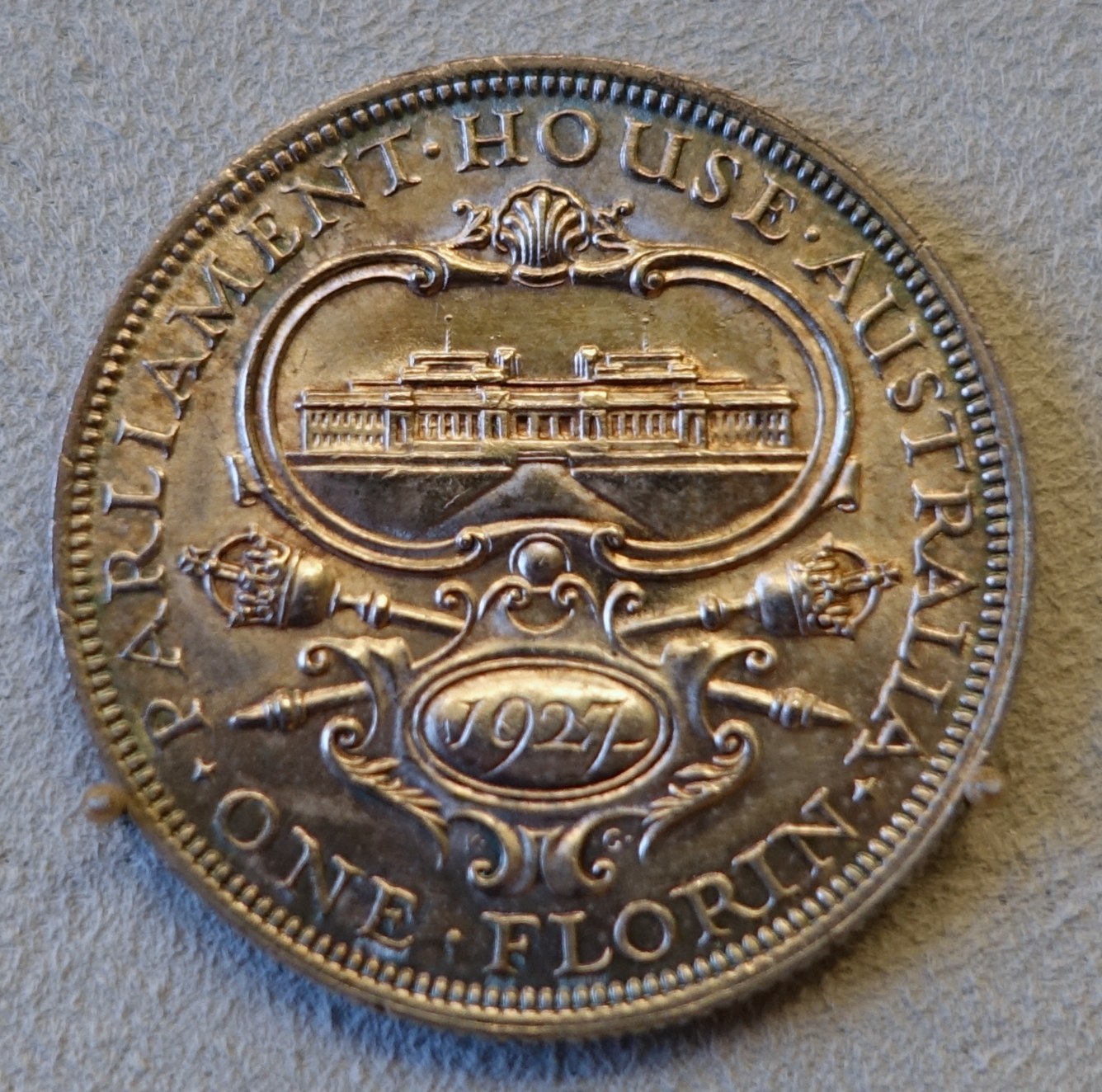
Start with size and weight. The florin is the largest of Australia's pre-decimal silver coins at about 28.5 mm in diameter, clearly bigger and heavier than the similar-looking shilling (roughly 23.5 mm). If the coin shows the coat of arms but is noticeably smaller, you likely have a shilling rather than a florin.
Read the coat of arms side. A genuine florin shows the full Commonwealth of Australia arms: a central shield within a bordered frame, a crown and six-pointed Commonwealth Star above, and a kangaroo and an emu as supporters on either side, with the word AUSTRALIA and the denomination FLORIN present. This distinguishes it from the sixpence and shilling, which use different single emblems, and confirms the two-shilling denomination.
Check the monarch and date. The portrait side identifies the era: Edward VII and George V appear on earlier issues, while George VI appears on coins from 1938 through the late 1940s, so a 1946 coin should show George VI facing left with a Latin legend. Use the date to judge the silver alloy, since coins dated 1910-1945 are .925 sterling and those from 1946 onward are .500 silver; the later, lower-silver coins can look slightly duller in tone.
Look for mint marks and varieties. Some florins carry a small mint mark or dot near the arms indicating the striking facility, and specialists track specific dates and die varieties that command premiums. Note any such marks before valuing the coin, and compare against a catalog for the exact year.
Authenticate with care. Weigh and measure the coin against published specifications, confirm it responds as silver rather than a base-metal fake, and be wary of tooled, cleaned or cast copies, especially for scarcer dates. When a coin appears to be a key date or is in high grade, third-party grading or an experienced dealer's opinion is worthwhile before buying or selling.
Frequently asked questions
How do I tell a florin from a shilling?
Size is the quickest test. The florin is about 28.5 mm across and heavier, while the shilling is smaller at roughly 23.5 mm. The florin also reads FLORIN and shows the full coat of arms with both a kangaroo and an emu.
How can I tell the silver content from the date?
Florins dated 1910 through 1945 are .925 sterling silver. Those dated 1946 and later, up to 1963, are .500 silver. So a 1946 coin like this one is the fifty percent silver alloy.
Does the florin have a mint mark?
Some issues carry a small mint mark or dot near the coat of arms to show where they were struck. Not every coin has one, so check the design near the arms and compare with a catalog for that year.
Which side is the obverse?
By convention the monarch's portrait is the obverse and the coat of arms is the reverse. On a 1946 florin the portrait side shows King George VI, and the arms side shows the kangaroo-and-emu Commonwealth crest.