
How to Identify the Australian Florin (pre-decimal)
Australia's pre-decimal two-shilling silver coin, minted from 1910 to 1963, carried the monarch's portrait on the obverse and a series of coat-of-arms and commemorative reverse designs.
Read the full Australian Florin (pre-decimal) encyclopedia entry →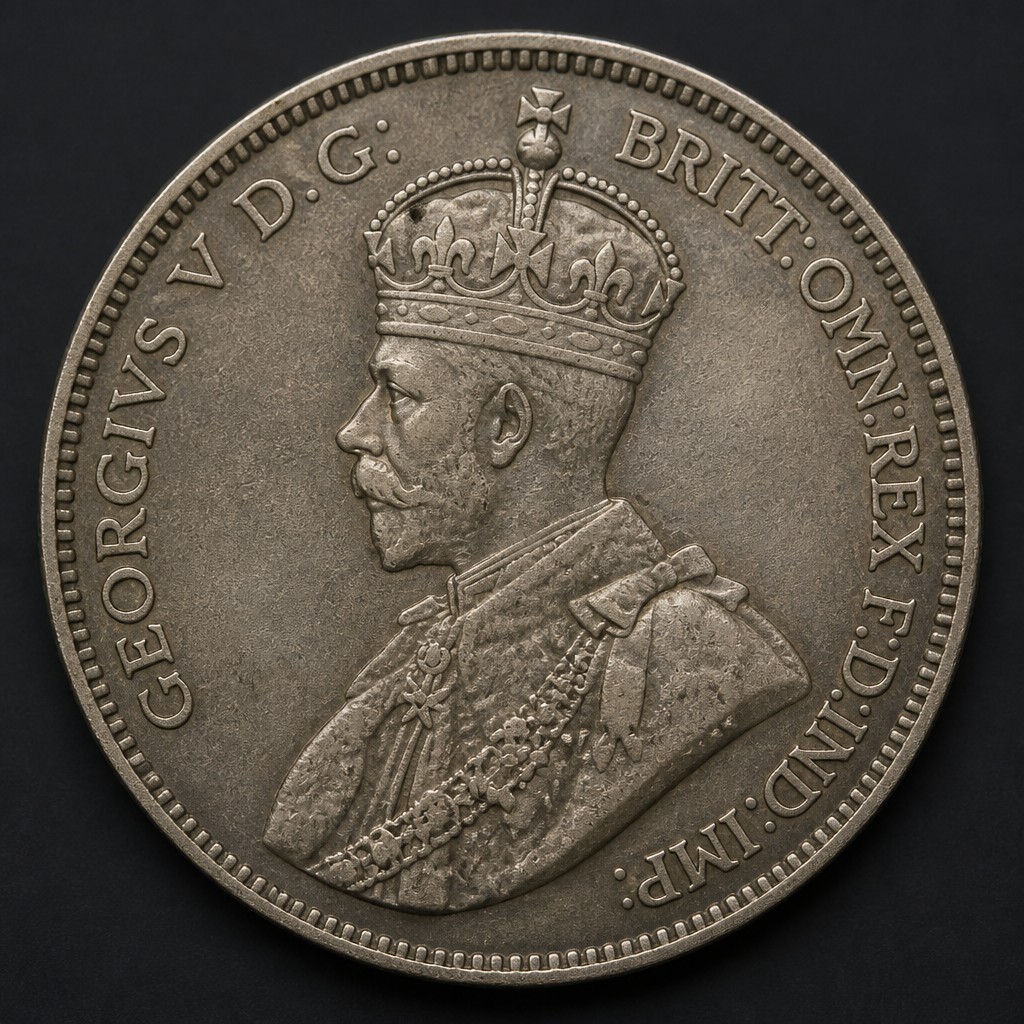
What This Coin Is
The florin was Australia's two-shilling coin, struck in silver from 1910 through 1963 as part of the pre-decimal currency system used before the 1966 switch to dollars and cents. Over its run, the florin featured several different reverse designs, including standard and special commemorative types issued for royal and national anniversaries.
Obverse Design & Inscriptions
The obverse carries the portrait of the reigning monarch at time of striking — King Edward VII, King George V, King George VI, or Queen Elizabeth II — along with the ruler's name and title abbreviations in Latin, plus the date.
Reverse Design & Inscriptions
The standard florin reverse shows the Australian coat of arms (a shield supported by a kangaroo and emu) with "FLORIN" or "TWO SHILLINGS" and "AUSTRALIA" around it, though the exact coat-of-arms rendering changed over the decades. Several special commemorative florins were also issued, including designs marking the 1927 opening of Parliament House in Canberra, the 1934–35 Melbourne Centenary, and the 1951 Jubilee of Federation, each with unique reverse artwork distinct from the standard coat-of-arms type.
Size, Weight, Metal & Edge
Australian florins measure approximately 28.5 mm in diameter and weigh about 11.31 grams. Coins struck from 1910 through 1945 are .925 sterling silver, while those from 1946 through 1963 were debased to .500 silver due to wartime and postwar silver costs. All florins have a reeded edge.
Mint Marks & Where to Find Them
Australian florins were struck at the Melbourne, Sydney, and (for a short period) Perth mints, with mint marks — a small "M" or no mark for Melbourne, and other small letters for other mints — sometimes appearing near the date, though many pre-decimal Australian coins carry no visible mint mark at all and must be attributed by die characteristics instead.
Telling It Apart From Similar Coins
Florins are similar in size to the earlier and contemporaneous Australian shilling but are notably larger and heavier; comparing diameter and weight against the shilling's roughly 23.5 mm size helps avoid confusion. Commemorative florins should be checked against the standard coat-of-arms type to identify which special issue, if any, is present, since some early commemoratives are more sought after than common-date coat-of-arms florins.
Judging Condition at a Glance
Examine the high points of the coat of arms or commemorative design, along with the monarch's hair and facial features on the obverse, for wear; the kangaroo and emu supporters on the standard reverse tend to show flattening first on circulated coins. Because post-1946 florins have lower silver content, they can also show more surface wear and toning differences compared to the higher-silver earlier issues.
Authenticity Red Flags
Because pre-decimal Australian silver coins are common and collected mainly by date and condition rather than being frequent counterfeit targets, the main concerns are cleaning (which leaves an unnaturally bright or hairline-scratched surface) and coins that have been artificially toned or altered to disguise wear; compare suspect coins' weight against the correct .925 or .500 silver standard for the date in question.
Frequently asked questions
What is the difference between a florin and a shilling in Australian pre-decimal coinage?
The florin (two shillings) is larger and heavier than the shilling (one shilling), at about 28.5 mm versus 23.5 mm in diameter.
Why did the silver content of florins change in 1946?
Rising silver costs led Australia to reduce the silver fineness from .925 to .500 starting in 1946, matching a broader Commonwealth trend.
What are commemorative florins?
Special one-year reverse designs issued for events like the 1927 Parliament House opening, the 1934–35 Melbourne Centenary, and the 1951 Federation Jubilee, distinct from the standard coat-of-arms florin.
Do Australian florins have mint marks?
Many pre-decimal Australian coins carry no visible mint mark, though some issues include a small identifying letter; attribution sometimes relies on die characteristics instead.