
How to Identify the Australian 50 Cent (round 1966 silver)
Australia's first decimal 50-cent coin, issued in 1966, was a round 80% silver piece whose rising bullion value led to rapid withdrawal and replacement by the familiar 12-sided coin in 1969.
Read the full Australian 50 Cent (round 1966 silver) encyclopedia entry →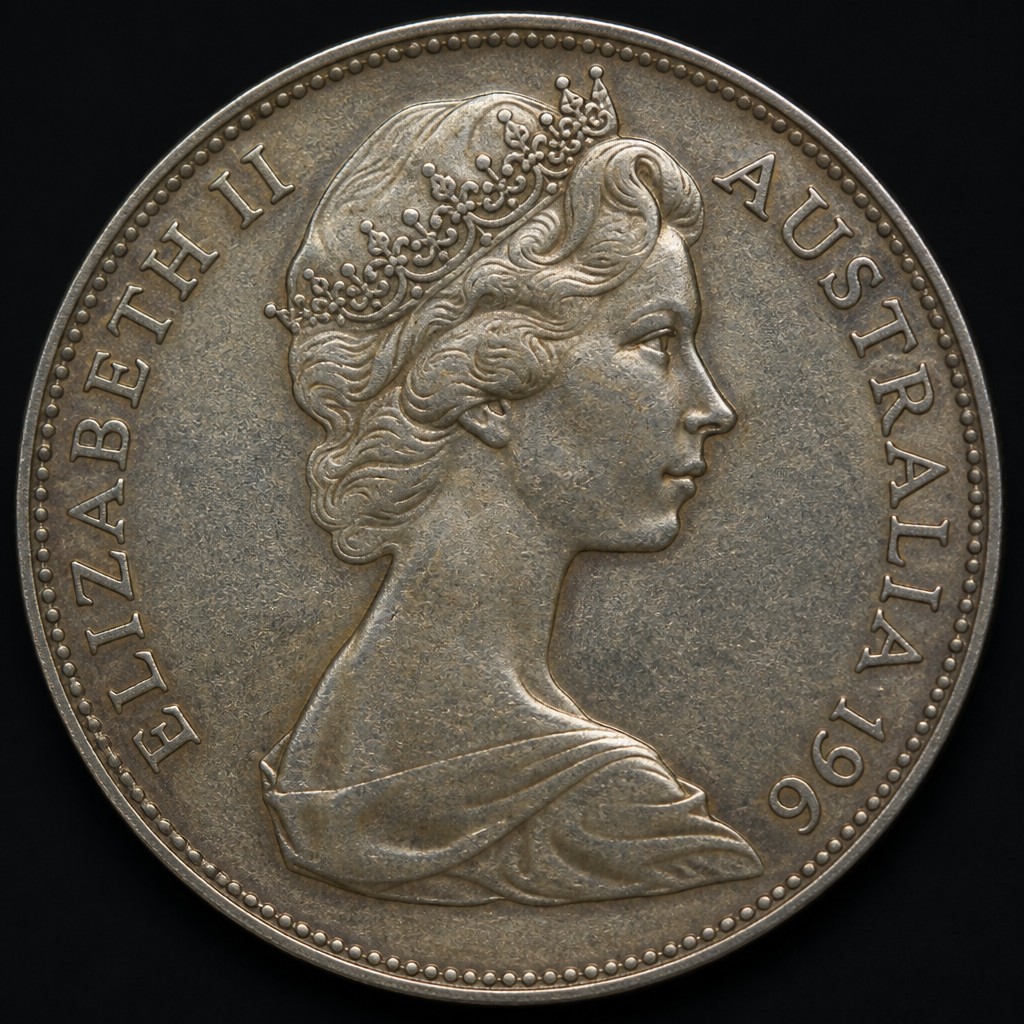
What This Coin Is
When Australia converted to decimal currency in 1966, the fifty-cent coin was initially issued as a round coin struck in 80% silver. Because the price of silver rose sharply not long after release, the coin's metal value soon exceeded its face value, prompting widespread hoarding and melting; the round silver fifty-cent piece was withdrawn from general circulation and replaced in 1969 by a smaller, 12-sided cupronickel version that continues to this day in updated form.
Obverse Design & Inscriptions
The obverse carries the portrait of Queen Elizabeth II as used on Australian decimal coinage of the mid-1960s, along with "ELIZABETH II AUSTRALIA" and the date 1966.
Reverse Design & Inscriptions
The reverse depicts the Australian coat of arms — a shield with state badges, supported by a kangaroo and emu, with a wattle motif — along with "50" and "CENTS" marking the new decimal denomination.
Size, Weight, Metal & Edge
The round 1966 fifty-cent coin measures about 31.5 mm in diameter and weighs approximately 13.28 grams, struck in .800 fine silver, with a reeded edge typical of the era's larger denomination coins.
Mint Marks & Where to Find Them
These coins were struck at Australian mint facilities without a distinguishing mint-mark letter on the coin itself; identification relies on the date (1966 specifically for the round silver type) and the coin's larger round shape and silver-gray color rather than any mint mark.
Telling It Apart From Similar Coins
The round 1966 fifty-cent piece is easily distinguished from the 12-sided cupronickel fifty-cent coins used from 1969 onward by its shape (round versus 12-sided) and its heavier, silver-colored appearance. Because it is the only round silver fifty-cent coin in Australia's decimal series, any coin matching this description and date can generally be identified with confidence, though weight should be checked to rule out plated fantasy pieces.
Judging Condition at a Glance
Examine the fine feathering on the emu and kangaroo, the wattle sprigs, and the Queen's portrait for wear; because so many examples were saved for their silver content rather than spent, a relatively high proportion of surviving coins remain in decent uncirculated or lightly circulated condition compared to typical circulating coinage of the same era.
Authenticity Red Flags
Because of its silver content, verify the coin's weight (about 13.28 grams) and diameter match official specifications, and be wary of lightweight copies or base-metal coins silver-plated to imitate the original. Given how many genuine examples were saved rather than melted, well-preserved authentic coins are not especially hard to find, reducing the incentive for forgery, but weight-checking remains a simple and effective verification step.
Frequently asked questions
Why was the round 1966 fifty-cent coin withdrawn?
Rising silver prices pushed the coin's melt value above its face value, leading to hoarding and melting, so it was replaced by a smaller 12-sided cupronickel version in 1969.
What is the silver content of the 1966 fifty-cent coin?
It is struck in .800 fine silver.
How do I tell it apart from later fifty-cent coins?
The 1966 coin is round and silver-colored, while all fifty-cent coins from 1969 onward are 12-sided and made of cupronickel.
Is the round 1966 fifty-cent coin rare?
It is common in absolute terms since many were saved for their silver content, but it remains popular with collectors for its unique one-year round silver design.