
How to Identify the Aureus of A. Manlius Vulso
A collector's guide to recognizing this late-Republican Roman gold aureus by its capped head, horseman-with-standard reverse, metal, and legend.
Read the full Aureus of A. Manlius Vulso encyclopedia entry →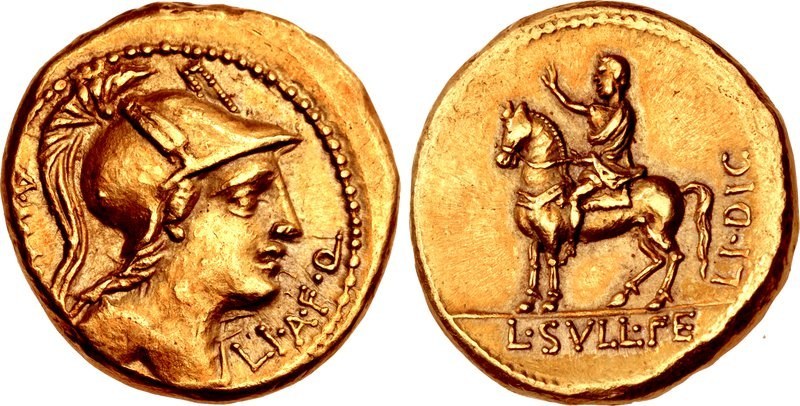
Begin with the metal and fabric. This is a gold aureus, so it should be a small coin that feels distinctly heavy for its diameter, with the warm, non-tarnishing color of gold rather than the gray of silver or the green patina of bronze. As a hand-struck ancient coin, expect a slightly irregular, not perfectly circular flan, high-relief engraving, and often an off-center strike. Perfectly round, uniformly flat, or seam-bearing pieces are warning signs of casting or modern manufacture.
Read the obverse for the key diagnostic: a head wearing a Phrygian cap, the soft pointed cap with a forward-curling tip, facing to the left. Distinguish this from bare heads, helmeted heads of Roma, or laureate portraits found on other Republican types. The cap is the primary obverse identifier for this issue.
Check the reverse for a horseman riding to the right while holding a military ensign or standard aloft. This mounted, standard-bearing figure sets the type apart from the many Republican reverses showing chariots, deities, or standing figures. Look along the fields and borders for the abbreviated moneyer's name referencing Manlius; ancient legends are heavily abbreviated and letters are often partly off the flan, so match whatever survives against a catalog rather than expecting a full inscription.
Confirm the attribution using a standard reference to Roman Republican coinage, pairing the exact head-and-horseman combination with the surviving legend, since imagery alone can overlap between issues. Weigh and measure the coin and compare it to published specifications for aurei of this period; a piece that is significantly under or over the expected gold weight warrants suspicion.
Finally, treat authentication as essential. Republican gold is scarce and valuable, which makes it a common target for forgery, including cast copies, tooled surfaces, and modern fantasy pieces. Have any candidate examined by a specialist in ancient numismatics and favor coins with documented provenance and, where available, an expert opinion or auction pedigree.
Frequently asked questions
What is the fastest way to tell this from a silver denarius?
Check the metal: an aureus is gold, so it is smaller but noticeably heavier for its size and keeps a warm golden color, whereas a denarius is silver and lighter for its diameter. Gold does not tarnish gray the way silver does.
What is a Phrygian cap and why does it matter here?
A Phrygian cap is a soft, pointed cap with a forward-curling tip. On this issue the obverse head wears one facing left, which is the main feature that separates it from bare, helmeted, or laureate heads on other Republican coins.
The legend is incomplete. How do I still identify it?
Ancient legends are heavily abbreviated and frequently run off the edge of a hand-struck flan. Record whatever letters survive, note the capped head and horseman-with-standard reverse, and match that combination against a standard Roman Republican coinage catalog.
Should I have it authenticated before buying or valuing it?
Yes. Republican gold is scarce and heavily forged, so any aureus at this value should be reviewed by an ancient-coin specialist, ideally with documented provenance or an auction pedigree, before you rely on any valuation.