
How to Identify the Aurelian Antoninianus
A guide to identifying Aurelian's reformed antoninianus (270-275 AD), including the new XXI/KA mint marks introduced by his 274 AD currency reform and his Sol Invictus reverse types.
Read the full Aurelian Antoninianus encyclopedia entry →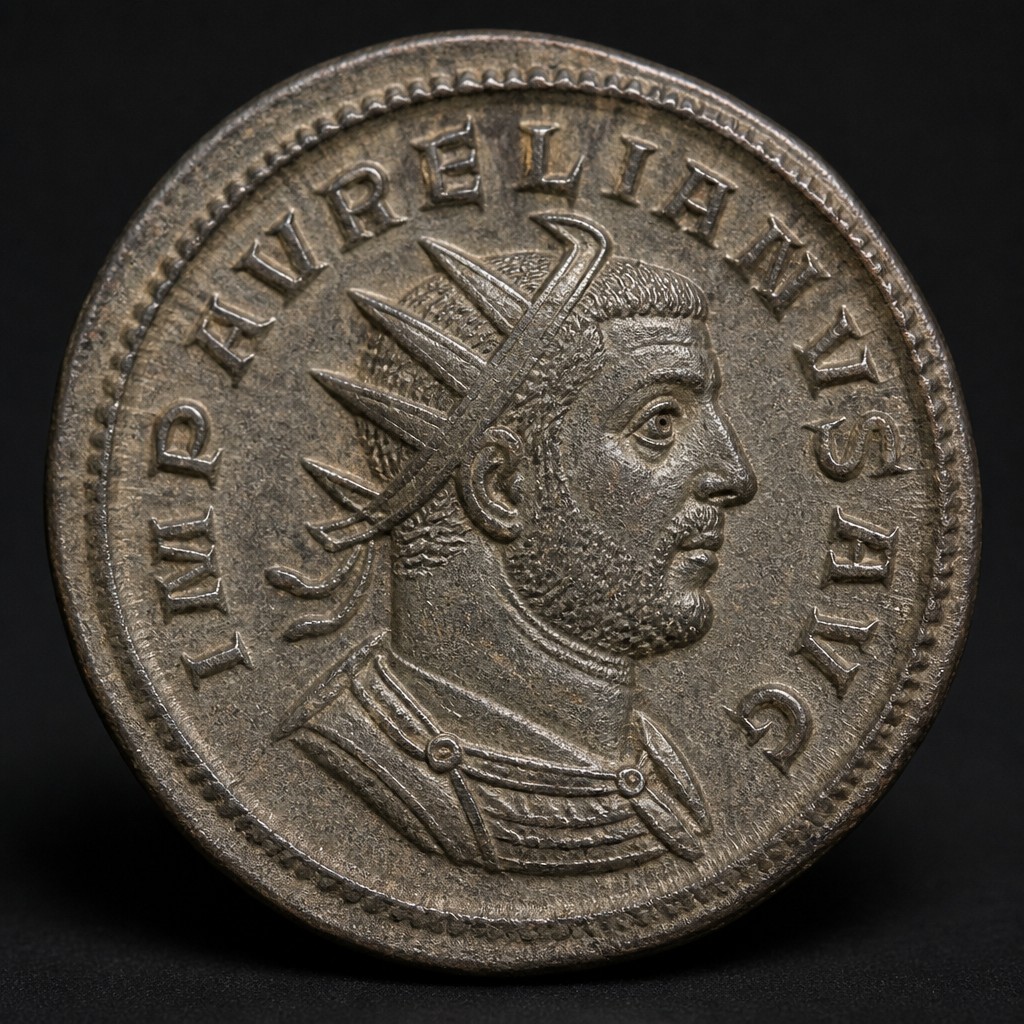
What Is the Aurelian Antoninianus?
Aurelian reigned from 270 to 275 AD and is remembered for reunifying the Roman Empire after defeating the breakaway Gallic and Palmyrene empires, and for enacting a major coinage reform in 274 AD that briefly improved the consistency and silver content of the antoninianus.
Obverse Design and Inscriptions
The obverse shows a radiate, cuirassed bust right with the legend IMP AVRELIANVS AVG.
Reverse Design and Inscriptions
Sol Invictus, the "Unconquered Sun" whose cult Aurelian actively promoted, appears frequently, standing with a globe and a raised hand. Also common are Concordia Militum, Fortuna Redux, and Restitutor Orbis, showing the emperor receiving a wreath from a female figure representing the world.
Size, Weight, and Metal
Post-reform coins measure roughly 21-23mm and weigh about 3.5-4 grams, with visibly brighter, more consistent silvering than earlier third-century issues.
Mint Marks and Where to Find Them
This is the first reign with a fully systematic mint-mark scheme. Post-reform coins carry an exergue mark such as XXI or KA, generally understood to indicate a fixed alloy ratio, combined with mint identifiers such as R for Rome, and city abbreviations for Siscia, Serdica, Cyzicus, Antioch, and Tripolis, plus an officina letter or numeral.
Telling It Apart from Similar Coins
His wife Severina's coins show a diademed female bust. The eastern ruler Vabalathus, briefly recognized alongside Aurelian on joint Alexandrian issues, has his own distinct portrait and titles, a useful check when a coin seems to name two rulers together.
Judging Condition at a Glance
Check the radiate crown, cheek, and especially the legibility of the exergue mint mark, since a clear mark both aids dating and helps confirm the coin's mint of origin.
Authenticity Red Flags
Exergue mint marks are sometimes crudely re-engraved on lower-grade fakes to suggest a different or rarer mint; compare the style and placement of the mark against known genuine layouts. Overall weight and the brightness of the silvering are also useful checks, since genuine post-reform coins should look noticeably better made than pre-reform issues from just a few years earlier.
Frequently asked questions
What changed with Aurelian's 274 AD coinage reform?
It introduced better and more consistent silvering on the antoninianus along with a systematic exergue mint-mark scheme, including alloy marks like XXI or KA and city/officina codes.
What does the XXI or KA mark mean?
It is generally read as indicating a fixed alloy ratio in the coin, commonly interpreted as roughly twenty parts base metal to one part silver.
What is the most common reverse type on Aurelian's coins?
Sol Invictus, the Unconquered Sun, appears very frequently, reflecting the solar cult Aurelian promoted during his reign.
How do I tell a genuine mint mark from an altered one?
Compare the style, spacing, and placement of the mark against documented genuine layouts for that mint; a mark that looks crudely added, oddly placed, or inconsistent with the coin's wear level is worth further scrutiny.