
How to Identify the Aurangzeb Rupee
A collector's guide to attributing a Mughal silver rupee to Aurangzeb: reading the couplet, mint-and-date formula, size, metal and common look-alikes.
Read the full Aurangzeb Rupee encyclopedia entry →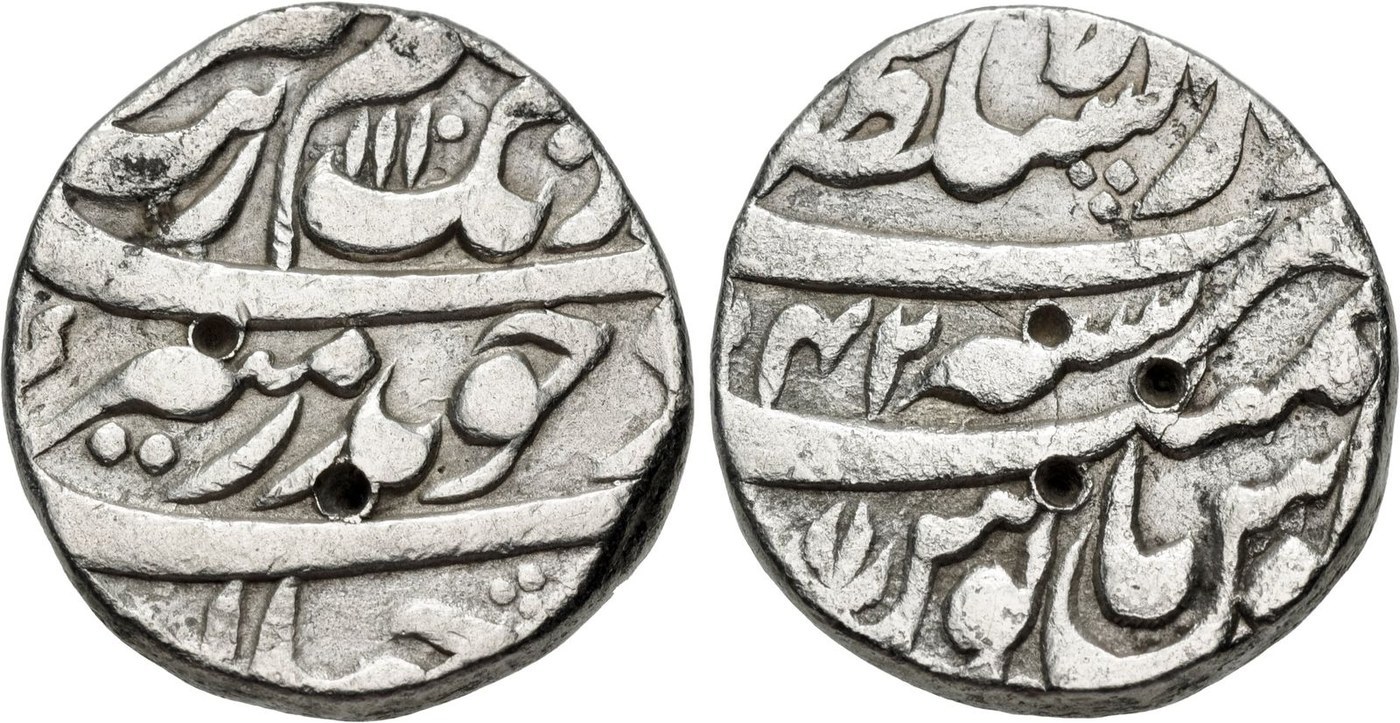
Start with the basics of the flan. An Aurangzeb rupee should be silver, roughly circular but often slightly irregular, about 21–24 mm across and near 11.0–11.6 grams. A coin that is much lighter, magnetic, or clearly base metal is either a different denomination, a modern fake, or a replica. Because the dies were larger than the blank, expect an off-center strike with part of the legend running off the edge — this is normal for hand-struck Mughal silver and is not a defect.
Attribution hinges on the obverse legend. Aurangzeb's rupees carry a Persian couplet praising the emperor and naming him with his title Alamgir, distributed across cartouches, rather than the Islamic kalima found on many earlier Mughal coins. If you can read the ruler's name in that couplet, you have confirmed the emperor; the absence of the creed and the presence of the laudatory verse are strong signals of an Aurangzeb issue over a Shah Jahan or earlier piece.
The reverse tells you where and when. Look for the mint formula built around "zarb" (struck at) plus a city name, followed by the regnal (julus) year and often the Hijri date — here AH 1110 (AD 1699–1700) — framed by ornamental devices. Correctly reading the mint city and the julus year is the most important step for a serious attribution, because value and rarity within the series depend far more on mint and date than on the emperor alone.
Watch for look-alikes. Other Mughal emperors, later successors, and various princely-state issues used the same aniconic, all-Persian format and can appear very similar at a glance, so never assume an old-looking Indian silver coin is Aurangzeb's without reading the name. Posthumous and imitation issues also exist. Be cautious of tourist-market forgeries and cast copies: genuine coins are struck (not cast), so seams, bubbles, a soft mushy surface, or a mold line around the edge are warning signs.
When in doubt, weigh and measure the coin, photograph both faces clearly, and have the Persian legend read by someone familiar with Mughal epigraphy or checked against standard references. An accurate mint-and-date reading not only confirms the coin is Aurangzeb's but also determines where it stands among common and scarce issues.
Frequently asked questions
How can I tell an Aurangzeb rupee from another Mughal ruler's rupee?
Read the obverse couplet: Aurangzeb's coins name him with the title Alamgir and replace the Islamic creed with a verse praising the emperor. The ruler's name in the legend is the definitive identifier.
Where is the date on the coin?
The reverse carries the mint formula with the city name, the regnal (julus) year, and frequently the Hijri (AH) date. On this coin the date is AH 1110, about AD 1699–1700.
Why is my coin off-center with part of the writing missing?
That is typical of hand-struck Mughal rupees. The dies were larger than the blank, so most coins show only part of the full legend and are rarely perfectly centered.
How do I spot a fake?
Genuine rupees are struck, not cast. Watch for casting seams, air bubbles, a soft or grainy surface, incorrect weight, or magnetic metal. When unsure, check weight and diameter and have the legend verified against reference material.