
How to Identify the Augustus Denarius
A visual guide to the silver denarius of Emperor Augustus, covering his portrait styles, common reverse types like Gaius and Lucius Caesar, and how mint origin affects the coin's look.
Read the full Augustus Denarius encyclopedia entry →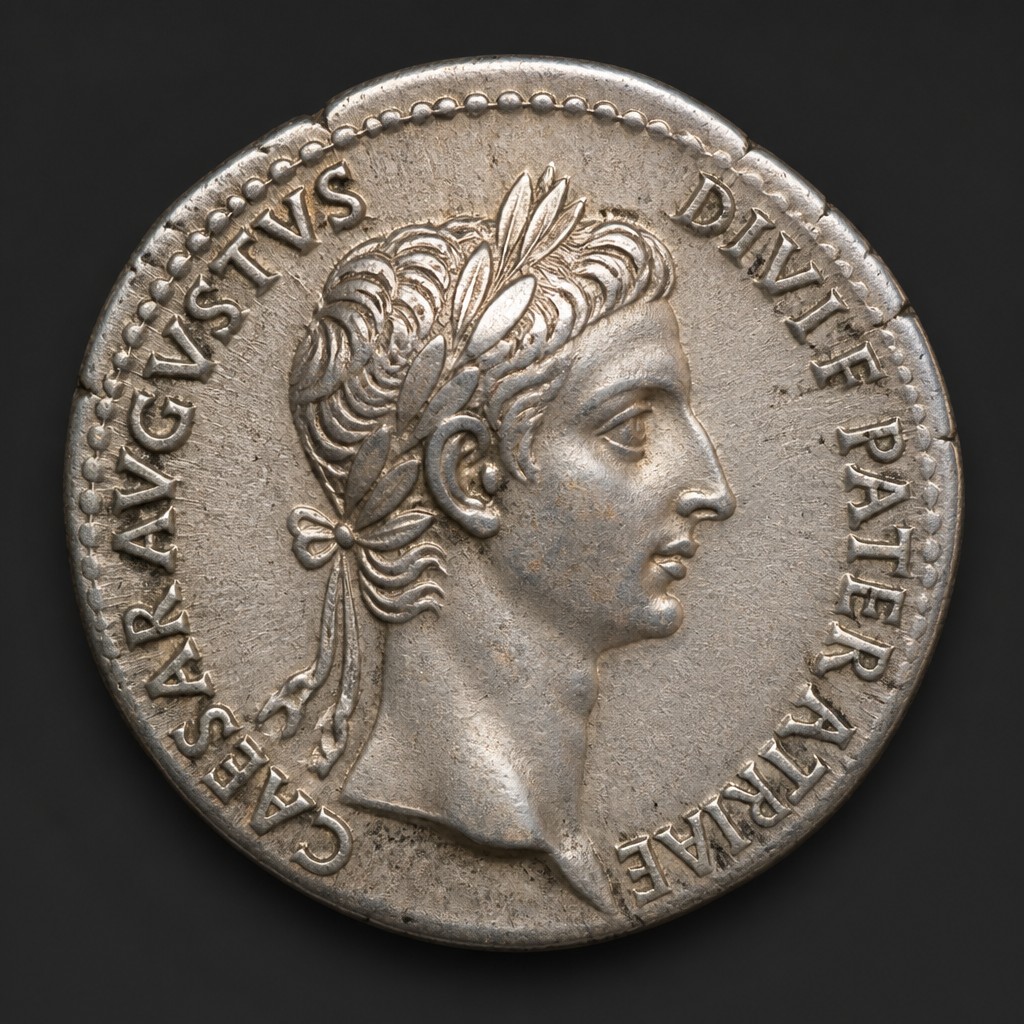
What This Coin Is
This silver denarius was struck under Augustus, Rome's first emperor, who reigned from 27 BC to AD 14. It marks the shift from Republican coin design to imperial portrait coinage as the standard.
Obverse Design
The obverse shows a bare or laureate head of Augustus facing right, occasionally left, with an abbreviated title legend around the portrait, commonly some variation of CAESAR AVGVSTVS. Portraits from the prolific Lugdunum (Lyon) mint are especially common and stylistically consistent from issue to issue.
Reverse Design
Reverse types vary widely, including Augustus's grandsons and heirs Gaius and Lucius Caesar standing beside shields and spears (a very common Lugdunum type with a CAESARES legend), a Capricorn holding a globe or cornucopia, and standing figures of Pax or Victory.
Size, Weight, and Metal
These denarii measure roughly 18-19mm across and were struck in silver at a weight close to the period standard of about 3.8 grams, with a plain hand-struck edge.
Mint Marks and Attribution
Most surviving examples come from the high-volume Lugdunum mint and show no separate mint abbreviation, but portrait style and letter forms help distinguish them from the smaller output of the Rome mint, which tends toward sharper, more classically detailed engraving.
Telling It Apart From Similar Coins
Compare against Julius Caesar's earlier lifetime and posthumous denarii, which look rougher and more Republican in style, and against Tiberius's later "Tribute Penny" type denarius, which shares a similar Lugdunum fabric but shows a different, older portrait and a seated female reverse figure instead of the Caesares type.
Grading at a Glance
Check the sharpness of Augustus's profile, especially the nose and hair strands, and the standing figures' facial and drapery detail on the reverse. These coins were produced in large numbers, so mild die wear is common and does not automatically indicate a low grade.
Authenticity Red Flags
Watch for soft, indistinct lettering or a portrait that looks unusually idealized compared to the somewhat sharp-featured genuine style. Weigh the coin against the roughly 3.8 gram standard, since many fakes are cast slightly underweight and often show a telltale seam along the edge.
Frequently asked questions
Why do so many Augustus denarii look the same?
A huge number were struck at the Lugdunum mint using a limited set of standardized dies, especially the Gaius and Lucius Caesar type, so a consistent style across many surviving coins is expected rather than suspicious.
What is the significance of the Capricorn reverse?
Capricorn was believed to be Augustus's astrological birth or conception sign and was used as a personal emblem on several of his coin issues.
How do I know if my coin is from Rome or Lugdunum?
Lugdunum issues tend to show a plumper, more uniform portrait style tied to the Caesares reverse, while Rome mint issues generally show finer, more varied classical engraving; specialized references compare exact letter forms and portrait dies for confirmation.
Does the coin ever show Augustus with his full name and titles?
Legends are almost always abbreviated due to limited space, so expect shortened forms like CAESAR AVGVSTVS rather than his full formal titulature spelled out.