
How to Identify the Athens New Style Owl Tetradrachm
A later Athenian silver tetradrachm featuring Athena's head on the obverse and an owl standing on an amphora within a wreath on the reverse, packed with magistrate names and control marks.
Read the full Athens New Style Owl Tetradrachm encyclopedia entry →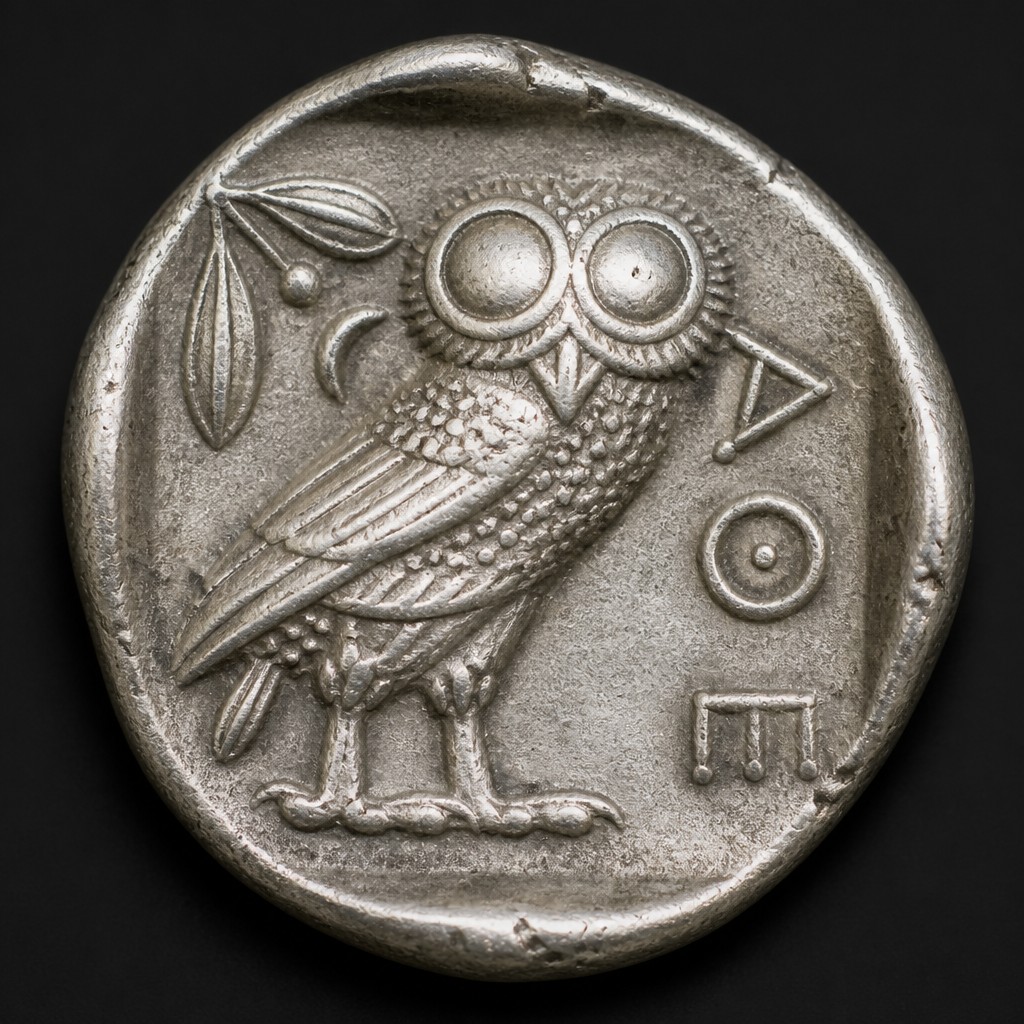
What This Coin Is
This is the "New Style" Athenian tetradrachm, a later evolution of Athens's famous owl coinage produced from roughly the mid-second century BC into the first century BC. It differs sharply in appearance from the earlier, austere "Old Style" owls, adopting a broader flan, a wreathed reverse design, and a wealth of inscribed names that make these coins a rich source of historical detail.
Obverse Design
The obverse shows the helmeted head of Athena facing right, wearing a triple-crested Attic helmet typically decorated with a floral scroll or other ornament above the visor. The style is more naturalistic and finely modeled than the archaic-looking Athena heads on earlier Athenian owls, reflecting Hellenistic artistic conventions.
Reverse Design
The reverse depicts an owl standing frontally on its two legs atop a tipped-over amphora (storage jar), with its wings closed and head turned to face the viewer. This entire scene sits inside a wreath, usually of olive leaves, which frames the design. Around and within the wreath, the coin carries the abbreviated ethnic AΘE (for Athens), along with the name of an annual magistrate, a secondary name or monogram, and various small symbols or letters on the amphora itself, all used to track the year and officials responsible for the issue.
Size, Weight, and Metal
These are larger and flatter than earlier owls, typically 28 to 34 millimeters in diameter, struck on broad thin silver flans weighing close to the Attic standard of about 16.5 to 17 grams. The edge is plain, as with virtually all hand-struck ancient silver.
Mint Marks and Where to Find Them
Unlike coins that rely on a single small control mark, New Style tetradrachms are unusually text-heavy: look for a magistrate's name written out along the wreath, a second name or monogram in the field, and a small symbol (such as an amphora device, a plant, or an animal) that changes from issue to issue. These combinations of names and symbols let researchers arrange the coinage into a detailed year-by-year sequence.
Telling It Apart From Similar Coins
The broad flan, wreath border, and owl-on-amphora composition make New Style tetradrachms easy to distinguish at a glance from the compact, plain-field Old Style owls of the fifth and fourth centuries BC, which show a simple standing owl with an olive sprig and crescent moon but no wreath or inscribed names. Other Greek cities occasionally used owl imagery, but the specific amphora perch, wreath frame, and Athenian magistrate inscriptions are unique to this Athenian series.
Judging Condition at a Glance
Examine Athena's helmet crest and facial features on the obverse, and the owl's head, wing feathers, and the amphora's outline on the reverse, since these are the highest-relief points most prone to wear. Because the design is wordy, also check whether the magistrate names and control symbols are legible, as worn or weakly struck examples can lose this identifying detail even when the main devices remain clear.
Authenticity Red Flags
Genuine examples show crisp, individually cut lettering for the magistrate names; blurry, garbled, or oddly spaced letters can indicate a cast copy or later imitation. A grainy surface texture, a visible casting seam, or a weight noticeably below the expected range are additional warning signs. Because New Style owls were influential and widely circulated, they have also attracted contemporary ancient imitations, so unusual style combined with an implausible magistrate name pairing is worth researching further before assuming authenticity.
Frequently asked questions
How is this different from the classic Athenian owl tetradrachm?
The New Style coinage uses a broader, thinner flan, adds a wreath border around the reverse, perches the owl on an amphora instead of showing it standing alone, and inscribes magistrate names, unlike the plain, compact Old Style owls of earlier centuries.
What do the names around the wreath mean?
They record the annual magistrates responsible for the issue, along with control symbols, allowing the coinage to be organized into a detailed chronological sequence by researchers.
Why is the flan so broad and thin compared to other tetradrachms?
This wide, flat fabric was a deliberate style choice of the New Style series, distinguishing it visually from both earlier Athenian coinage and contemporary issues from other Greek mints.
What metal and weight should I expect?
These are silver coins generally weighing close to 16.5 to 17 grams, consistent with the Attic weight standard used for Athenian tetradrachms throughout their history.