
How to Identify the Arles Miliarensis
A collector's guide to recognizing a 4th-century Roman silver miliarensis by its diademed portrait, armed reverse figure, size, and Arles mint mark.
Read the full Arles Miliarensis encyclopedia entry →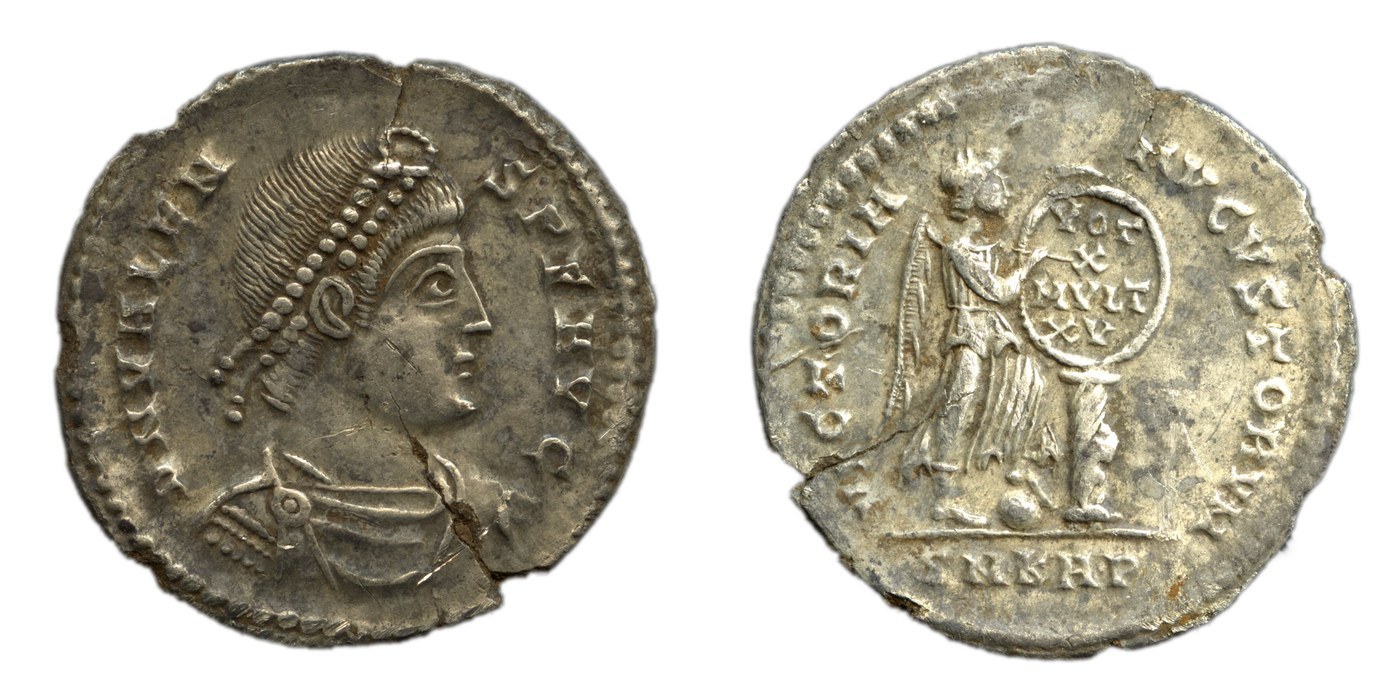
Begin with the metal and physical scale. A miliarensis is silver, and it should feel and look like a substantial silver coin, broader and heavier than the thin siliqua yet smaller than a gold solidus. If the coin is bronze, or is a wispy, small silver flan, it is a different late-Roman denomination. Getting the denomination right is the first and most important step before any mint attribution.
Examine the obverse portrait. This type shows a right-facing imperial bust wearing a pearl diadem, the beaded band across the brow that marks Constantine the Great and his 4th-century successors, as opposed to the radiate crowns or laurel wreaths of earlier Roman coinage. Read the surrounding Latin legend carefully; it names the emperor and his titles and is essential for narrowing down which ruler you have, since the portrait style alone is often ambiguous across the Constantinian dynasty.
Turn to the reverse and the exergue. The reverse figure here is a standing armed personage holding a spear and shield, a standard late-Roman military motif, accompanied by its own legend. The mint mark in the exergue, the small letters below the ground line, is what ties the coin to Arles (Arelate); an Arles attribution depends on marks associated with that city, which was also called Constantina for a time. Do not assume the mint from the design alone, since the same reverse types were struck at multiple mints.
Be cautious about look-alikes and authenticity. Late Roman silver, including miliarenses and siliquae, has been widely copied and cast, and modern forgeries as well as ancient imitations exist. Watch for casting bubbles, seams, incorrect weight, tooling, or soft mushy detail. Because this is a higher-value silver type, it is prudent to seek confirmation from a specialist in Roman coins or a reputable dealer, and to weigh and measure the coin against published standards before relying on any attribution.
Frequently asked questions
How do I tell a miliarensis from a siliqua at a glance?
Compare size and weight. The miliarensis is the larger, heavier silver coin, while the siliqua is a thinner, smaller silver piece. Weighing and measuring the coin against published figures is the surest quick check.
Where is the mint mark on this coin?
Look in the exergue, the space below the ground line beneath the reverse figure. The small letters there indicate the mint; an Arles coin carries marks tied to Arelate, sometimes rendered under the name Constantina.
What does the pearl diadem tell me?
The beaded pearl diadem places the coin in the Constantinian era or later 4th century, distinguishing it from earlier Roman portraits that use laurel wreaths or radiate crowns. It points to Constantine the Great or one of his successors.
Should I worry about fakes?
Yes. Late Roman silver is frequently forged or cast, and this is a valuable type. Check weight, look for casting seams or bubbles and unnatural surfaces, and get a specialist or reputable dealer to confirm authenticity before buying or selling.