
How to Identify the Argentine Peso Moneda Nacional (Patacón)
Nicknamed the 'Patacón,' the 1880s silver Peso Moneda Nacional features a Liberty head obverse and national arms reverse, and was Argentina's standard large silver coin under its early national currency system.
Read the full Argentine Peso Moneda Nacional (Patacón) encyclopedia entry →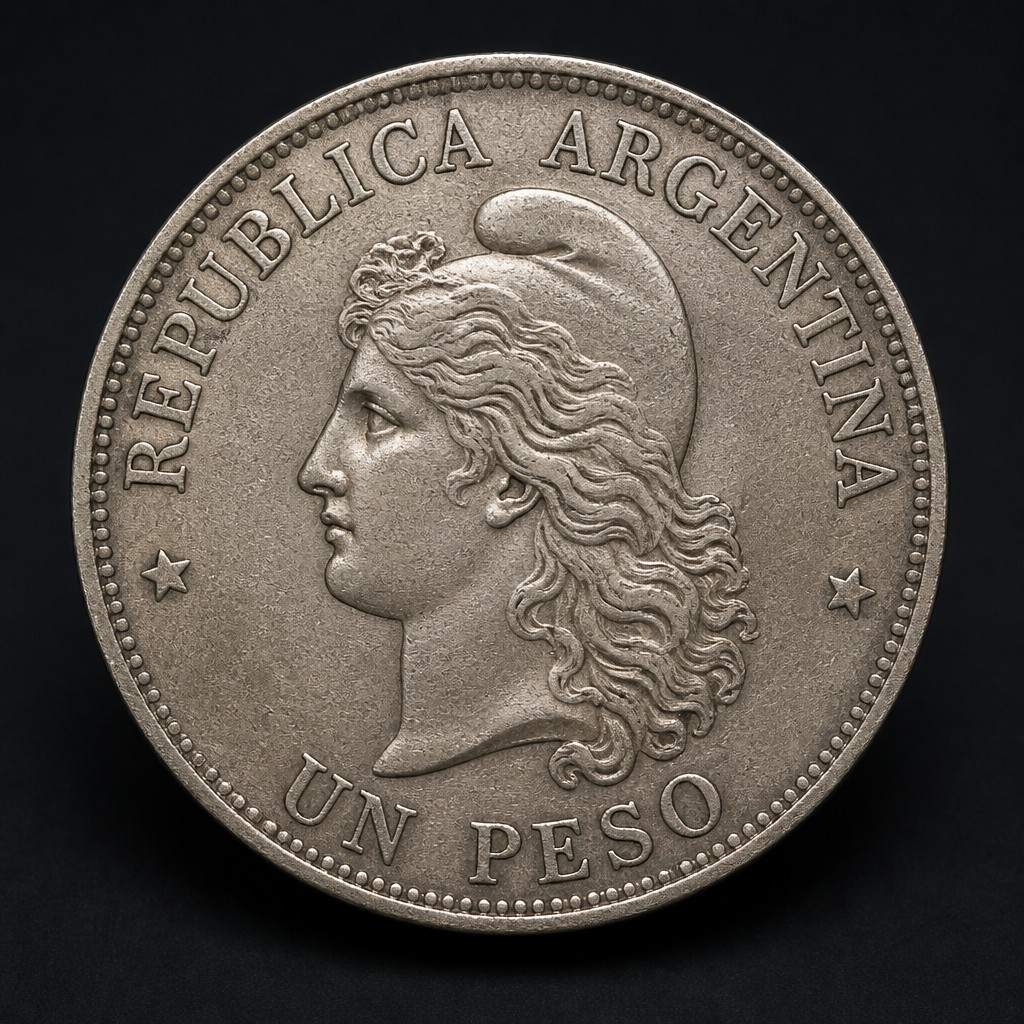
What the Coin Is
The Peso Moneda Nacional was Argentina's silver peso issued starting in the early 1880s under the country's national currency reform. Collectors nicknamed a well-known type the "Patacón," a colloquial Spanish term historically used for large silver coins generally. It circulated as the principal silver denomination of the era.
Obverse Design & Inscriptions
The obverse displays a Liberty head facing left (or right, depending on variety), often wearing a cap or with flowing hair, sometimes accompanied by rays or a radiant border. The legend "REPUBLICA ARGENTINA" typically arcs around the portrait, with the date below.
Reverse Design & Inscriptions
The reverse carries the Argentine coat of arms — two clasped hands holding a staff topped by a Phrygian cap, framed by a rising sun, with the denomination "UN PESO" and "MONEDA NACIONAL" inscribed around or below the arms.
Size, Weight, Metal, Edge
This silver peso weighs approximately 25 grams with a diameter near 37 mm, in .900 fine silver, matching the international silver crown standard of the period. The edge is reeded.
Mint Marks & Where to Find Them
Most coins of this type were struck without a distinct mintmark or bear a small mint identifier near the date; check the area just below the portrait and along the rim near the legend for any small die markers or engraver initials.
Telling It Apart from Similar Coins
Because several Latin American nations issued similar Liberty-head silver pesos in this era (including Uruguay and other neighboring states), always confirm the country name "REPUBLICA ARGENTINA" in the legend and the specific coat-of-arms details — the clasped hands and sun are unique to Argentina's design.
Judging Condition at a Glance
Check the hair detail and cap of the Liberty portrait, along with the fine lines of the sun's rays on the reverse, as these wear down first. A sharp strike will show individual hair strands and distinct facial features; well-worn examples flatten the portrait into a smooth profile.
Authenticity Red Flags
Genuine pieces have a properly reeded edge and a dense, cool feel typical of struck silver. Suspect coins with mushy or indistinct lettering, a magnetic response, incorrect diameter, or a edge that looks molded rather than mechanically reeded, all of which point toward a modern reproduction or cast counterfeit.
Frequently asked questions
Why is this coin called the 'Patacón'?
'Patacón' is a traditional Spanish-language nickname for a large silver coin, and it stuck to this particular Argentine peso type among collectors and the public.
What images appear on the coin?
The obverse shows a Liberty head portrait, while the reverse displays Argentina's coat of arms with clasped hands, a Phrygian cap, and a rising sun.
What is the coin's silver content?
It was struck in .900 fine silver, weighing about 25 grams with a diameter around 37 mm.
How can I distinguish it from other Latin American Liberty-head pesos?
Look for the legend 'REPUBLICA ARGENTINA' and the specific clasped-hands-and-sun coat of arms, which are distinct from neighboring countries' designs.
What areas show wear first?
The Liberty head's hair and facial features on the obverse, and the sun's rays on the reverse, tend to smooth out first with circulation.