
How to Identify the Argentine Argentino Gold (5 Pesos)
The 'Argentino' was Argentina's gold 5-peso coin issued in the 1880s and 1890s, built to international gold-standard specifications and identifiable by its Liberty head obverse and national arms reverse.
Read the full Argentine Argentino Gold (5 Pesos) encyclopedia entry →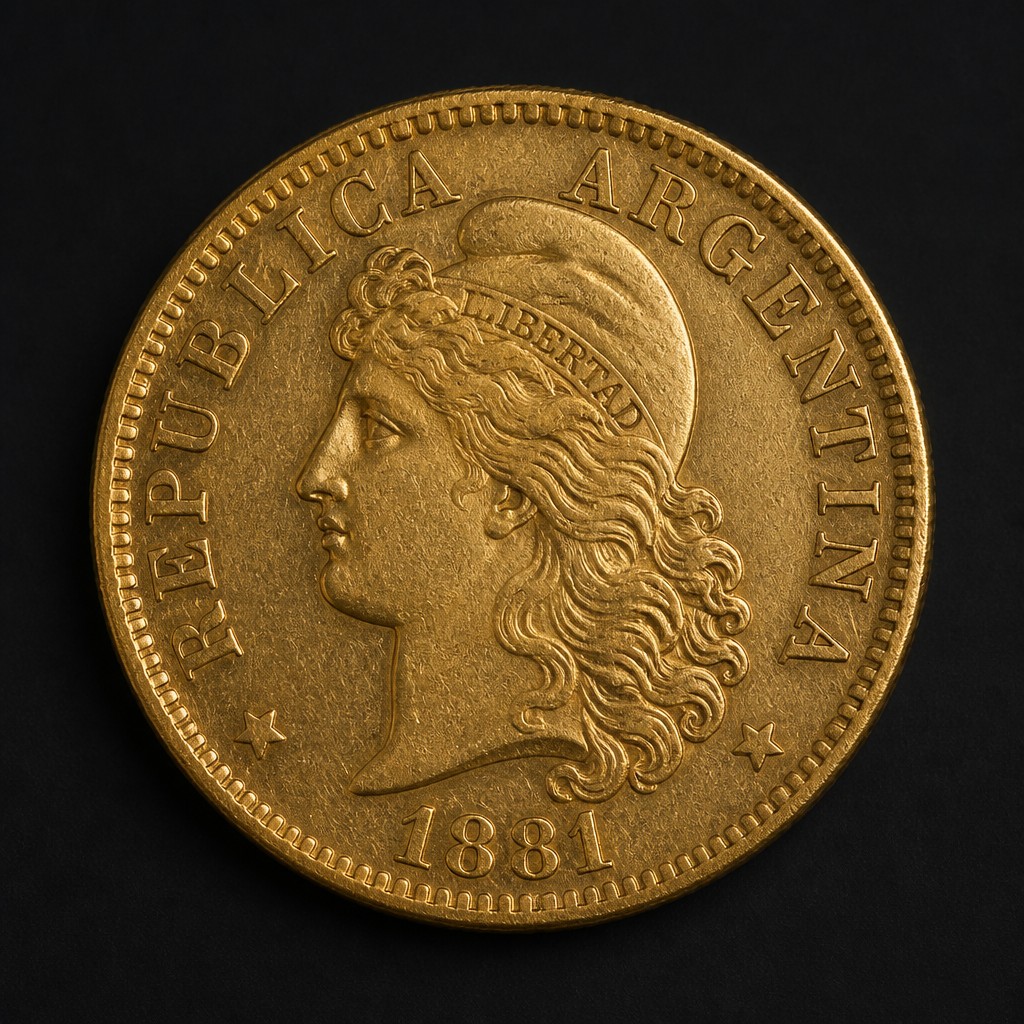
What the Coin Is
The Argentino was a gold coin equal to 5 pesos oro sellado, struck by Argentina in the 1880s and into the mid-1890s as the country aligned its coinage with the international gold standard, similar in weight concept to gold coins from France, the United States, and other trading partners of the period.
Obverse Design & Inscriptions
The obverse features a Liberty head portrait, generally shown facing left, with detailed hair and, on some varieties, a simple cap or band. The legend "REPUBLICA ARGENTINA" curves around the upper rim, with the date positioned below the neckline.
Reverse Design & Inscriptions
The reverse displays the national coat of arms — clasped hands supporting a staff and Phrygian cap beneath a rising sun — surrounded by the denomination and any additional inscriptions noting the coin's weight standard or fineness.
Size, Weight, Metal, Edge
Struck in .900 fine gold, the Argentino weighs approximately 8.06 grams with a diameter around 22 mm, deliberately sized to be compatible with other gold-standard coins circulating internationally at the time. The edge is reeded.
Mint Marks & Where to Find Them
Check near the date or along the coin's lower rim for small mint or assay markers; because these were produced during a period of standardized gold coinage, design consistency across dates is generally high, making the date itself the most useful identifying feature.
Telling It Apart from Similar Coins
Its size and weight are close to several other contemporary gold coins (such as certain 20-franc-equivalent pieces), so always confirm the Argentine national arms and "REPUBLICA ARGENTINA" legend rather than relying on size alone. The clasped-hands-and-sun motif on the reverse is the clearest national identifier.
Judging Condition at a Glance
Gold wears more slowly than silver but still shows friction on the Liberty head's highest curls and the sun's rays on the reverse first. A sharply struck, lightly handled coin retains fine definition in the hair; a well-circulated example shows a smoother, softer profile overall.
Authenticity Red Flags
Because gold coins are common counterfeiting targets, verify weight and diameter precisely against known standards, and check the color — genuine .900 fine gold has a warm, slightly muted yellow tone rather than the brassy or overly pale look of base-metal fakes or gold-plated counterfeits. A magnet test should show no attraction, and the edge reeding should be crisp and even.
Frequently asked questions
What was the Argentino used for?
It served as Argentina's gold 5-peso coin, aligned with the international gold standard so it could circulate alongside comparable foreign gold coins.
How much gold does it contain?
It's struck in .900 fine gold and weighs about 8.06 grams.
What images are on the coin?
A Liberty head portrait appears on the obverse, and the Argentine coat of arms with clasped hands and a rising sun appears on the reverse.
How do I know it's not a similar-sized foreign gold coin?
Confirm the 'REPUBLICA ARGENTINA' legend and the clasped-hands coat of arms, since several countries' gold coins share a similar size and weight class.
What's a simple check against counterfeits?
Verify the exact weight and diameter with a scale and calipers, check for a non-magnetic response, and inspect the edge reeding for crispness and consistency.