
How to Identify the Argentina 8 Reales
A large silver coin struck in the early Argentine Republic and its predecessor provinces, continuing the colonial Spanish 8 reales tradition with a sun and liberty cap design.
Read the full Argentina 8 Reales encyclopedia entry →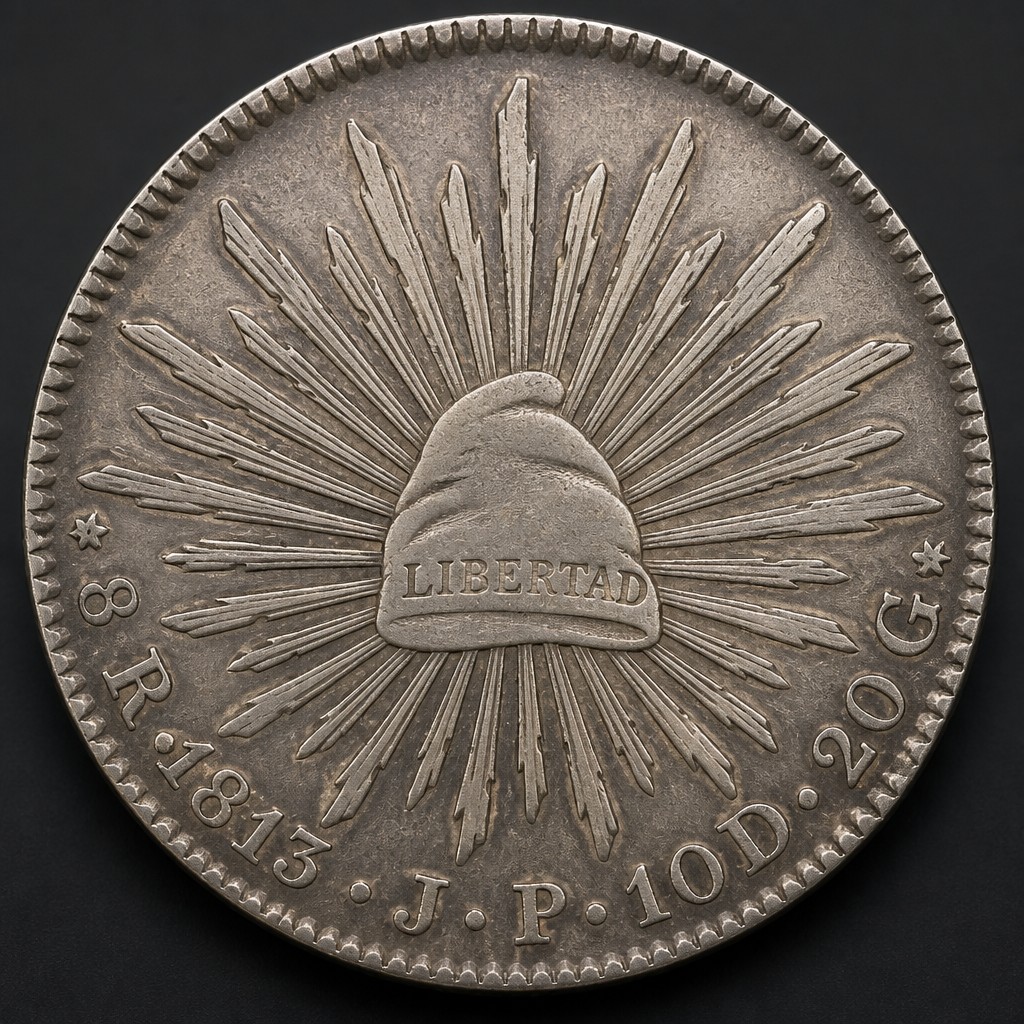
What This coin Is
The Argentina 8 Reales refers to large silver coins struck in the early 19th century by the United Provinces of the Rio de la Plata and successor Argentine authorities, continuing the size and denomination tradition of the Spanish colonial "piece of eight." These coins funded early independence-era commerce and are historically significant transitional pieces between colonial and national coinage, bridging the gap between Spanish royal issues and the fully republican coinage that followed.
Obverse Design & Inscriptions
The obverse commonly features a radiant sun with a human face, known as the "Sun of May," a national symbol representing independence, sometimes combined with clasped hands or a liberty cap on a pole. Legends around the border typically read something like "EN UNION Y LIBERTAD" or reference the issuing province and date.
Reverse Design & Inscriptions
The reverse often shows a liberty cap radiating light atop a pole, or similar allegorical liberty imagery, within a wreath, with the denomination "8 R" or "8 REALES" and the mint city abbreviation. Early provincial issues can vary somewhat in exact reverse arrangement depending on the specific mint and year.
Size, Weight, Metal, and Edge
These are large silver crowns, close to 38-39 mm in diameter and about 27 grams, continuing the traditional Spanish colonial 8 reales weight standard, generally around .896 to .900 fine silver. The edge is usually engrailed or lettered depending on the specific mint and period, similar to late colonial Spanish American practice.
Mint Marks and Where to Find Them
A mint abbreviation, most often "P" for Potosi or other regional mint letters, appears on the reverse near the denomination, along with assayer's initials that identify the mint official responsible for fineness. These letters are small and located close to the base of the main design.
Telling It Apart From Similar Coins
Spanish colonial 8 reales of the same era carry a monarch's portrait or the Pillars of Hercules design rather than the sun and liberty symbols used on the early Argentine issues, making the political imagery the clearest distinguishing feature. Later Bolivian and Peruvian independence-era 8 reales also use sun or liberty motifs, so the specific legend wording and mint letter are needed to confirm the issuing authority.
Judging Condition at a Glance
Look at the rays of the sun and the folds of the liberty cap for wear, as these raised details flatten first under circulation. A coin retaining strong, well-defined rays and crisp lettering represents better condition than one with a smooth, faint central design.
Authenticity Red Flags
Be cautious of coins with blurred sun rays, incorrect weight for the large crown standard, or a grainy surface suggesting a cast reproduction rather than a hammered or milled strike. Confirm the mint letter and assayer initials are consistent with known combinations for the claimed date, since inconsistent letter pairs can indicate a later fantasy piece.
Frequently asked questions
What does the sun symbol represent?
The radiant sun with a face, known as the Sun of May, symbolizes Argentine independence and national identity.
How heavy is this coin?
It follows the traditional 8 reales weight standard of roughly 27 grams in silver.
What mint letters should I look for?
Look near the denomination on the reverse for a mint abbreviation such as 'P' along with small assayer's initials.
How is this different from a Spanish colonial 8 reales?
Spanish colonial coins show the king's portrait or the Pillars of Hercules, while early Argentine issues replace these with sun and liberty cap imagery reflecting independence.