
How to Identify the Antoninus Pius Denarius
A silver denarius from the long, stable reign of Antoninus Pius, identified by his mature laureate portrait and a wide range of peaceful, civic-themed reverse types.
Read the full Antoninus Pius Denarius encyclopedia entry →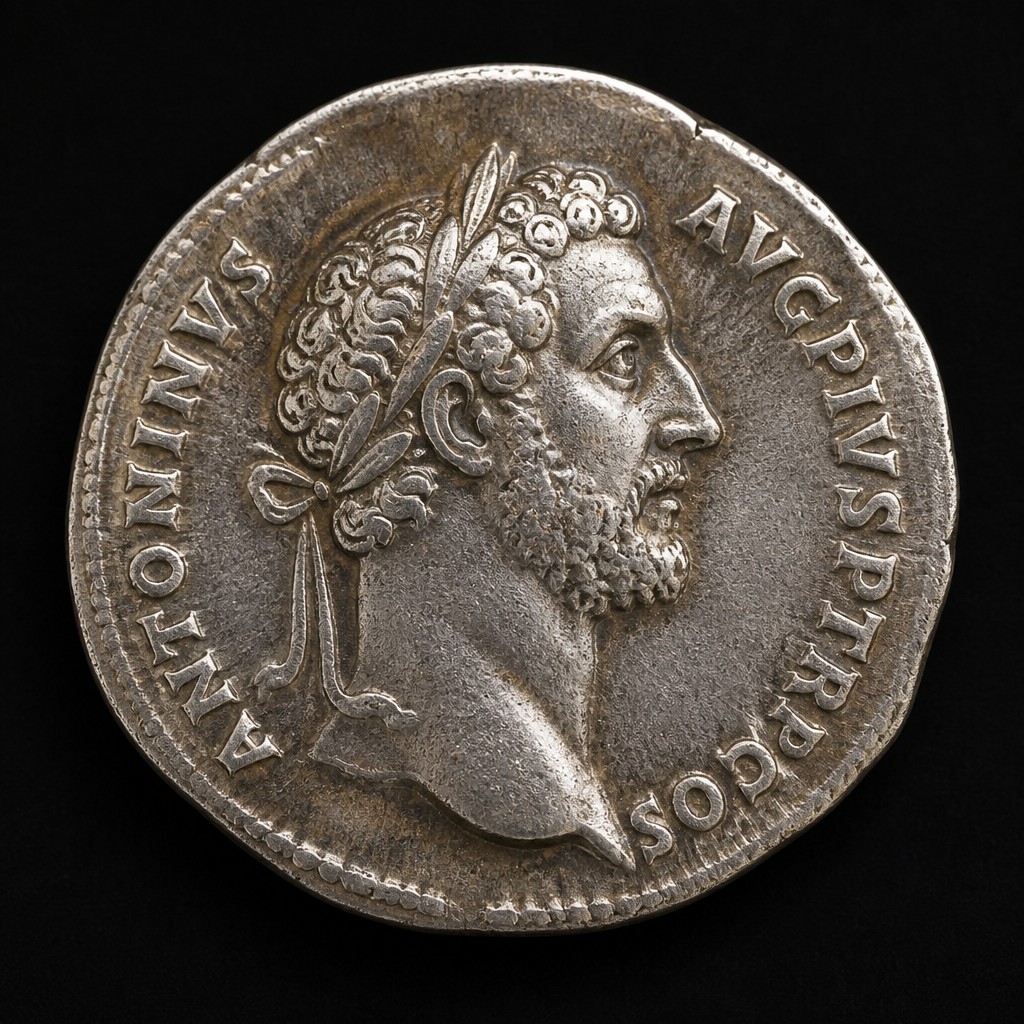
What the Coin Is
Antoninus Pius reigned from AD 138 to 161, one of the longest and most peaceful periods of the Roman Empire. His denarius coinage survives in enormous quantity and variety, reflecting a stable domestic administration rather than extensive military conquest.
Obverse Design & Inscriptions
The obverse shows a laureate head of Antoninus Pius right, generally portraying him as an older man with a fuller, somewhat jowly face. The legend typically reads ANTONINVS AVG PIVS P P, accompanied by his tribunician power (TR P) and consular (COS) numerals, which can help narrow the approximate year of striking.
Reverse Design & Inscriptions
Reverse types are exceptionally wide-ranging: personifications such as Annona, Pax, Salus, Providentia, Libertas, and Fortuna appear regularly, along with images of animals on games-related issues. A notable group commemorates the 900th anniversary of the founding of Rome in AD 148, showing the legendary she-wolf suckling the twins Romulus and Remus, among other anniversary designs.
Size, Weight, Metal & Edge
The coin measures roughly 18mm in diameter and weighs about 3.2-3.4 grams, with silver fineness around 83 percent, continuing the gradual debasement trend of the second century. The edge is plain.
Mint Marks & Where to Find Them
Denarii of this reign were struck at Rome; there is no mint-letter system to search for, and attribution relies on the obverse legend and portrait.
Telling It Apart from Similar Coins
Marcus Aurelius, adopted as Antoninus Pius's heir, struck his own denarii as Caesar during this same period with a legend reading AVRELIVS CAESAR AVG PII F ("son of Augustus Pius"), sharing some of the same reverse themes; the obverse name is the clear distinguishing feature between the two. Compared to Hadrian's earlier, sometimes bearded portraits, Antoninus Pius's face is generally heavier and more advanced in age, with a fuller beard by the standards of his own reign's engraving style.
Judging Condition & Grade at a Glance
Check the drapery folds on standing reverse figures and the fullness of the portrait's jaw and cheek for wear. Because so many examples survive, well-centered strikes with sharp, complete legends are more desirable than off-center or weakly struck pieces even at the same numerical wear grade.
Authenticity Red Flags
Given how common genuine worn examples are, there is little incentive to fake ordinary low-grade coins, but collectors should still watch for silver-plated fourrées revealing a copper core at any nick or scratch, and for reproduction sets sold as "ancient replicas" without clear disclosure. A coin that looks unusually sharp and fresh for its apparent circulation wear, or that has an inconsistent metal color across its surface, warrants closer inspection.
Frequently asked questions
How do I distinguish Antoninus Pius's coins from Marcus Aurelius's early issues?
Read the obverse legend for the name; Antoninus Pius's coins read ANTONINVS AVG PIVS, while Marcus Aurelius's Caesar-period coins read AVRELIVS CAESAR AVG PII F, identifying him as Pius's son and heir.
What do the anniversary coins from AD 148 look like?
They commemorate Rome's legendary 900th birthday and often show the she-wolf suckling the twins Romulus and Remus, along with other themed reverse designs specific to that celebration.
Why is there so much variety in his reverse types?
His long, largely peaceful 23-year reign gave the mint time to produce a wide range of civic and religious personifications rather than concentrating on military victory themes.
What silver purity should I expect?
Genuine denarii from this reign are typically around 83 percent silver, part of the gradual second-century debasement trend, though individual coins vary with wear and old cleaning.
Are these coins commonly faked?
Because so many genuine low-grade examples exist cheaply, ordinary coins are less targeted, but plated fourrées and undisclosed modern replicas do circulate, so checking for a copper core at any wear point is still worthwhile.