
How to Identify the Antoninianus of Tetricus I
A collector's guide to recognizing a billon antoninianus of Tetricus I by its radiate portrait, legends, reverse types, and size.
Read the full Antoninianus of Tetricus I encyclopedia entry →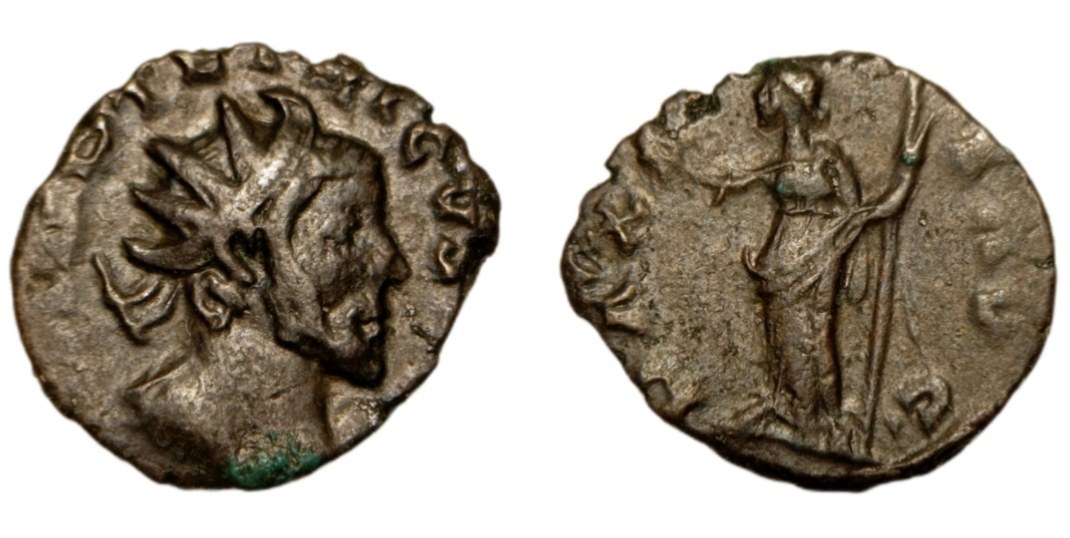
Begin with the crown. An antoninianus of Tetricus I shows the emperor wearing a spiked radiate diadem rather than a laurel wreath; the sun-ray crown is the single quickest sign you are holding a radiate antoninianus and not a denarius or a later coin. The bust faces right and is usually draped and cuirassed.
Read the obverse legend around the head. Tetricus I is named in forms such as IMP C TETRICVS P F AVG or the shorter IMP TETRICVS AVG. The critical word is AVG (Augustus): it separates the father from his son Tetricus II, who is titled CAES or NOB CAES and portrayed as a younger, beardless boy. If the portrait looks juvenile and carries a caesar title, it is the son, not this coin.
Turn to the reverse and match the figure and legend. This example shows Pax standing, holding an olive branch, typically labeled PAX AVG. Tetricus used a large family of similar standing-figure reverses (Spes, Salus, Laetitia, Hilaritas, Comes, Virtus, Fides), each named in its legend, so read the inscription rather than relying on the pose alone. Identify the personification by its attributes: an olive branch points to Pax, an anchor to Spes, a rudder to Fortuna, and so on.
Check the physical coin. Expect a small flan about 17–20 mm across, struck in debased billon or bronze that is now brown or greenish, often with little or no surviving silver wash. Crude engraving, weak or off-center strikes, and blundered lettering are entirely normal and do not by themselves indicate a fake. There are no consistent modern-style mint marks; attributions to the Cologne or southern Gallic mints rest on style and reverse type rather than legible mint letters.
Watch for two look-alikes. First, ancient contemporary imitations copy Tetricus with cruder, sometimes garbled legends and smaller, lighter flans; they are genuine ancient objects but not official issues. Second, coins of other radiate emperors of the same era (Victorinus, Claudius II, the Tetricus II caesar coins) share the same look, so confirm the TETRICVS name and the AVG title before attributing. Cast copies with seams, a soapy surface, or an unnaturally uniform patina should raise suspicion; genuine examples are struck and show honest circulation wear.
Frequently asked questions
What is the fastest way to confirm it is an antoninianus?
Look for the radiate crown, a spiked, sun-ray diadem on the emperor's head. That radiate portrait marks the coin as an antoninianus rather than a laurel-wreathed denarius.
How can I read a worn legend to get the name?
Tilt the coin under raking light and look for the letters T-E-T-R-I-C-V-S and the ending AVG. Even partial legends showing TETRIC and AVG confirm Tetricus I over his caesar son or other radiate emperors.
Does the reverse always show Pax?
No. This coin shows Pax with an olive branch, but Tetricus I issued many standing-figure reverses. Read the reverse legend and identify the figure by its attributes rather than assuming Pax.
How do I spot a fake or an imitation?
Genuine coins are struck and show honest wear; be wary of casting seams, soapy surfaces, or overly uniform patina. Small, crude, lightweight pieces with garbled legends are usually ancient contemporary imitations rather than modern fakes.