
How to Identify the Antoninianus of Probus
A collector's guide to confirming a Probus radiate by its crown, obverse legend, size, metal, and mint mark, with authentication cautions.
Read the full Antoninianus of Probus encyclopedia entry →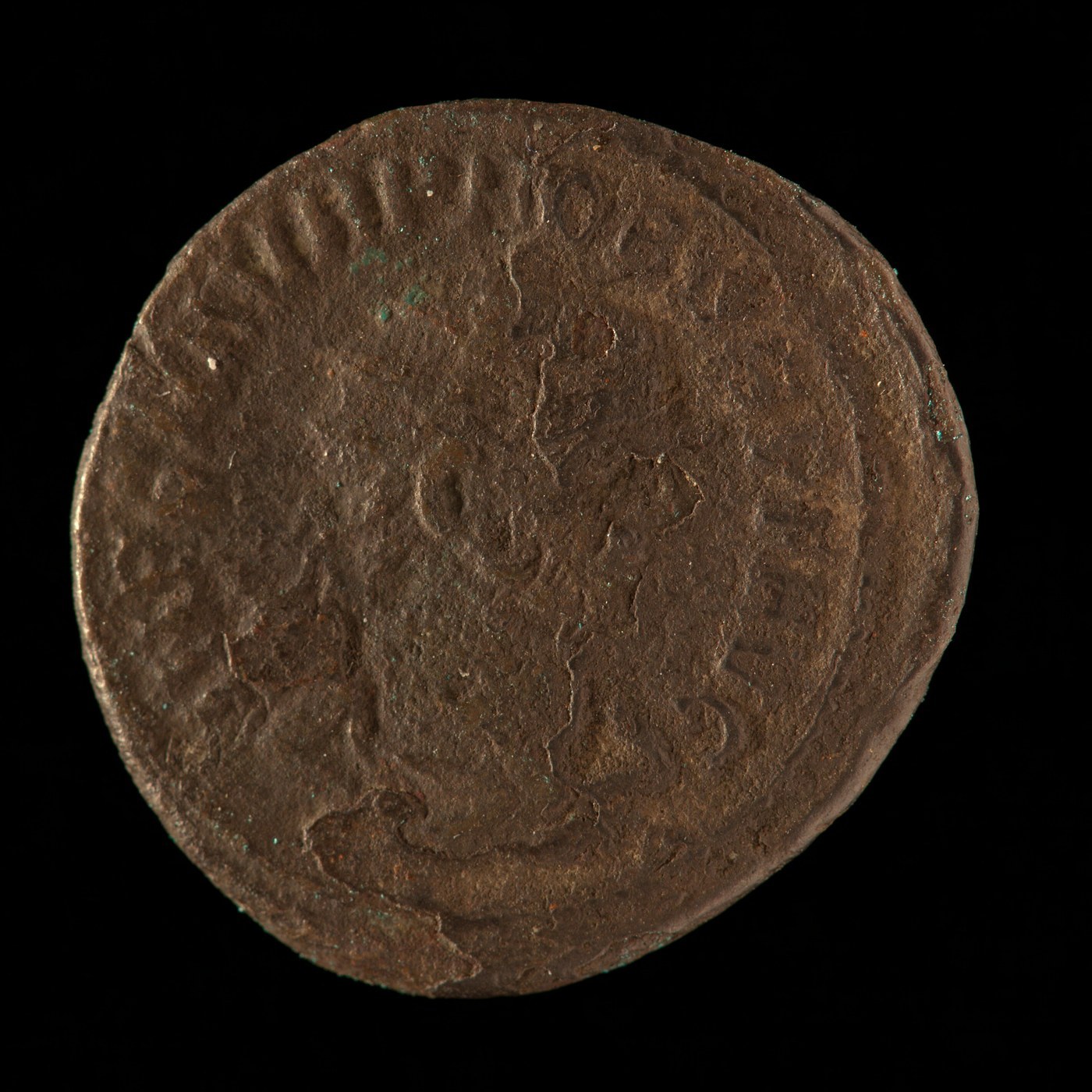
Begin with the crown. An antoninianus is defined by the emperor's radiate crown — a ring of spikes like sun-rays — rather than the laurel wreath of a denarius. The coin shown here clearly displays that radiate portrait, so it is an antoninianus. If the portrait wears a flat laurel wreath instead, you are looking at a different denomination.
Read the obverse legend to name the emperor. Probus coins carry his name and titles in abbreviated Latin around the portrait, commonly including IMP and PROBVS AVG. The lettering runs clockwise around the rim; even a partial legend showing PROBVS is enough to attribute the coin, since the radiate crown and the 276-282 AD window narrow it down.
Check size, weight, and metal. Expect a small, thin coin roughly 20-24 mm across and only a few grams, struck in billon or bronze. Genuine surfaces are usually brown, grey, or olive with age, sometimes with traces of the original thin silvering; the metal is not magnetic. A coin that looks like bright, heavy modern silver, or that sticks to a magnet, is a warning sign.
Use the reverse and mint mark when they are available. This image does not show the reverse, so the exact type cannot be read here. On a complete coin, the reverse design and legend identify the type, and the small mint mark in the exergue (below the reverse design) identifies the issuing mint — both are essential for a precise attribution and for judging any premium.
Apply authentication caution. Because Probus radiates are common and inexpensive, outright forgeries are less of a concern than with rare coins, but tooled, cast, or artificially patinated examples do exist. Look for crisp, unmushy lettering, natural wear consistent with age, and a patina that sits in the recesses rather than a painted-on look. For anything sold as scarce or high-grade, buy from a reputable dealer and favor coins with a clear provenance.
Frequently asked questions
What single feature confirms this is an antoninianus?
The radiate crown on the portrait — a spiked, sun-ray diadem — marks the coin as an antoninianus rather than a laureate denarius. It is the defining diagnostic and is visible on the obverse here.
How can I read the emperor's name?
Follow the legend around the obverse rim. Probus coins include abbreviated Latin titles with PROBVS AVG. Even a partial reading of PROBVS, combined with the radiate crown, is enough to attribute it.
What size and metal should a genuine example be?
A small, thin billon or bronze coin about 20-24 mm across and only a few grams. Surfaces are typically brown, grey, or olive, sometimes with traces of silvering, and the metal is non-magnetic.
Why does the mint mark matter?
The mint mark in the reverse exergue identifies which imperial mint struck the coin and helps pin down the exact type. It cannot be checked here because the reverse is not shown in this image.