
How to Identify the Antoninianus of Laelianus
Collector checks for a scarce Gallic usurper radiate: reading the LAELIANVS legend, radiate bust, billon fabric, mints, look-alikes, and fakes.
Read the full Antoninianus of Laelianus encyclopedia entry →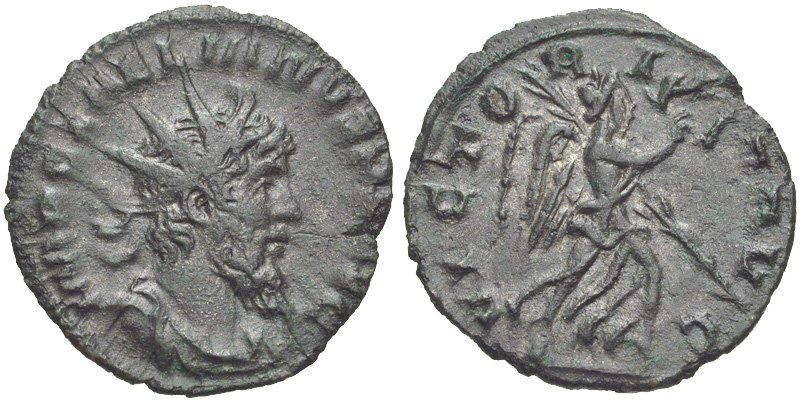
Begin with the fabric and format. This is an antoninianus: a small base-silver (billon) coin, usually in the low-20-millimeter range, with a male bust wearing a spiked radiate crown rather than a laurel wreath. That radiate crown confirms the denomination but not the ruler, so the obverse legend does the real work of attribution.
Read the obverse legend carefully. Laelianus is named in a form such as IMP C VLP COR LAELIANVS P F AVG. The distinctive elements are the VLP (Ulpius) and COR (Cornelius) and the name LAELIANVS itself. Because his name is easily confused at a glance with contemporaries in the Gallic series, spell out the legend letter by letter before concluding you have a Laelianus rather than a Postumus, Victorinus, or Marius.
Check the reverse type and legend. Expect a single standing deity or personified virtue with a Latin legend, such as Victory (VICTORIA AVG) or prosperous times (TEMPORVM FELICITAS); matching your reverse to a recorded Laelianus type helps confirm the attribution and pin down the catalogue reference. The coins are attributed to a Rhine-region mint (traditionally Mainz, possibly Cologne), and the workmanship is often hurried, reflecting an emergency issue.
Separate the look-alikes. Many usurpers and emperors of AD 260-274 struck near-identical radiate coins, so a bust type alone is never diagnostic. Watch for coins where the name has been tooled or re-cut to read LAELIANVS, and be wary of any "bargain" example, since a common ruler's coin altered to a rare name is a known trap.
Authenticate with care. Because the name carries a strong premium, Laelianus is disproportionately targeted by forgers and by misattribution. Weigh and measure the coin, examine the surfaces for casting bubbles or seams, look for tooling around the critical legend letters, and for any significant purchase seek an expert opinion or third-party attribution rather than relying on the name alone.
Frequently asked questions
What legend confirms a coin is Laelianus?
An obverse legend naming him, typically IMP C VLP COR LAELIANVS P F AVG or a close abbreviation. The VLP, COR, and LAELIANVS elements are the key identifiers to read out in full.
How do I tell it apart from other Gallic radiates?
The radiate bust is shared across the whole series, so rely on the legend, not the portrait. Confirm the exact spelling of the name and match the reverse type to a recorded Laelianus issue.
What size and metal should it be?
A billon (debased silver) antoninianus, generally around 20-23 mm, often brown or grey toned with possible traces of thin silvering over a base-metal core.
Why should I be cautious about fakes?
His name commands a large premium, so common radiates are sometimes re-cut to read LAELIANVS and outright forgeries exist. Inspect the legend letters for tooling and get an expert opinion before buying.