
How to Identify the Antoninianus of Gordian III
A collector's guide to spotting a Gordian III antoninianus by its radiate portrait, reverse deity, size, and metal.
Read the full Antoninianus of Gordian III encyclopedia entry →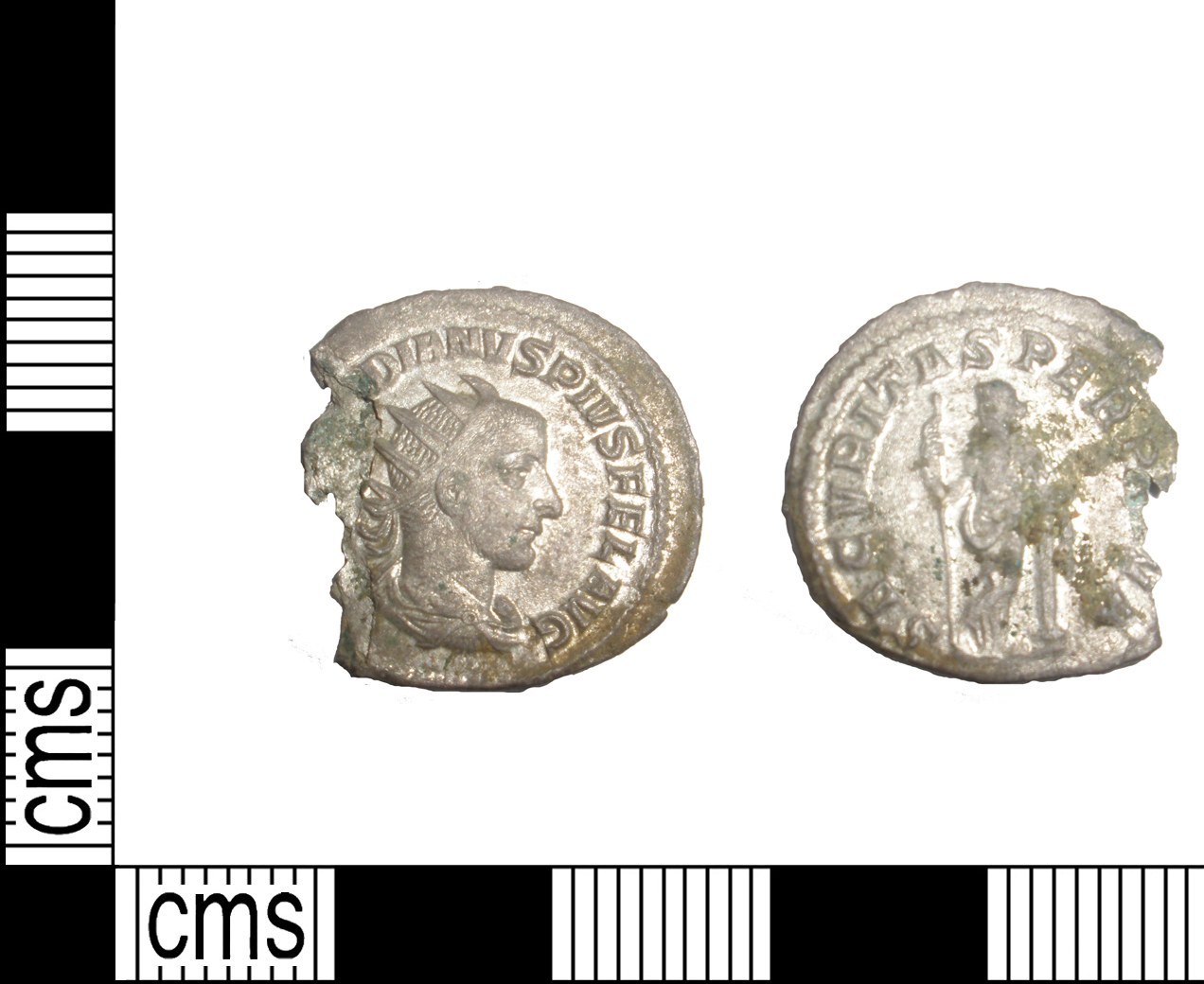
Start with the obverse portrait. A genuine antoninianus of Gordian III shows a youthful male bust facing right wearing a radiate crown of pointed spikes, not a laurel wreath. Read the encircling legend: an imperial titulature built around GORDIANVS, most often IMP GORDIANVS PIVS FEL AVG, confirms the ruler. The young, rounded facial features help separate him from older, bearded third-century emperors.
Next examine the reverse. Expect a single standing figure, a deity or personification, holding identifying attributes: Sol raising a hand and holding a globe, Jupiter with a spear and thunderbolt, Providentia leaning on a column with a wand over a globe, or Fortuna with a rudder and cornucopia. The reverse legend names the type; matching the figure's attributes to that legend is the key attribution step.
Check the physical coin. Diameter should fall roughly in the 21-24 mm range with a weight near 3.5-5 grams. The fabric is silver but alloyed, so a pale, greyish, or lightly toned surface is normal and expected; a bright, dead-white or unusually heavy piece deserves a second look.
Beware of look-alikes and fakes. Antoniniani of neighboring emperors, especially Philip I who followed Gordian, share the same format and standing-deity reverses, so always confirm the obverse name. Cast copies show seams, bubbles, or a soft mushy strike, while genuine coins are struck with crisp detail on the high points. When authenticity or value matters, compare the exact obverse and reverse legends against a standard reference (such as RIC) rather than relying on the portrait alone.
Frequently asked questions
What is the single fastest way to attribute this coin?
Read the obverse legend for GORDIANVS and confirm the radiate crown; that alone narrows it to Gordian III's antoninianus, then use the reverse legend to name the type.
How can I tell a cast fake from a genuine strike?
Genuine coins are struck and show sharp, crisp detail; casts often reveal a seam around the edge, tiny surface bubbles, and soft, blurry lettering.
Why does my coin look grey instead of bright silver?
Third-century antoniniani use debased, alloyed silver, so a pale grey or lightly toned surface is normal and is not by itself a sign of a fake.
Could this be a coin of a different emperor?
Yes, many third-century rulers used the same radiate format and standing-deity reverses, so always verify the emperor's name in the obverse legend before attributing it.