
How to Identify the Antoninianus of Aurelian
Collector checks for Aurelian's radiate: the crown, obverse legend, standing reverse figures, XXI/KA marks, size and metal, and fakes.
Read the full Antoninianus of Aurelian encyclopedia entry →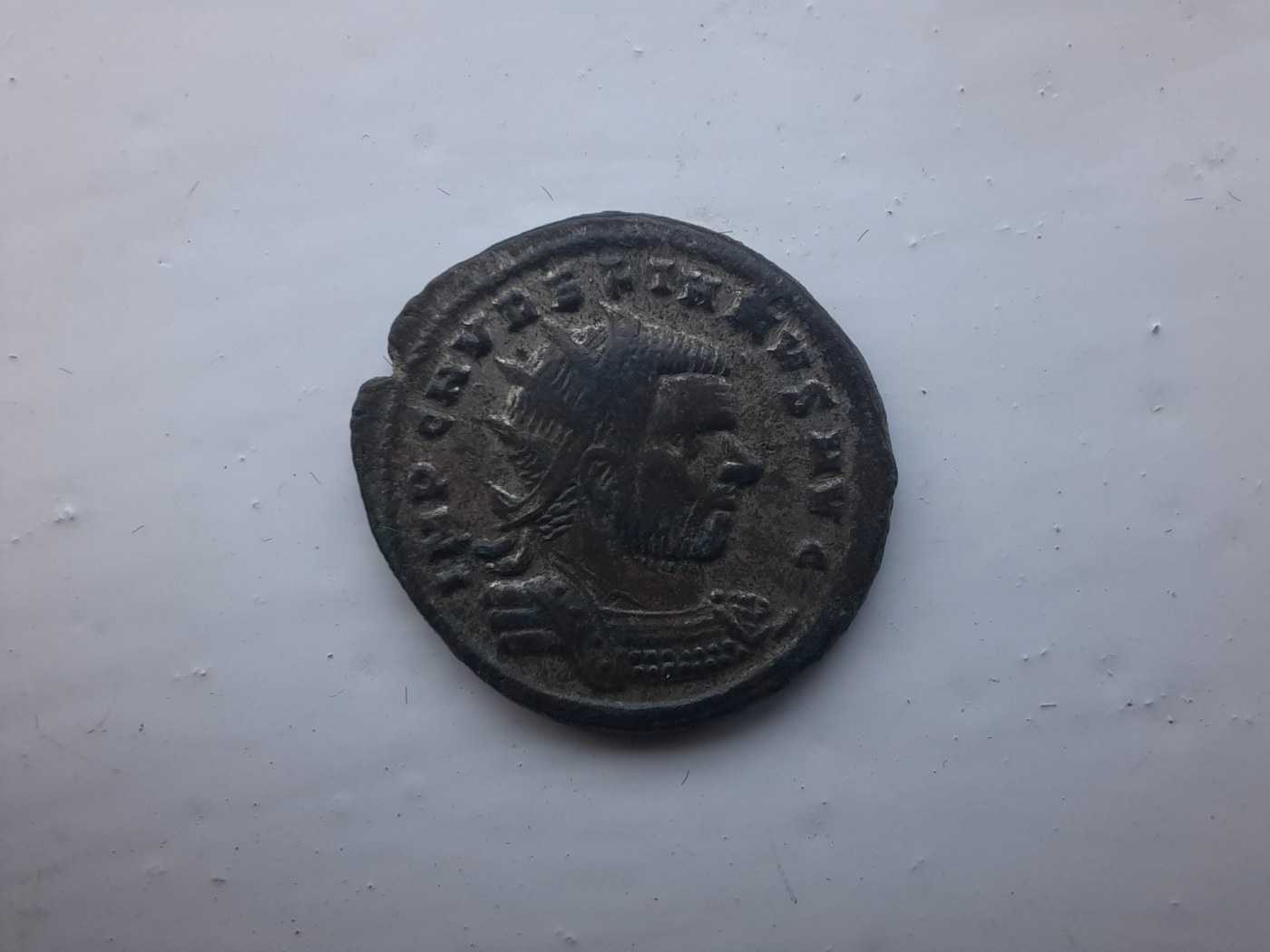
Start with the crown and the metal. An antoninianus is identified by the radiate crown, a ring of pointed rays around the emperor's head, seen on the right-facing bust. The coin should be billon (silvered bronze), roughly 20-23 mm across and about 3-4 grams, often dark brown or green with patches of surviving silvery surface. A laurel wreath instead of rays would point to a denarius, not an antoninianus.
Read the obverse legend to confirm Aurelian. Look for his name in Latin forms such as IMP AVRELIANVS AVG or the fuller IMP C L DOM AVRELIANVS AVG running around the rim. Because dies were hand-cut, letter spacing and portrait style vary between genuine coins, and worn silvering can make legends faint, so examine the whole inscription rather than a single word.
Study the reverse figure and its legend. Aurelian's radiates commonly show a standing deity or personification, Sol Invictus (often raising a hand, with a captive at his feet), Concordia, Virtus, Fides, or the emperor himself, paired with legends like ORIENS AVG, CONCORDIA MILITVM, VIRTVS MILITVM, or RESTITVTOR ORBIS. Match the standing figure and its attributes (globe, spear, wreath, cornucopia) to the legend to attribute the type.
Check the exergue for reform marks. Post-274 AD coins usually carry XXI (or the Greek KA at eastern mints) plus letters or numerals identifying the mint and workshop, for example a mint-city abbreviation followed by a workshop numeral. These marks help place the coin to Rome, Siscia, Cyzicus, Antioch, and other centers and distinguish reformed issues from earlier, cruder radiates.
Watch for look-alikes and fakes. Radiate coins of other third-century emperors (Claudius II, Probus, Tacitus) and contemporary "barbarous radiate" imitations share the same format, so always confirm the name in the legend. Beware cast copies with soft detail or seams, and tooled or artificially re-silvered coins. For anything beyond common circulated grades, weigh and measure the coin and seek an experienced dealer or third-party opinion before buying or selling.
Frequently asked questions
How do I tell an antoninianus from a denarius?
The antoninianus shows the emperor in a radiate crown (a ring of rays), while the denarius uses a laurel wreath. Aurelian's coins are radiate antoniniani, not denarii.
How can I be sure the coin is Aurelian and not another emperor?
Read the obverse legend for his name, such as IMP AVRELIANVS AVG. Many third-century emperors used radiate portraits, so the inscription, not the crown, confirms the ruler.
What do the mint marks look like?
In the exergue below the reverse figure you may see XXI or KA plus a mint abbreviation and a workshop letter or numeral. These identify where and in which workshop the coin was struck.
Should the coin still have silver on it?
Sometimes. These were silver-washed billon, so many survive with only traces of silvering while others keep bright patches. Missing silvering is normal and does not mean the coin is fake.