
How to Identify the Antiochos Seleucid Tetradrachm
A silver tetradrachm issued by one of the Seleucid kings named Antiochos, typically featuring a diademed royal portrait and a seated Apollo on the reverse.
Read the full Antiochos Seleucid Tetradrachm encyclopedia entry →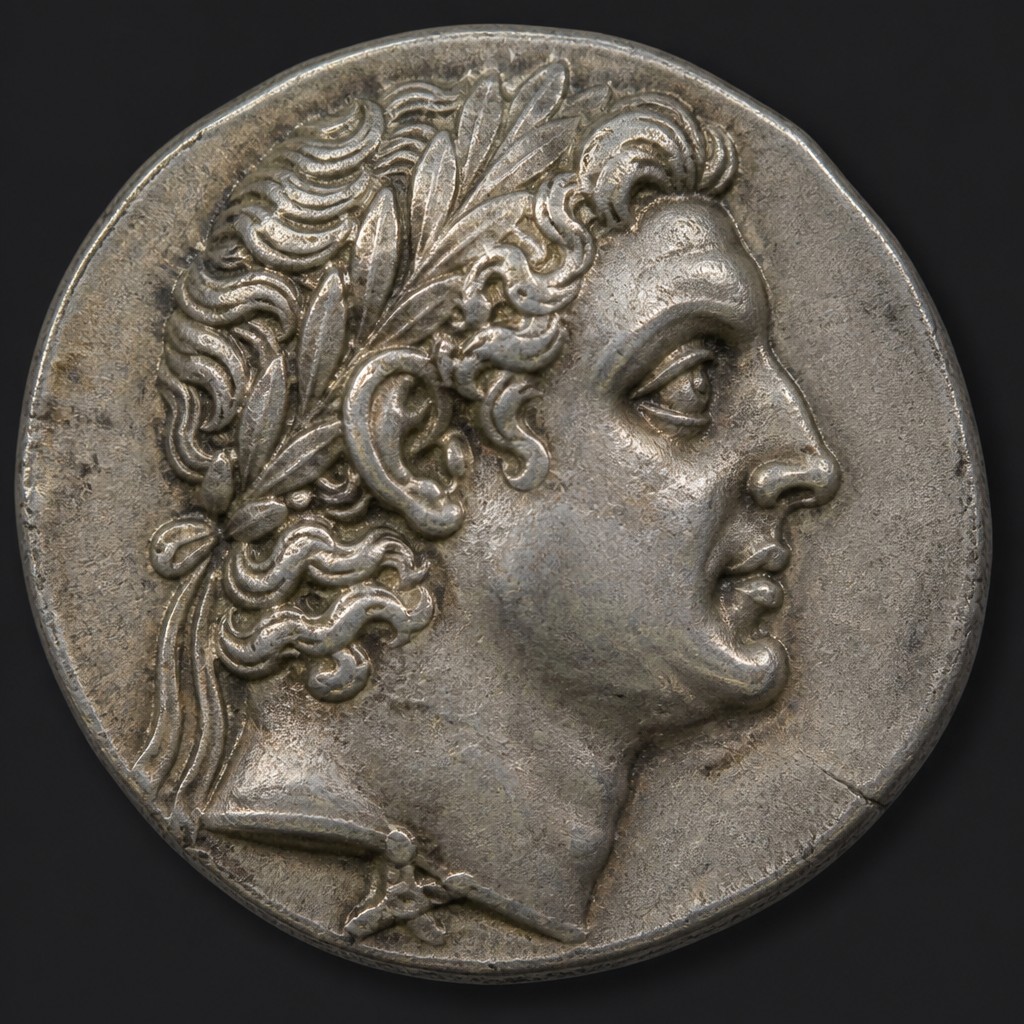
What This Coin Is
This coin belongs to the long series of silver tetradrachms struck by Seleucid kings who took the name Antiochos, spanning from Antiochos I in the early third century BC down through later rulers of the same name in the second and first centuries BC. Because the Seleucid dynasty used this name repeatedly, "Antiochos tetradrachm" covers a broad family of related but distinguishable issues.
Obverse Design
The obverse consistently shows a right-facing royal portrait wearing a diadem, the simple cloth headband that was the standard mark of Hellenistic kingship rather than a crown. Portrait style evolves over time: earlier Antiochos issues tend toward idealized, youthful features, while later kings are shown with more individualized, sometimes aging or heavier features, occasionally with additional attributes like an aegis around the neck on certain issues.
Reverse Design
The most common reverse type across the Antiochos series shows Apollo seated left on the omphalos (the sacred stone at Delphi), holding an arrow in one hand and resting the other on a bow. The Greek legend BASILEOS ANTIOCHOU ("of King Antiochos") appears in the field, often with an added epithet such as EPIPHANOUS or the like on later issues, along with royal titles that help pin down which specific king struck the coin.
Size, Weight, and Metal
Struck in silver, these tetradrachms generally weigh around 16 to 17 grams and measure roughly 26 to 32 millimeters across, though exact figures shift slightly by mint and period. The edge is plain and hand-struck, without any milling or lettering.
Mint Marks and Where to Find Them
Small control letters, monograms, or symbols appear in the exergue beneath Apollo or in the field near his throne. Major mints included Antioch on the Orontes, Seleucia on the Tigris, and other regional centers, each of which used its own set of control marks. These marks, combined with the specific royal epithet in the legend, are the main tools for pinning a coin to an exact ruler and mint.
Telling It Apart From Similar Coins
Because so many Seleucid kings shared the name Antiochos, careful reading of the full legend and comparison of portrait style is essential. The seated Apollo reverse type is shared across most of the dynasty's silver coinage, so it will not by itself distinguish one Antiochos from another; the royal epithet, control marks, and subtle portrait differences (hairstyle, presence of a diadem knot, aging features) are the real distinguishing details.
Judging Condition at a Glance
On the obverse, check the diadem ties, hair, and facial features for crispness, since these high-relief areas wear first. On the reverse, look at Apollo's face, the bow, and the arrow tip, along with the throne or omphalos beneath him, for sharp definition. A well-centered strike with full legends visible is more desirable than an off-center or double-struck example.
Authenticity Red Flags
Be alert for cast copies, which often show a slightly rough or granular surface texture and a visible seam around the edge. Modern fantasy or tourist reproductions sometimes combine an incorrect portrait style with the wrong royal epithet, or show a legend with malformed Greek letters. Comparing the coin's weight and diameter against the standard range for genuine Seleucid tetradrachms, and checking that the portrait style matches the claimed ruler's known coinage, are useful first steps before assuming a coin is authentic.
Frequently asked questions
How do I know which Antiochos struck a particular coin?
Read the full legend for any royal epithet (such as an added descriptive title) beyond the basic BASILEOS ANTIOCHOU, and compare the portrait style and control marks against reference examples, since these details narrow the coin to a specific king and mint.
Why does the reverse look the same on so many different Antiochos coins?
The seated Apollo on the omphalos was the standard reverse type used across most of the Seleucid dynasty's silver coinage, so it was retained by many successive kings named Antiochos rather than redesigned each reign.
What is a diadem and why does it matter for identification?
The diadem is the plain cloth headband tied at the back of the head that marked Hellenistic royalty. Its presence confirms a royal portrait, and small variations in how it is tied can help sort portraits by period.
What weight should I expect from a genuine tetradrachm of this type?
Most genuine examples fall in the general range of 16 to 17 grams, consistent with the broader Hellenistic silver standard, though minor variation is normal for hand-struck ancient coinage.